REVIEW · BRUSSELS
Flanders Fields Remembrance Tour from Brussels
Book on Viator →Operated by Brussels City Tours - Keolis Travel · Bookable on Viator
A bus through WWI, with real quiet moments. This full-day Flanders Fields remembrance tour strings together the places where the war’s cost still feels personal, from German war graves to Commonwealth cemeteries, then finishes with the daily Last Post at Menin Gate in Ypres. It’s built around an expert guide, a comfortable air-conditioned coach, and long stretches where you can actually slow down and take things in.
I especially like two stops: the Vladslo German Military Cemetery and its haunting sculpture by Käthe Kollwitz, Grieving Parents, and the evening Last Post Ceremony at Menin Gate, which turns history into something you can hear and feel. The guide’s storytelling style also matters here, because otherwise these sites can blur together into “more memorials.”
One thing to plan for: this is a long day (about 13 hours) with lots of coach time plus multiple walking stretches. If you don’t enjoy late finishes, or you need an easier pace, you’ll want to think twice before booking.
In This Review
- Key highlights worth your attention
- From Brussels to the Ypres Salient: why this route works
- Vladslo German War Cemetery and Käthe Kollwitz’s Grieving Parents
- Diksmuide’s Brooding Soldier and the Canadian gas attack memorial
- Flanders Fields Museum: why a museum break matters
- Passchendaele: battlefield ground, then time to reflect
- Tyne Cot Commonwealth Cemetery: 35,000 graves and the scale of loss
- Essex Farm Field Hospital and John McCrae’s words
- Hill 60 tunnels: strategy under the ground
- Ypres time and the Menin Gate Last Post ceremony
- Price and timing: is $113.72 a good deal?
- Who should book this WWI remembrance day, and who should skip it
- Should you book the Flanders Fields Remembrance Tour from Brussels?
- FAQ
- Is hotel pick-up included?
- What’s included in the tour price?
- Is lunch included?
- What time does the tour start and end?
- Can I attend the tour in English?
- Can I get a full refund if I cancel?
Key highlights worth your attention
- Vladslo’s Grieving Parents: a powerful work of art set in a very peaceful cemetery
- Diksmuide’s Brooding Soldier: a clear, specific reminder of the first German gas attack and Canadian sacrifice
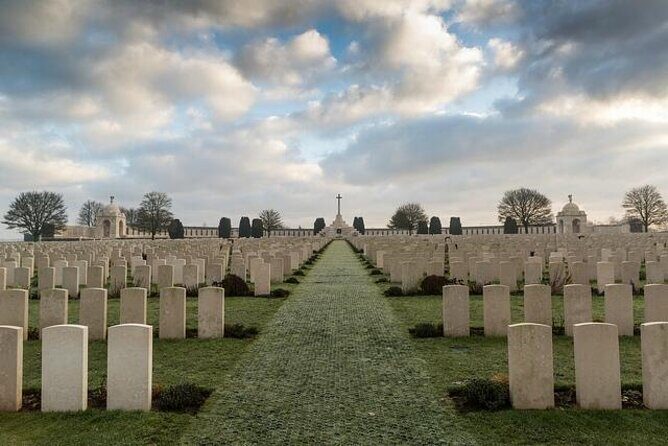
- Tyne Cot Commonwealth Cemetery: the scale of more than 35,000 graves hits hard in the best way
- John McCrae’s Essex Farm Field Hospital area: the connection to In Flanders’ Field makes the day feel personal
- Ypres at night for Last Post: the memorial service gives the whole route a strong emotional landing
- Small-coach group feel: capped at 100 travelers, with radios/earphones when needed
From Brussels to the Ypres Salient: why this route works
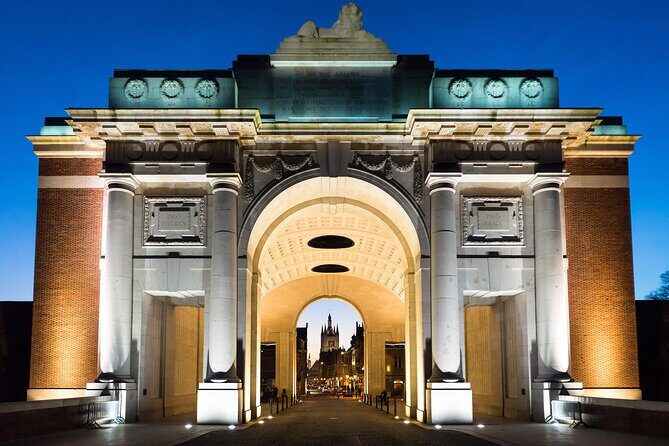
The value of this kind of tour is simple: you get transport, a tight sequence, and a guide who helps you connect the dots across the Ypres Salient without wasting your limited holiday time. Going it alone is possible, but you’d spend a lot of time figuring out logistics and a lot less time actually understanding why each stop matters.
You start in central Brussels and ride out toward the Flanders region, then spend the day bouncing between memorials, battlefield areas, and museums. Expect a steady rhythm: brief introductions, time to walk and look, and then more context so you’re not just counting gravestones. The coach is air-conditioned, which matters when you’re gone most of the day and the weather does whatever it wants.
Also, you’re not just chasing famous names. The route balances German and Commonwealth remembrance, so you see the war’s impact on both sides, not only the Allied story. That broader lens makes the day feel more honest.
You can also read our reviews of more tours and experiences in Brussels.


Vladslo German War Cemetery and Käthe Kollwitz’s Grieving Parents
Vladslo is where the tone changes from “tour day” to something more human. You’ll visit the Deutscher Soldatenfriedhof Vladslo / Vladslo German War Cemetery, and the standout is the sculpture by Käthe Kollwitz, Grieving Parents. It’s the kind of art that doesn’t need a speech. You see it, you feel the message, and you understand why memorial art often includes faces and grief rather than only symbols.
What I like about starting with Vladslo is that it slows you down early. You don’t immediately rush into the bigger Commonwealth cemeteries. Instead, you begin with a place where quiet seems built into the setting, and where the memorial is tied directly to the reality of families losing sons.
Practical tip: wear comfortable shoes. Even when a stop doesn’t look like much on the map, cemeteries often involve uneven paths and short distances that add up across the day.
Diksmuide’s Brooding Soldier and the Canadian gas attack memorial
Next you head toward Diksmuide, where the standout is the monument of the Brooding Soldier dedicated to the sacrifice of 2,000 Canadian soldiers during the first German gas attack. This is a good example of how the war shows up in Flanders not just as battle dates, but as specific remembered events tied to particular communities.
This stop helps you understand how “WWI” becomes more specific once you’re on the ground. You start noticing that the memorials aren’t generic. They point to particular moments—like chemical warfare—that shaped the experience of soldiers in ways that battle fields alone can’t fully explain.
If you like details, this is your kind of moment. A strong guide can connect the monument’s symbolism to what soldiers faced and why places like this became important to commemorate.
Flanders Fields Museum: why a museum break matters
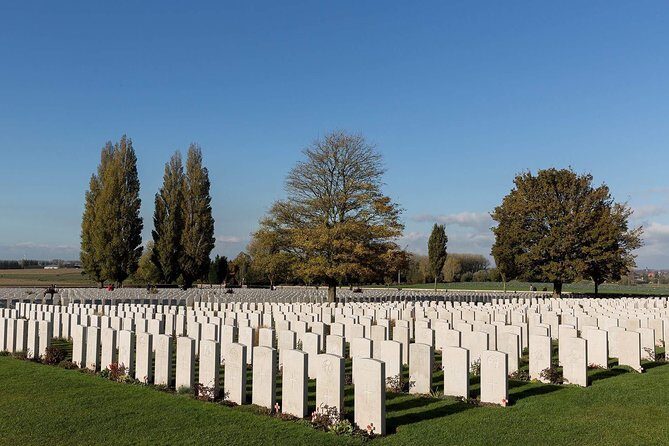
After a short break for lunch time (lunch isn’t included), you’ll visit the Flanders Fields museum. Museums can feel like a pause in a long travel day, but here it’s more like the glue that holds the whole route together.
You’ll hear the story of how events led toward the First World War and how the situation turned into catastrophe. That’s valuable because many of these sites are connected to the same wider narrative, but without context they can feel like a list: cemetery, monument, cemetery, then another monument.
A museum visit helps you switch from “where” to “why.” And that makes the later walking stops hit harder. You’re not just seeing the aftermath—you’re seeing the reasons, the timing, and the human cost behind the names.
Passchendaele: battlefield ground, then time to reflect
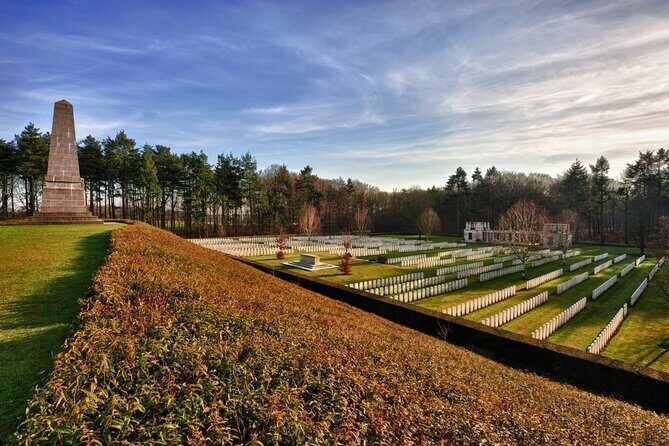
Then you’ll reach Passchendaele, with a short visit focused on the battlefield area. It’s not a stop designed to be quick-witted and entertaining. It’s there to give you the physical sense of place—what it meant to fight over ground that, once it was torn up by warfare, became hard for armies to simply move through like normal terrain.
Expect around 30 minutes here. That’s just enough time to look and absorb, but not enough to treat it like a full study visit. If you’re the type who loves reading every sign, plan to rely on the guide’s explanation and the overall tour context instead of trying to master Passchendaele on your own.
The trade-off is clear: you’re moving. The upside is that the day stays connected and doesn’t drag.


Tyne Cot Commonwealth Cemetery: 35,000 graves and the scale of loss
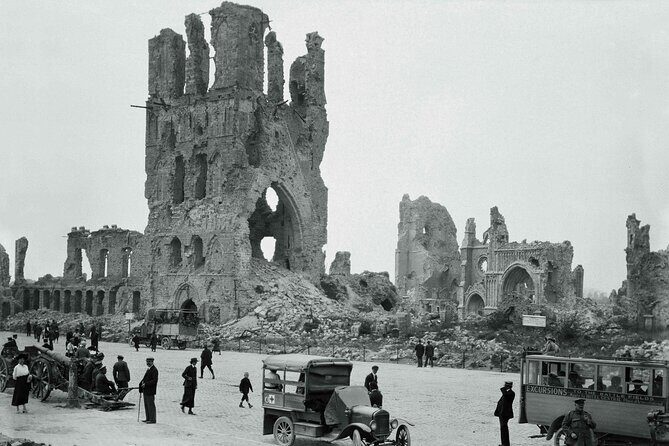
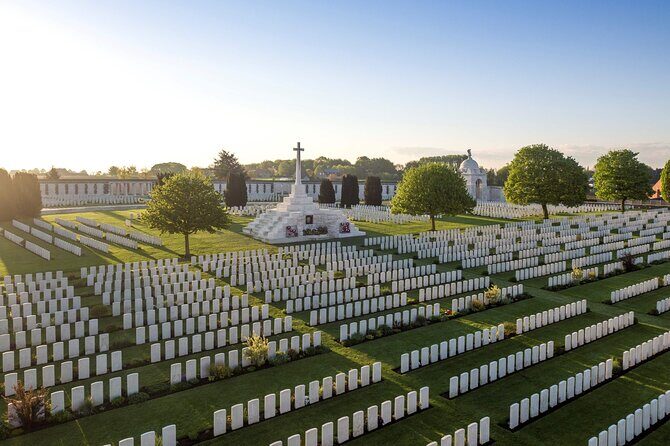
Tyne Cot is one of those places that changes your pacing. The Tyne Cot Commonwealth War Graves Cemetery is the largest Commonwealth cemetery in the world, with about 35,000 graves. Even before you count anything, the scale tells you what kind of war this was.
This stop matters because it shifts remembrance from single events to total loss. You can’t just remember one charge or one day. Instead, you see how the war’s human cost became a massive, lasting record.
I also like that the day includes multiple cemeteries: it gives you contrast in design and messaging. Some cemeteries feel like landscaped memorials. Others feel more like a place you go to sit with grief. Tyne Cot tends to pull you into that second mode—quiet, respectful, and hard to rush.
Practical tip: take your time at the first viewing point. If you sprint to see everything, you’ll miss what makes this place meaningful.
Essex Farm Field Hospital and John McCrae’s words
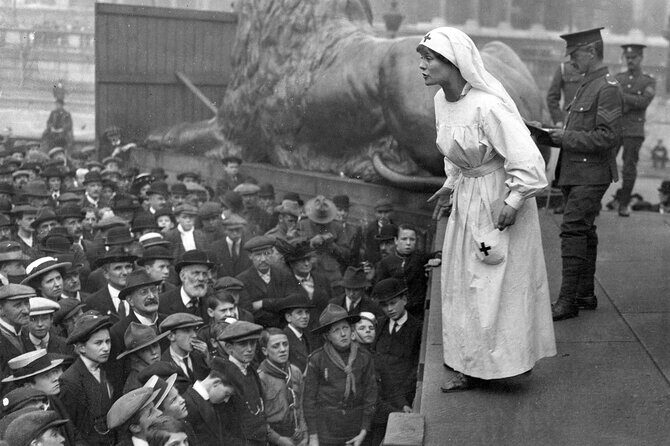
At Essex Farm Field Hospital, you’ll get a key literary connection: this is where the bunkers and surroundings inspired John McCrae to write In Flanders’ Field. Even if you already know the poem, visiting the associated area gives the words a different weight. You’re reminded that the famous lines came from a real environment, not a classroom example.
This is one of the stops where the guide’s framing can make a huge difference. The poem reads one way on paper. It reads differently when you understand the setting and the urgency behind those lines.
Expect a short stop (about 15 minutes). It’s enough to connect the place to the poem, but not enough to read every word on every marker. If you love literature or you’ve carried the poem through school memories, I’d spend a little extra time looking around rather than just snapping photos.
Hill 60 tunnels: strategy under the ground
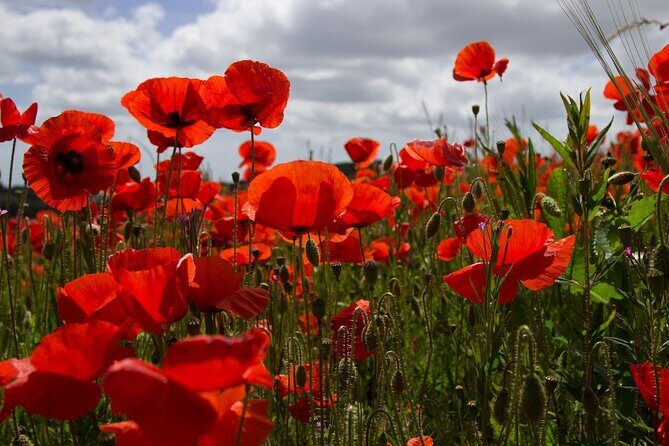
The tour also includes a stop at Hill 60, noted for strategic tunnels. Tunnels and under-ground warfare are often the least pictured part of WWI, but they matter because they show how the front line wasn’t only visible at ground level.
Even if you don’t have time for technical details, standing in the place where tactical thinking happened helps you understand why the war felt so relentless. When movement on the surface is nearly impossible, digging becomes a lifeline and a threat at the same time.
This stop is a nice contrast after cemeteries and memorial art. It reminds you the war wasn’t only about what was buried. It was also about what armies tried to do, secretly, to survive and gain advantage.
Ypres time and the Menin Gate Last Post ceremony
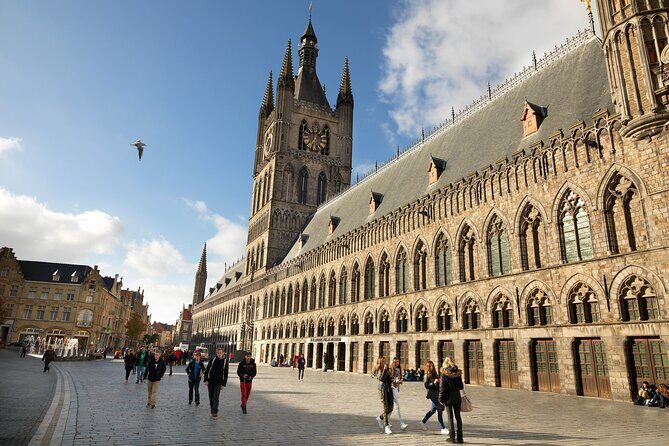
You’ll disembark in Ypres for independent time, including time to grab dinner on your own. This is a smart break. After hours of historical weight, Ypres lets you breathe in small doses: streets, cafés, and the feeling that life kept going even after the fighting moved on.
Then you’ll reconvene to attend the Last Post Ceremony at Menin Gate. It happens at 8 pm and lasts about 30 minutes. The ceremony is described as a daily tribute to Commonwealth soldiers and officers missing after battle, and that definition fits the moment perfectly.
I find the Last Post especially effective because it turns a day of sites into one shared ritual. You can feel the quiet attention in the crowd. Even if you’re not a ceremony person, it’s hard not to stand there and recognize how much the war took.
If you’re thinking about clothing: even in temperate months, evening in Flanders can feel cooler. Bring something for the nighttime wait and wear shoes you can stand in.
Price and timing: is $113.72 a good deal?
At about $113.72 per person for an approximately 13-hour day, this isn’t “cheap,” but it also isn’t unreasonable for what you’re getting. You pay for more than a bus ride.
You’re buying:
- round-trip coach transportation from Brussels
- a professional guide
- a packed route that includes major remembrance sites plus a museum visit
- the evening ceremony experience at Menin Gate
The big value lever is that guide context. Without it, you’d likely spend your own time researching why Vladslo, Tyne Cot, Essex Farm, and Hill 60 all fit together. With the guide, you get the connections on the spot, and your visits feel less like a checklist.
The other timing reality: you’re not getting to linger everywhere. Free time exists, but the schedule is built around fitting many stops in one day. If you prefer slow travel, you might feel rushed at certain points. Still, the emotional payoff—especially at Menin Gate—tends to outweigh that inconvenience for many people.
Plan for meals: lunch isn’t included. Build your budget around buying your own lunch and dinner during the free time.
Who should book this WWI remembrance day, and who should skip it
This tour suits you if:
- you’re a history buff or you want real context, not just photos
- you want a structured, efficient day from Brussels
- you care about remembrance that includes both German and Commonwealth sites
- you want the Last Post ceremony as a centerpiece of your trip
It may not suit you as well if:
- you dislike long days with lots of coach time and repeated entrances/exits
- you have trouble walking for extended periods or across uneven ground
- you want lots of downtime between stops
There’s also a group-size factor. With a maximum of 100 travelers, it’s not tiny, but it’s not a giant crowd either. Radios/earphones when needed help keep you oriented.
If you’ve got limited time in Belgium and you want one strong WWI day instead of hopping around multiple sites on your own, this is a sensible choice.
Should you book the Flanders Fields Remembrance Tour from Brussels?
I’d book it if you want a single, guided day that hits the major emotional and historical landmarks of the Ypres Salient—plus the Menin Gate Last Post ceremony that gives the trip a clear ending. It’s long, and it’s serious, but the structure is what makes it work: memorial art in Vladslo, specific event remembrance in Diksmuide, interpretive context at the museum, then the big Commonwealth scale at Tyne Cot, followed by the poem connection at Essex Farm and the under-ground strategy at Hill 60.
If you go in with the right mindset—quiet attention over sightseeing speed—you’ll come away with far more than a stack of stops. You’ll leave with a connected story.
FAQ
Is hotel pick-up included?
No. The meeting point is on your voucher, and the tour starts at Bd de Berlaimont 18, 1000 Bruxelles.
What’s included in the tour price?
You get an air-conditioned vehicle and a professional multilingual guide. Radios and earphones may be provided when necessary.
Is lunch included?
No. Lunch is not included, though you’ll have a lunch break during the day.
What time does the tour start and end?
The start time is 9:15 am from the Brussels meeting point, and the tour ends at Brussel-Centraal Carr de l’Europe.
Can I attend the tour in English?
Yes. The tour is offered in English.
Can I get a full refund if I cancel?
Yes. You can cancel up to 24 hours in advance for a full refund.