REVIEW · BRUSSELS
Guided tour: Brussels Crime Scenes
Book on Viator →Operated by Brussels By Foot · Bookable on Viator
Brussels’ street corners hide darker stories. What I love most is how the walk links specific crimes to the actual buildings you can still see today, and how the guide adds the right historical context so it doesn’t feel like spooky theater. The one possible drawback: the subject matter can get quite grim, with cases described as violent, so keep that in mind if you prefer gentler sightseeing.
This is a small-group experience (max 25) with a mobile ticket, designed to be done on foot in about 2 hours. With a very high rating (4.9) and strong praise for professional, friendly guiding, it’s the kind of tour where you finish with a better feel for Brussels—not just for streets, but for social change, policing, and everyday customs as the city evolved.
In This Review
- Key Things to Know Before You Go
- A Two-Hour Crime-Scene Walk With Street-Level History
- Starting At Rue de l’Etuve and Crossing the Grand Place
- Rue de l’Amigo: From a Swanky Hotel to a Crime of Passion
- Le Coin du Diable and the Devil’s Corner Legend
- Place Saint-Géry: The Mid-1800s Case That Shocked Brussels
- Place du Jardin aux Fleurs: A Villain, a Twist, and Unusual Loot
- How the Guide Turns Dark Facts Into Context
- Price and Logistics: Why $23.26 Can Be Good Value
- Who This Tour Fits Best (and Who Should Rethink It)
- Final Verdict: Should You Book Brussels, Scene of Crimes?
- FAQ
- Where does the Brussels Crime Scenes tour start and end?
- How long is the tour?
- How much does it cost?
- Do I need admission tickets for the stops?
- Is there a mobile ticket?
- How big is the group?
- Is public transportation nearby?
- Is the tour suitable for everyone, and can service animals go?
- What is the cancellation policy?
Key Things to Know Before You Go

- Start at Rue de l’Etuve 1 and end at Pl. Saint-Géry 1, right in the heart of the neighborhood
- Two hours on foot means comfortable walking shoes help more than you’d think
- Small group size (max 25) makes it easier to hear the story without straining
- No extra admission tickets are needed at the stops (each stop is admission ticket free)
- Mobile ticket gets you in with less hassle
- Expect dark crime stories told respectfully, with factual grounding
A Two-Hour Crime-Scene Walk With Street-Level History
If you like your travel history grounded in real places, this walk is a good fit. Instead of museum rooms and glass cases, you’re moving through Brussels as a city of addresses—corners, hotels, squares—where 19th and 20th century criminal cases left their mark.
What makes it work is the way the crime details sit inside bigger changes: how people lived, what society looked like at the time, and how policing and customs shifted across eras. So yes, it’s scary in places (some accounts are described as very violent), but it doesn’t feel random. The story is anchored to the city itself.
Just know the tone is purposely respectful. This isn’t about shock for shock’s sake. Still, if you’re sensitive to crime narratives, you may want to pace yourself and bring your own filter.
You can also read our reviews of more guided tours in Brussels
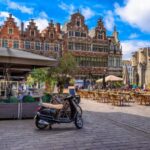

Starting At Rue de l’Etuve and Crossing the Grand Place
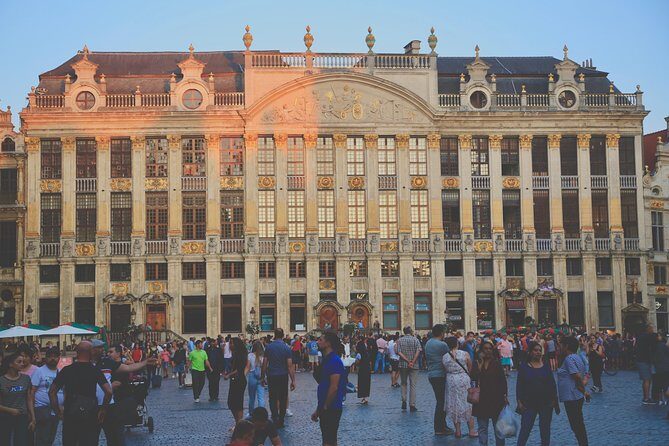
The tour begins at Rue de l’Etuve 1 (1000 Bruxelles) and quickly gets you oriented for what comes next. From there, you cross the Grand Place—Brussels’ showpiece—then the mood changes. That contrast is part of the point.
Grand Place can make you think of pageantry and postcard symmetry. But walking from there into lesser-known corners reminds you that a city’s “famous face” doesn’t cancel its darker chapters. You’re not just seeing a route; you’re getting a before-and-after feeling: how a grand square exists next to streets where everyday life—and sometimes violence—played out.
Practical tip: give yourself a moment at the start to get comfortable with where you’re standing. Since the tour ends at Place Saint-Géry, it helps to think of this as a guided line across central Brussels rather than a loop.
Rue de l’Amigo: From a Swanky Hotel to a Crime of Passion
One of the most interesting stretches is around Rue de l’Amigo. The story opens with a “luxe hotel” connection that’s more complicated than you might expect—because the same address that attracted prestigious visitors wasn’t insulated from scandal.
Then it narrows right down to a specific, famous case of passion crime that took place at the Hotel À la Ville de Courtrai, at the corner of Rue de l’Amigo. This stop matters because it shows how crime isn’t only about the act. It’s also about the social setting: reputation, expectations, and how certain crimes were understood at the time.
What I like about this part of the walk is the realism. You’re standing on real street material—no special effects. The guide’s job is to connect what you see now (the hotel’s presence in the street) to what happened then, so your brain doesn’t treat the story like a legend.
Potential drawback: if you prefer purely “how Brussels looks today” sightseeing, this stop will feel more like a story walkthrough. But if you’re here for crime scenes, that’s the whole deal.
Le Coin du Diable and the Devil’s Corner Legend
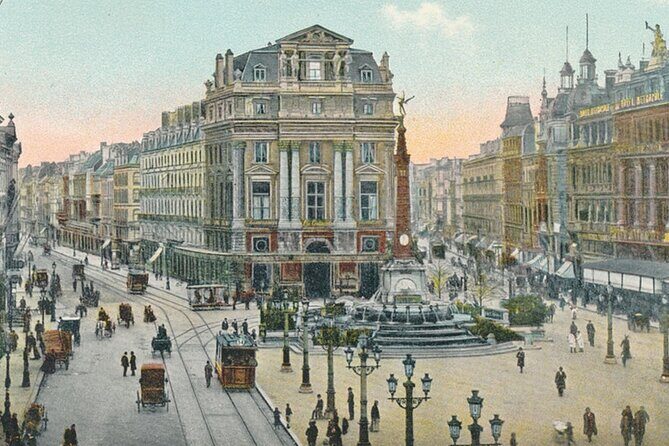
Next comes Le Coin du Diable, tied to the Devil’s Corner legend that dates to the 17th century. This is where the tour adds a different flavor. Not every stop is a modern-feeling “case file” moment. Some are shaped by older folklore and how stories stick to places over time.
This stop works well because it reminds you that cities run on layers. Even when a legend is older than the 19th–20th century cases the tour focuses on, the legend still changes how people read the street. You’re learning how Brussels tells its own tales—how people explain fear, danger, and the unknown through names and stories.
If you like to travel with curiosity instead of fear, this is often the most fun stop. It’s still part of the dark theme, but it has a mythic quality that breaks up the heavier moments elsewhere.
Place Saint-Géry: The Mid-1800s Case That Shocked Brussels
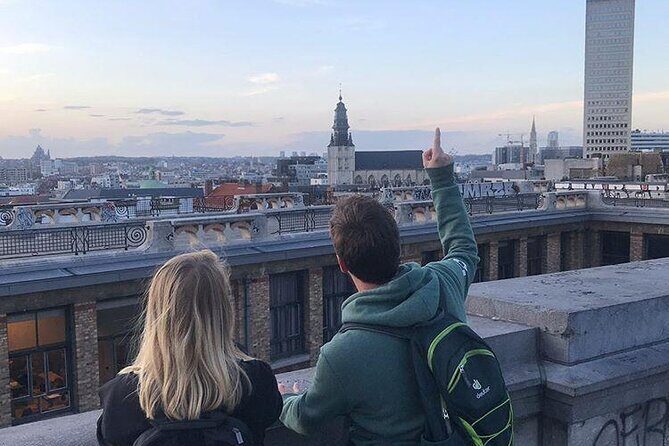
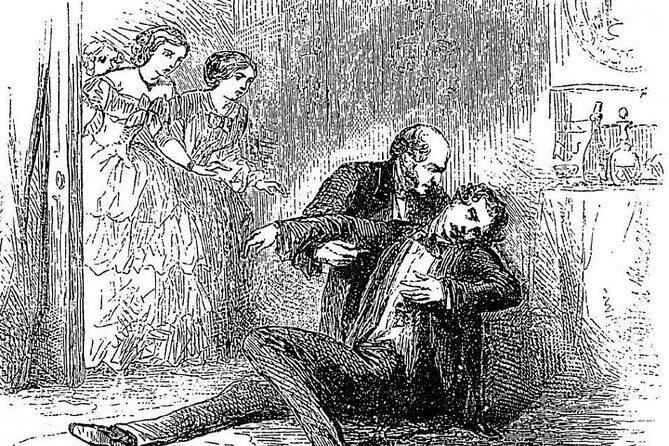
Place Saint-Géry is the emotional anchor. This is where the tour turns to the Place Saint-Géry crime, described as particularly atrocious, leaving 3 dead, and fascinating Brussels in the mid-19th century.
This stop is important not just because of the numbers, but because of the reaction. A crime in a major public space becomes part of civic memory. People talk. Newspapers report. Rumors grow. And over time, even the setting becomes a shorthand for what happened there.
What I value here is the balance. The guide doesn’t treat the tragedy like a thrill ride. The emphasis stays on context—how the city’s social life and attitudes at the time likely shaped everything around the case, from public fascination to the way such events were discussed.
If you’re taking photos, keep it respectful. The square is in use and surrounded by normal life, so treat the moment like you’re standing near a historical site, not a set.





Place du Jardin aux Fleurs: A Villain, a Twist, and Unusual Loot
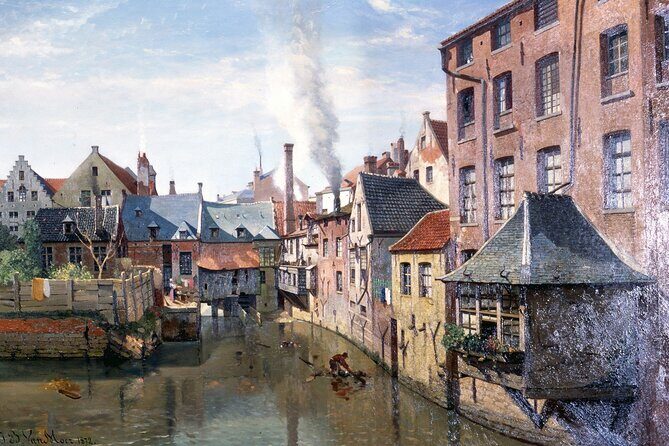
The final story stop is Place du Jardin aux Fleurs, centered on a villainous crime with unusual loot. Even the wording hints that this isn’t your standard pickpocket narrative. It’s memorable because the “prize” in the story seems odd enough to stand out.
This kind of stop matters for how you remember the tour. After you’ve processed a heavy, shocking case in Place Saint-Géry, an oddball crime can feel like a mental breather. Not because it’s less serious, but because it adds variety to the pattern of crime stories and what people found worth stealing, protecting, or obsessing over.
I also like that this stop keeps the walk from feeling like one long tragedy. It reinforces the idea that Brussels history includes different kinds of criminal behavior—passion crimes, older legend-linked fear, and public-sensation tragedies—all living side by side in the same city fabric.
Expect the story to land you right where the experience ends: Pl. Saint-Géry 1, in the center of Place Saint-Géry.
How the Guide Turns Dark Facts Into Context
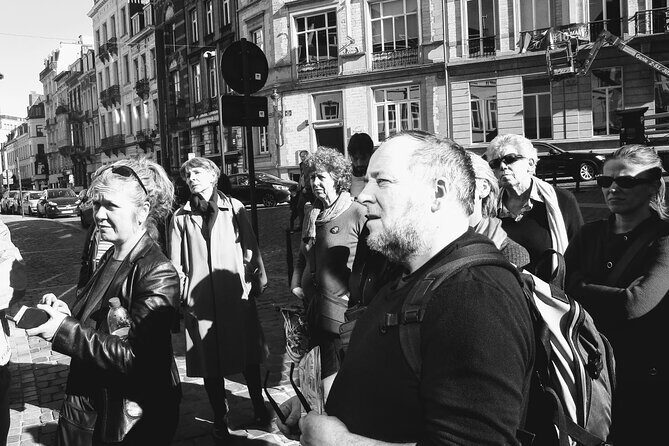
A tour like this lives or dies by the guide. Here’s what stands out from the strong feedback: the guide is described as friendly and professional, and able to captivate attention without turning the material into a mess.
More importantly, you don’t just get the crime. You get context—police, people, and the customs of different eras. That approach changes everything. Facts stick better when you understand the world that produced them.
One review also suggested adding a touch of theatrical elements—costumes or more interaction—like a more playful layer. I get the idea, but the current style seems designed to keep the tone respectful and factual. So if you want accuracy-first storytelling, you’ll likely appreciate the balance. If you crave loud theatrics, you may find yourself wishing for a bit more “stage” energy.
Price and Logistics: Why $23.26 Can Be Good Value
At $23.26 per person, you’re paying for guidance plus the time savings of having someone connect the dots between buildings and crimes. You could walk the area on your own, sure. But you’d be left piecing together separate plaques, street history, and whatever details you can find. A good guide saves you from that guesswork.
The value gets better because the tour is tightly scheduled: about 2 hours, with a small maximum group size of 25. Smaller groups help you actually hear and stay engaged, especially on story-heavy walks. And since it uses a mobile ticket, it avoids the friction of printed vouchers.
You also don’t need to budget extra for separate entry tickets at the stops, since the stops listed are admission ticket free. So the price mostly stays the price.
Who This Tour Fits Best (and Who Should Rethink It)
This is a strong match if you like:
- Walks that feel like a guided story trail through real neighborhoods
- History that includes social context, not just dates and monuments
- Central Brussels sightseeing where you learn while walking
It’s less ideal if:
- You want only light, upbeat city vibes
- You dislike crime narratives, especially when they’re described as violent
- You’re looking for a hands-on interactive show with costumes and crowd participation
Also, consider your pace. The tour is short, but it’s packed with stories. If you get mentally tired from heavy topics, take a breath, step back for a minute when needed, and let the next square settle before the next story.
Final Verdict: Should You Book Brussels, Scene of Crimes?
If you enjoy street-level history and you can handle darker subject matter with a respectful tone, I think this is a smart booking. You’ll get a focused 2-hour experience that uses central Brussels as your “timeline,” moving from Grand Place to Rue de l’Amigo, then to Devil’s Corner and on to Place Saint-Géry and Place du Jardin aux Fleurs.
The standout selling points for me are the guide quality—friendly, professional, and strong at adding historical context—and the fact that the crimes are tied to real addresses you can still see. For $23.26, it feels like good value because the tour prevents you from turning the city into homework.
If crime stories make you uncomfortable, skip it. If they don’t—and you want Brussels to feel more real and more human—this one’s worth your time.
FAQ
Where does the Brussels Crime Scenes tour start and end?
It starts at Rue de l’Etuve 1, 1000 Bruxelles, Belgium, and ends at Pl. Saint-Géry 1, 1000 Bruxelles, Belgium in the center of Place Saint-Géry.
How long is the tour?
The duration is approximately 2 hours.
How much does it cost?
The price is $23.26 per person.
Do I need admission tickets for the stops?
The stops are listed as admission ticket free, and the tour includes all fees and taxes.
Is there a mobile ticket?
Yes, the tour offers a mobile ticket.
How big is the group?
The tour has a maximum of 25 travelers.
Is public transportation nearby?
Yes, it’s near public transportation.
Is the tour suitable for everyone, and can service animals go?
Most travelers can participate, and service animals are allowed.
What is the cancellation policy?
You can cancel for a full refund if you do it up to 24 hours before the experience starts. After that window, the amount paid is not refunded.