REVIEW · ANTWERP
Private Antwerp’s Diamonds and Jewellery Old City Center Historic Tour
Book on Viator →Operated by De gouden straatjes · Bookable on Viator
Antwerp can feel like it runs on diamonds. This private 2-hour walk links jewellery-making streets to the people and institutions that built the city’s trade. The best part is how the route mixes landmarks with small workshops you’d normally walk past.
I especially like the atelier-style stops, including time inside studios where craft is the main event. I also like that the guide sets context first, so each street name and building detail makes sense once you’re standing there.
One possible drawback: it’s a walking tour with short stops and a few “look-and-learn” moments, so if you’re hoping for a heavy program of long museum time or lots of guaranteed inside visits everywhere, plan to be flexible.
In This Review
- Key highlights to know before you go
- Entering the diamond story at DIVA (before you start walking)
- Grote Markt: why the diamond trade crowds gather right in the square
- Wisselstraat and the word behind the money-changer era
- Saint Paul’s Church: the diamond treasury thread you can’t miss
- Zwartzustersstraat and Zirkstraat: from old shop layers to cutter history
- Inside Pascale Masselis: handcrafted 18-carat jewellery and remaking ideas
- Lange Koepoortstraat and the nation-house idea for goldsmiths
- Wijngaardstraat’s maker lane: multiple brands, different techniques
- Ending at Rembrandt Jodan: art-gallery energy meets goldsmith work
- Price and what you truly get for $234.93 per group
- Best uses for this tour: who will enjoy it most
- Practical tips for a smooth walk through the diamond district
- Should you book this Antwerp diamond and jewellery tour?
- FAQ
- How long is the Private Antwerp’s Diamonds and Jewellery Old City Center Historic Tour?
- What’s the price of the tour?
- Is the tour private?
- Where does the tour start and end?
- Is the tour offered in English?
- Do I need to buy museum tickets during the tour?
- Do I get a ticket for the tour?
- What should I know about weather?
- What’s the cancellation policy?
Key highlights to know before you go
- DIVA museum start sets the diamond-and-jewellery context right away, even if you only add the museum after
- A true old-city walk with focused stops tied to the diamond trade’s rise
- Silversmithing and church treasury stop includes a mention of a well-stocked treasury with 3,000+ diamonds
- Designer atelier access with visits like Pascale Masselis, where custom and remaking old pieces are part of the story
- Multiple jewellery makers in one lane around Wijngaardstraat, including artists and ring specialists
- Guides called out by name in feedback (Margaret, Vivien, Catherine, Maria) for pacing and tailoring your interests
Entering the diamond story at DIVA (before you start walking)
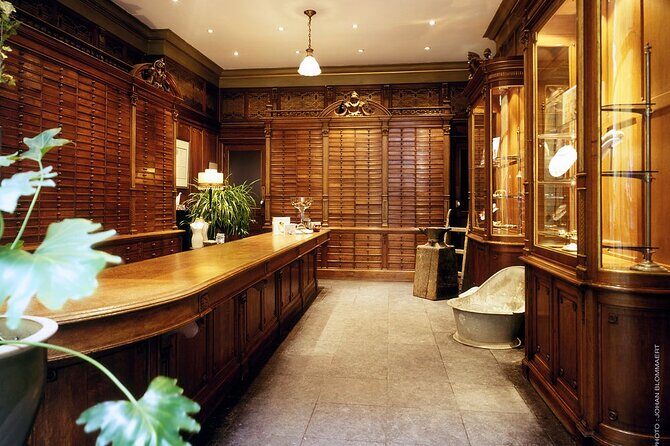
Your tour begins in front of DIVA (museum voor diamant, juwelen en zilver) on Suikerrui 17/19. Starting here matters. Before you move into the old streets, your guide anchors you in how Antwerp built a reputation around diamonds, jewellery, and silversmithing—then points your attention at what to notice as you walk.
Expect a short intro, then a move into the neighbourhood where today’s creative workshops sit near the trade routes and historic spaces tied to cutters, traders, and jewellers. You’ll also get a natural next step: after the walking portion, you can strongly consider visiting DIVA itself. The museum admission isn’t included, but the tour is clearly designed to make you want the extra context.
Practical note: this is the kind of stop where you’ll get the most value if you arrive with questions. Ask how “diamond” and “jewellery” connect in Antwerp, not just what the city is known for today.
You can also read our reviews of more city tours in Antwerp


Grote Markt: why the diamond trade crowds gather right in the square
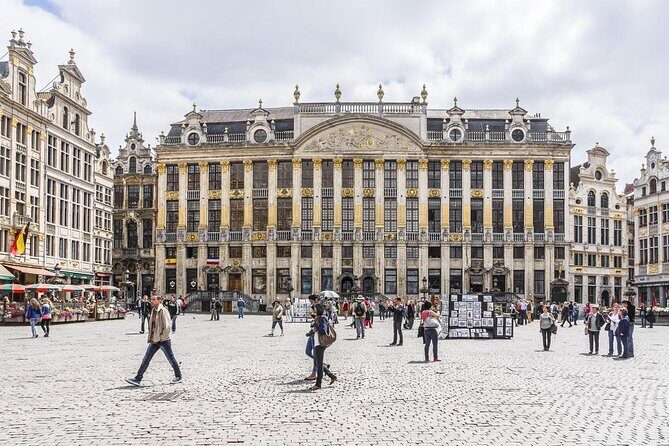
From DIVA, you head to Grote Markt, one of Antwerp’s most central squares. This stop is short, but it carries weight because it connects Antwerp’s rise to the diamond world’s trading rhythm.
Here’s the idea you’ll get from your guide: the city’s diamond capital reputation is tied to regular fairs where foreign merchants came to trade and buy gems and jewellery. Even if you don’t see “diamond business” in action the way you might imagine, your guide helps you read the square as a stage for commerce—one that makes Antwerp’s trade history feel real rather than abstract.
Drawback to consider: this is a quick stop (around 10 minutes), so it won’t replace a museum visit. It’s a “set the scene” moment to help you understand why the rest of the walk is worth it.
Wisselstraat and the word behind the money-changer era
Next is Wisselstraat, where your guide brings the trading world down to everyday details. The street name links directly to exchange and money-changing, and this is where the story turns from “shiny” to human.
You’ll learn that foreign buyers used to exchange their money here, and that the history wasn’t always glamorous. One of the most memorable elements is the connection between the area’s past and where the word Bankrupt comes from. It’s the kind of linguistic detour that makes a city feel smarter, not just older.
This stop is also a reminder: jewellery trade history includes risk, pressure, and sharp deals. If you like trade history as much as design, this is one of the best “wait, that changes what I think I know” moments on the route.
Saint Paul’s Church: the diamond treasury thread you can’t miss
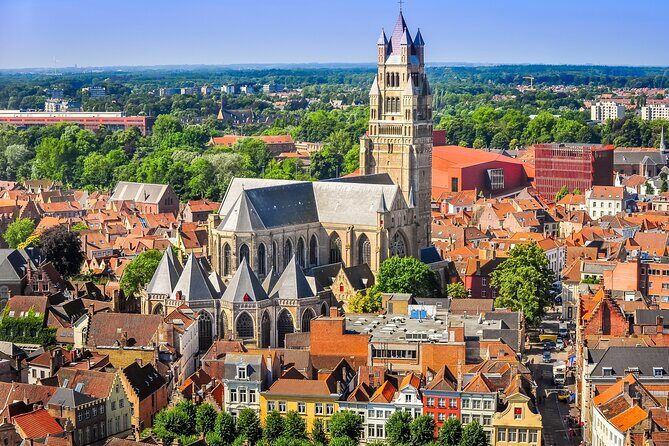
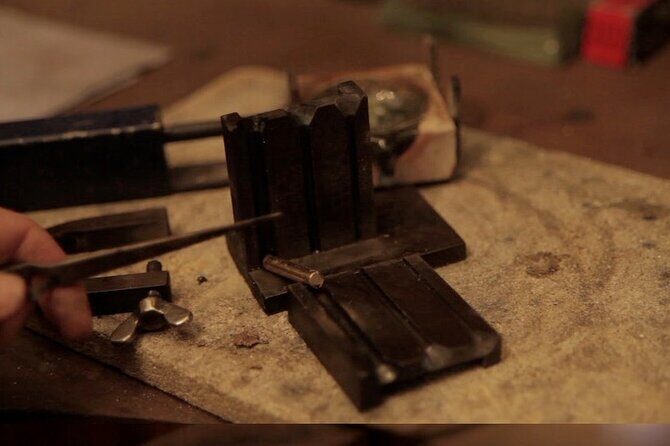
At Saint Paul’s Church, your guide ties jewellery to craftsmanship and institutions rather than just individual storefronts. The key detail is the church’s connection to silversmithing and jewellery—and the fact that it still boasts a treasury with over 3,000 diamonds.
This stop works well if you enjoy seeing how wealth and craftsmanship were stored, protected, and displayed through the city’s civic and religious spaces. It’s also a strong pause in the walk: your brain gets a break from street-level craft browsing and you absorb a bigger, slower idea of how Antwerp’s diamond world organized itself.
Consideration: it’s about 15 minutes, so treat it as “learn what matters here,” not a full deep dive into church collections.
Zwartzustersstraat and Zirkstraat: from old shop layers to cutter history
Two adjacent stops—Zwartzustersstraat and Zirkstraat—help you understand that Antwerp’s jewellery world wasn’t just a single street. It was a stacked system of activities.
In Zwartzustersstraat, the street looks like it’s for shopping now, but your guide explains how it used to function differently: jewellery shops on the ground floor and diamond cutters’ ateliers above. You’ll also hear it framed in plain terms—where the glitter happened below, and the real work (cutting) sat on another level of the city’s daily rhythm.
Then you move to Zirkstraat, where your guide points out that the first diamond cutter lived here in the 15th century. That’s a surprisingly early timestamp to anchor your imagination. Even a brief stop becomes meaningful when it connects you to the long timeline of Antwerp’s cutting craft.
Why this segment is valuable: it gives you spatial logic. Once you understand “shop level vs. workshop level,” you start seeing Antwerp as a working city, not just a design destination.
You can also read our reviews of more private tours in Antwerp




Inside Pascale Masselis: handcrafted 18-carat jewellery and remaking ideas
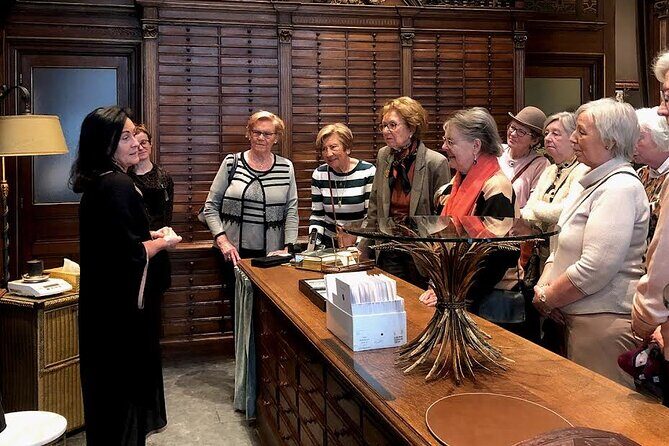
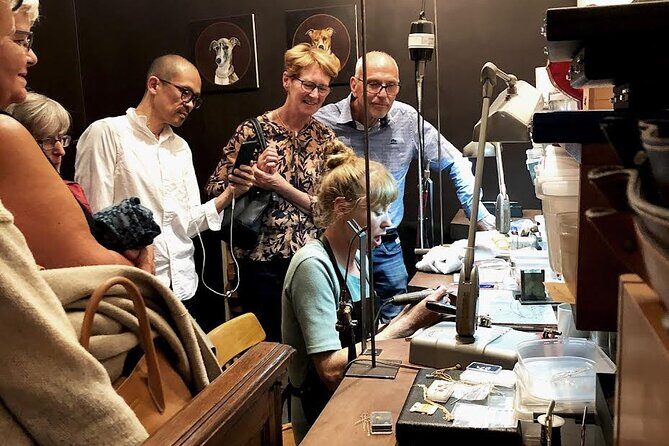
One of the most action-heavy stops is the atelier visit with Pascale Masselis. This is where the tour shifts from city history into the human scale of making.
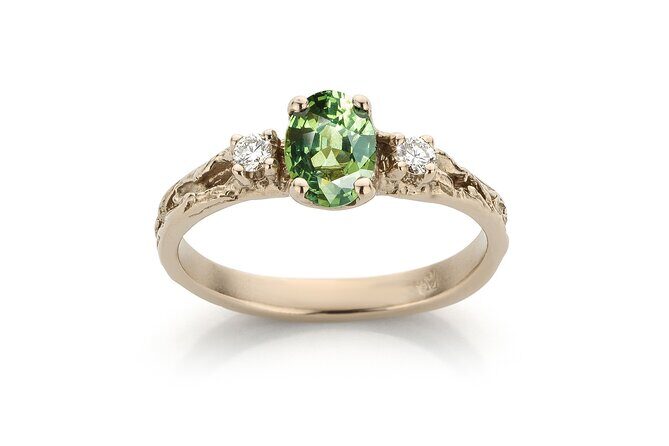
Your guide brings you into Masselis’s atelier, and you’ll learn she graduated from the Royal Academy of Antwerp in 1983. The craft details matter too: she works exclusively with 18 carat gold, and every piece is unique and handcrafted in her own studio. Your tour time also includes the idea that pieces can be made to order—plus a practical service concept: she can transform old, out-of-date jewellery into modern treasures.
What to expect: you’re not just viewing finished items. You’re hearing how someone builds a piece, how uniqueness is part of the process, and how “new” doesn’t always mean “buy new.”
Possible drawback: this stop can be more meaningful if you’re interested in personal design stories or remaking jewellery. If you only want history and zero interest in craft, you might find it slightly more “personal atelier” than “street history.” Still, it’s a highlight because it shows how Antwerp’s trade supports craft today, not just yesterday.
Lange Koepoortstraat and the nation-house idea for goldsmiths

At Lange Koepoortstraat, your guide introduces a historical structure with a specific purpose: it used to be the nation house of silver and goldsmiths. That phrasing might sound abstract, but your guide explains why a “nation house” was needed.
This is one of those moments where the tour connects craft to organization—how artisans, rules, and guild-like structures shaped the trade. It’s not just “people made jewellery.” It’s that they built systems around training, standards, and identity.
This stop is around 10 minutes, so it won’t overwhelm you with detail. It will, however, give you an important lens: Antwerp’s jewellery world relied on structure, not just talent.
Wijngaardstraat’s maker lane: multiple brands, different techniques
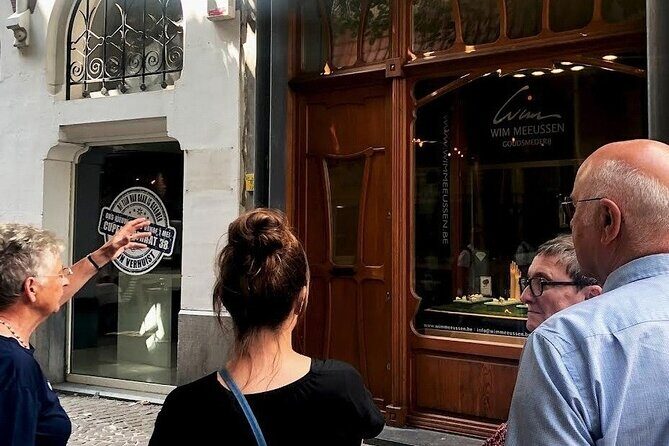
The tour’s longest street segment is Wijngaardstraat, and this is where you get a concentrated hit of contemporary jewellery makers. You’ll pass (and in some cases step into) spaces tied to distinct creative styles, training backgrounds, and production philosophies.
Here are the makers your tour highlights on this street:
- Gerda De Vrij: she studied in Pforzheim under Klaus Ullrich, described in the tour context as a pioneer for modern jewellery. After graduating, she settled in Antwerp and started her atelier with her then-husband, Emile Henry. The tour also notes their two daughters joined the business, helping the brand survive into the next generation.
- Wim Meeussen: known for a distinctive collection, especially wedding rings. The tour points out a flagship store plus a second location focused on silver jewellery, which your guide frames as a way to access the signature style across different budgets.
- Hanne Schoofs: she regularly seeks out new techniques so the collection keeps evolving rather than staying frozen.
- Eva Crauwels: an independent goldsmith for over 15 years, with a retro-romantic, feminine touch to her collection.
And the pace matters here: this section runs longer (about 20 minutes), which helps you actually register the variety. Antwerp isn’t one style. It’s a cluster of ways to build jewellery—some rooted in modern technique, some in tradition, some in reinterpretation.
Value for you: if you’re considering a purchase, this is where your taste gets a chance to form. If you’re not shopping, it’s still useful—you’ll leave with a clearer sense of what “Antwerp jewellery” means across different approaches.
Ending at Rembrandt Jodan: art-gallery energy meets goldsmith work
Your final stop is at Rembrandt Jodan on Wijngaardstraat 18 (listed meeting end as Rembrandt Jordan). The tour frames him as an artist and goldsmith with a multidisciplinary space that functions as an art gallery, atelier, and jewellery shop.
This closing stop is smart because it resets the tone. After absorbing multiple makers and techniques, you land at a space where craft, visual art, and sales exist in one room. It’s a nice final “this is how today’s jewellery world actually works” note—less museum, more lived-in creativity.
If you’ve got time after the tour, this is also a good spot to slow down. You’ll likely feel more confident reading pieces by then, because earlier stops gave you the historic “why,” and the atelier stop gave you the “how.”
Price and what you truly get for $234.93 per group
At $234.93 per group (up to 15 people) for about 2 hours, the tour’s real value is in the private format. You’re not paying per person for a fixed bus experience. You’re paying for a guide and a route designed to hit the right mix of context and craft.
When this works best: if you’re traveling as a small group of friends, a family, or even a couple plus a relative. Splitting the cost can make this feel like a high-quality, personalized history walk rather than a pricey “tour for two.”
What you should not expect: this isn’t a full day of museum time. It’s a focused old-city route with short segments and a key atelier visit. If you’re looking for hours of shopping breaks, you may want to add your own time after the tour.
On booking timing, the average booking window is 42 days in advance. That suggests you’ll want to reserve early if you’re traveling in peak periods or want a specific day.
Best uses for this tour: who will enjoy it most
This is a strong match if you like one (or more) of these:
- You’re into city history with a craft angle—where trade and design connect.
- You want atelier access, not just storefront photos.
- You enjoy a guide who can pace the tour around what your group cares about. In feedback, guides such as Margaret, Vivien, Catherine, and Maria have been named for being patient, adaptable, and engaging.
Families can also do well. One feedback note praised the guide for engaging kids aged 12 and 17, which usually means the tour doesn’t talk only in academic terms.
If you’re on a super tight schedule and only want the easiest sightseeing highlights, you might prefer a shorter tour. But if Antwerp’s jewellery scene matters to you, this route is built to give you a working understanding fast.
Practical tips for a smooth walk through the diamond district
A few simple things will make the experience feel effortless:
- Wear comfortable shoes. The route is a walking tour with several short stops.
- Bring questions about trade, not just design. The tour is set up to explain why streets and buildings have specific meanings.
- Plan extra time for DIVA if it’s open when you go. The tour starts outside DIVA and strongly encourages adding a museum visit. If DIVA is closed, you’ll still get the street story, but you lose that extra layer.
- If you’re interested in jewellery ideas, the atelier stop (Pascale Masselis) and the maker-heavy segment (Wijngaardstraat) are where you’ll get the most value for your money, even if you don’t plan to buy.
Should you book this Antwerp diamond and jewellery tour?
Book it if you want a private, craft-focused way to understand Antwerp beyond famous sights. The combination of old-city storytelling and designer atelier access is exactly what makes the tour feel more than a checklist walk.
Skip it or reconsider if you need a long museum day, a deep, technical explanation of diamond cutting logistics for hours, or a tour with lots of uninterrupted time inside multiple workshops. This experience is designed for smart pacing: short stops, clear context, and a few high-impact inside moments.
If you’re traveling soon, I’d book earlier rather than later—especially since the average booking lead time is about 42 days. And if your group cares about both history and what’s made today, this is one of the better-value ways to connect the two in just two hours.
FAQ
How long is the Private Antwerp’s Diamonds and Jewellery Old City Center Historic Tour?
The tour lasts about 2 hours.
What’s the price of the tour?
It costs $234.93 per group, for groups up to 15 people.
Is the tour private?
Yes. It’s a private tour for your group only.
Where does the tour start and end?
It starts at DIVA (Suikerrui 17/19, 2000 Antwerpen) and ends at Rembrandt Jordan/Jodan on Wijngaardstraat 18, 2000 Antwerpen.
Is the tour offered in English?
Yes, the tour is offered in English.
Do I need to buy museum tickets during the tour?
DIVA’s admission ticket is not included (10 minutes at the start). Stops like Grote Markt, Wisselstraat, Saint Paul’s Church, Zwartzustersstraat, Zirkstraat, Lange Koepoortstraat, and the jewellery and gallery spaces listed are described as free for admission.
Do I get a ticket for the tour?
You’ll receive a mobile ticket.
What should I know about weather?
This experience requires good weather. If it’s canceled due to poor weather, you’ll be offered a different date or a full refund.
What’s the cancellation policy?
Cancellation is free. You can cancel up to 24 hours in advance for a full refund.