REVIEW · BRUSSELS
Private Tour – Bruges and Ghent, our fairytale cities
Book on Viator →Operated by Brussels City Tours - Keolis Travel · Bookable on Viator
Ghent and Bruges in one day feels like magic. You’ll get a private route with a multilingual guide, so the medieval streets make sense as you walk, not just as photos. I especially like how the tour stitches the highlights together in a logical flow, and how so many stops have free admission so you spend time sightseeing instead of budgeting.
Two cities, two moods: Ghent has a student-energy vibe around its quays and cathedral area, while Bruges leans into canals, church towers, and stately squares. If you want the best odds of seeing both towns without getting stuck on timetables, this format is strong. One drawback to plan for: the day is mostly walking, and it’s not ideal if you struggle with steps or long distances.
In This Review
- Key things to know before you go
- A Private Ghent-and-Bruges Day That Actually Works
- Price and Value: What $57 Buys (and What It Doesn’t)
- Your Coach Ride From Brussels: Fast, Comfortable, Low-Stress
- Ghent First: The City of Quays, Towers, and University Energy
- Het Belfort van Gent (Ghent Belfry) as Your Orientation Point
- Graslei and Korenlei: The Leie River Quays
- St. Bavo’s Cathedral: Gothic Power and the Ghent Altarpiece
- Gravensteen: The Castle That Refused to Stay One Thing
- Saint Nicholas Church: One of Ghent’s Oldest Landmarks
- Switching to Bruges: Canals, Tower Views, and Church Squares
- Basilica of the Holy Blood: A Relic-Linked Stop
- Onze-Lieve-Vrouwekerk: The Tall Tower That Still Dominates
- Stadhuis (City Hall) in Burg Square: Where Bruges Sets the Mood
- Minnewater Lake and the Lovers Bridge: A Pause That Feels Like a Breather
- Ten Wijngaarde Beguinage: Quiet Faith in Brick-and-Green Form
- Free Time and the Bruges Canal Option You Can Use Smartly
- Logistics That Matter: Walking Pace, Radios, and When to Expect Crowds
- Who This Tour Fits Best (and Who Might Skip It)
- Should You Book Private Tour: Bruges and Ghent, Our Fairytale Cities?
- FAQ
- FAQ
- How long is the tour?
- Is this tour private?
- What languages are available for the guide?
- Does the tour include transportation from Brussels?
- Are the admissions included?
- Is food and drinks included?
- Will there be free time during the day?
- Can I book the canal tour in Bruges ahead of time?
- Do I need to bring my passport?
- What if I’m late to the meeting point?
Key things to know before you go
- Private group day: only your group rides together in a coach from Brussels
- Multilingual guide (English, French, Spanish): choose your language at booking
- Free entry at nearly every stop: most sites on the route are listed as free
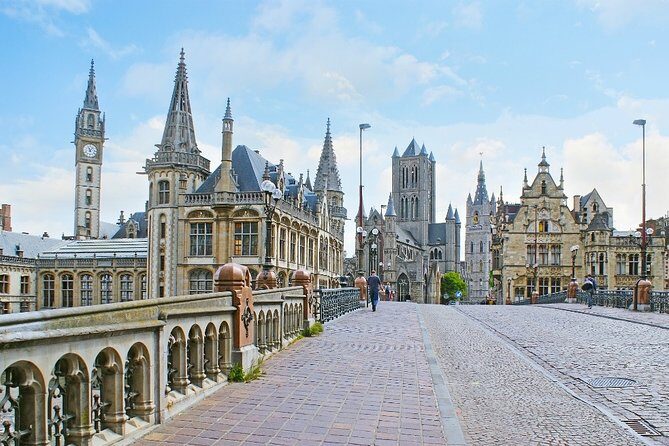
- Ghent’s skyline viewpoints: belfries, cathedral, and the famous Leie river quays
- Bruges at street level: church interiors, squares, and the beguinage zone
- Optional canal tour in Bruges: not included, booked with your guide the day-of
A Private Ghent-and-Bruges Day That Actually Works
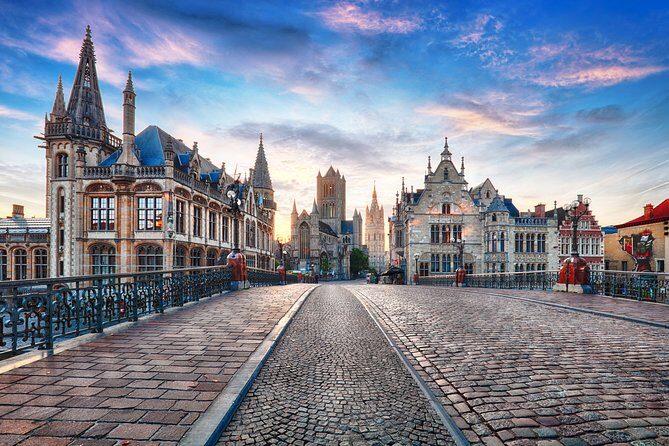
This is the kind of day trip that spoils you a little. Instead of bouncing between two cities on your own and losing time to directions, you follow a route designed to connect the top sights without feeling like you’re speed-running. It’s a private tour, so you’re not stuck reacting to random group pacing.
You start in the Brussels area and head out in an air-conditioned coach. That matters more than people think—especially if the day gets warm or you end up traveling between stops on a tight schedule.
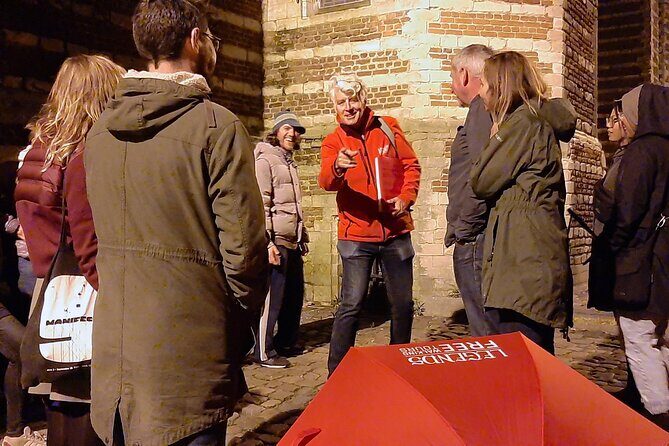
You also get a professional guide who keeps the story straight. That’s the difference between walking past a tower and understanding why it mattered, or knowing what you’re looking at inside a major church rather than just admiring the exterior.
You can also read our reviews of more private tours in Brussels
Price and Value: What $57 Buys (and What It Doesn’t)
$57 for about 10.5 hours is a bargain if you like two things: guided context and not paying entry fees all day. Almost every major stop on the route is listed with free admission, which is where this tour quietly earns its value.
What’s not included is the obvious one: food and drinks. You’ll have time to eat on your own, but you should budget for lunch or snacks separately. If you’re the type who needs a sit-down meal halfway through, plan that into your mental schedule.
Also, even with a private group, this is still a day built around walking. Comfortable shoes are a must, because the charm of these cities is at street level.
Your Coach Ride From Brussels: Fast, Comfortable, Low-Stress
The transport part is simple: you ride in an air-conditioned vehicle, with pickup offered as a convenience option. In practice, you’ll have a specific meeting point shown on your voucher and it’s near public transportation. So don’t treat this like hotel-to-hotel door service.
There’s another small but important detail: radios and earphones are provided when necessary. That helps you actually hear your guide, even when you’re walking through busy squares and near church exteriors where sound can get messy.
You should also be ready for a moderate fitness level. The tour is doable for many people, but it’s not designed as a mostly-sitting experience.
Ghent First: The City of Quays, Towers, and University Energy
Starting with Ghent makes sense. The city’s highlights cluster well, and the layout helps you build a mental map quickly—so later, when you switch cities, Bruges doesn’t feel like total whiplash.
Het Belfort van Gent (Ghent Belfry) as Your Orientation Point
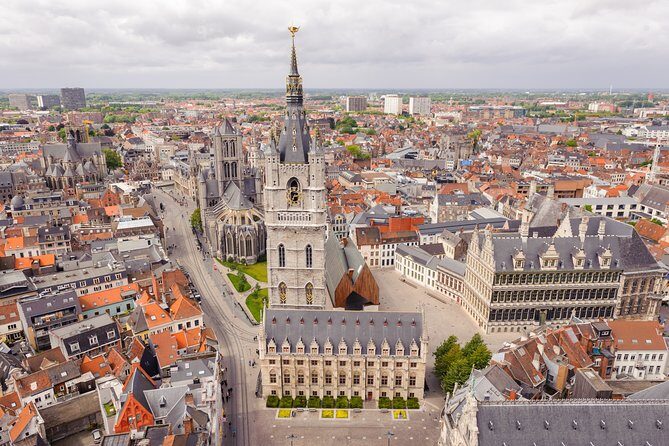
You’ll visit the 91-metre-tall belfry, one of three medieval towers that dominate Ghent’s skyline. It’s the kind of sight that instantly tells you the city was built to show civic pride, not just to look pretty.
Admission is free here, so you can focus on the experience rather than ticket logistics. It’s also a great stop for orientation because you’ll see how the tower relates to the broader old-center area.

Graslei and Korenlei: The Leie River Quays
Then you’ll walk the historic quays at Graslei and Korenlei along the Leie river. This is where Ghent’s medieval look becomes real-life scenery: waterline views, old façades, and that sense of a living city rather than a staged museum.
This stop is quick, but it’s the kind of quick that gives you photos and also gives you bearings. If you’re the kind of person who likes to wander afterward, this is a smart early anchor.
St. Bavo’s Cathedral: Gothic Power and the Ghent Altarpiece
Next comes St. Bavo’s Cathedral, an 89-metre Gothic cathedral that houses the well-known Ghent Altarpiece. Even if you don’t go deep into art history, the cathedral’s scale and purpose hit you fast.
Important planning note: access to the Mystic Lamb at St Bavo’s Cathedral isn’t possible on Sundays. If you’re traveling on a Sunday and that part matters to you, build your expectations around what will be accessible.
Admission is free, so it’s one of the easiest “yes” stops on the whole day.
Gravensteen: The Castle That Refused to Stay One Thing
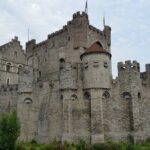
Gravensteen is Ghent’s stone memory. The castle dates to 1180 and it served as the residence of the Counts of Flanders until 1353, then got repurposed over the centuries as a court, prison, mint, and even a cotton factory.
That list of changing roles is more than trivia. It helps you read the building in layers instead of seeing it as only a medieval backdrop.
Saint Nicholas Church: One of Ghent’s Oldest Landmarks
You’ll also stop at Saint Nicholas Church, begun in the early 13th century as a replacement for an earlier Romanesque church. It’s not just about age; it’s about how the city kept rebuilding and refining its important religious spaces over time.
The timing is short, but the stop works because it keeps your “big sight” momentum going without turning the day into one long queue.
Switching to Bruges: Canals, Tower Views, and Church Squares
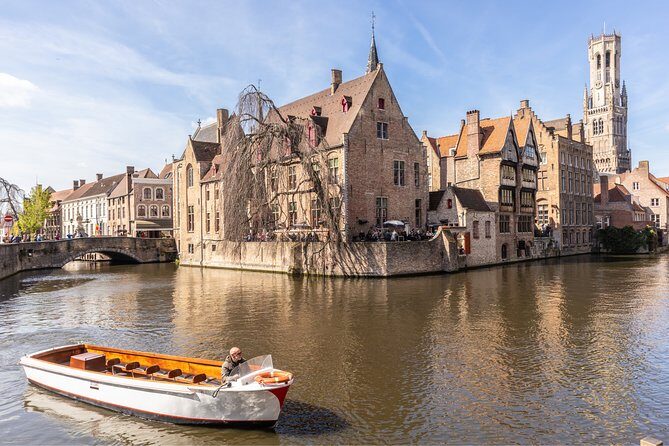
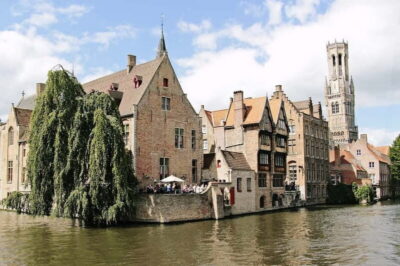
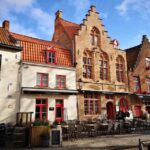
After Ghent, Bruges feels more compact and more storybook. The streets narrow, the atmosphere shifts, and you’ll notice how often churches and squares shape what you see next.
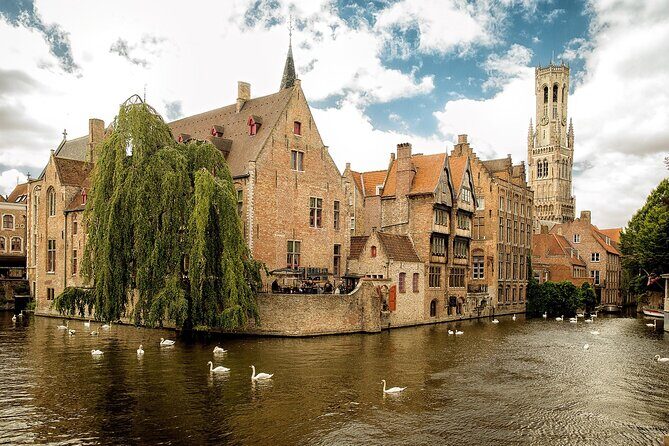
If Ghent is the city for riverfront life and civic pride, Bruges leans into heritage and the dramatic silhouette of church towers.
Basilica of the Holy Blood: A Relic-Linked Stop
In Bruges, you’ll visit the Basilica of the Holy Blood, a Roman Catholic basilica connected to a venerated relic of the Holy Blood. The church is associated with a story involving Joseph of Arimathea and a transfer from the Holy Land brought by Thierry of Alsace.
Admission is listed as free, and the stop is short. That’s a good way to experience something deeply significant without letting it consume your whole day.
Onze-Lieve-Vrouwekerk: The Tall Tower That Still Dominates
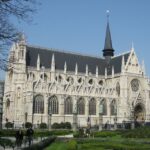
Next is Onze-Lieve-Vrouwekerk (Church of Our Lady). Its tower reaches 115.6 metres and is noted as the tallest structure in Bruges and the second tallest brickwork tower in the world.
The interior matters, but the tower is what your eyes keep catching as you move around. This is one of those stops that rewards you for looking up, then walking a few steps and looking up again.
Stadhuis (City Hall) in Burg Square: Where Bruges Sets the Mood
You’ll then reach the Stadhuis at Burg Square, the political center of Bruges and located where a fortified castle stood in the city center. It’s one of those places where architecture lovers can’t help but notice the variety of styles around the square.
The timing is brief, but it gives you a “center of gravity” point for the city.
Minnewater Lake and the Lovers Bridge: A Pause That Feels Like a Breather
Then you’ll head to Minnewater Lake, called the Lake of Love, with the Lovers Bridge nearby. It’s a small romantic pocket inside the city, and it’s timed as a short stop—just enough to slow down and reset your legs.
This is also a nice contrast after church-heavy sightseeing. You get water views and open space, which helps your brain switch gears.
Ten Wijngaarde Beguinage: Quiet Faith in Brick-and-Green Form
The Princely Beguinage Ten Wijngaarde is the only preserved beguinage in Bruges. No beguines live there now, but since 1927 it functions as a convent for Benedictines.
Even if you don’t know the beguinage concept, you’ll feel the difference in pace. It’s a calmer corner that gives the day balance instead of stuffing in one more big attraction.
Free Time and the Bruges Canal Option You Can Use Smartly
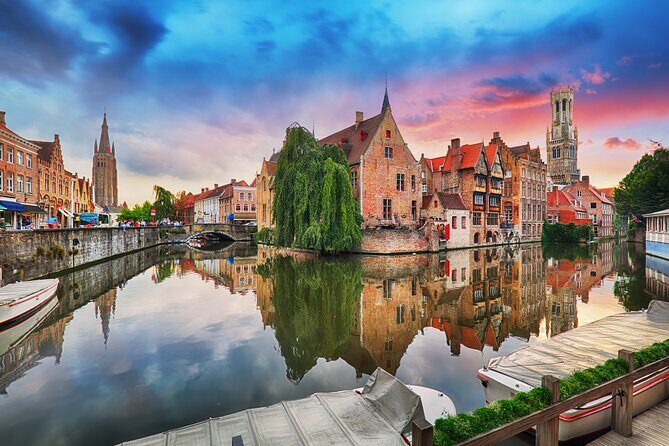
The tour builds in free time. That’s one of the best parts of this format, because you can adjust based on your energy level and interests. If your group wants to shop, people often use the open slots to browse—especially around central areas.
One optional add-on is the canal tour in Bruges. You’ll have time for it, but it’s not included, and it can only be booked with your guide on the day of your trip. So if you want that canal experience, keep your schedule flexible and ask your guide at the right moment so you don’t miss the timing.
Logistics That Matter: Walking Pace, Radios, and When to Expect Crowds
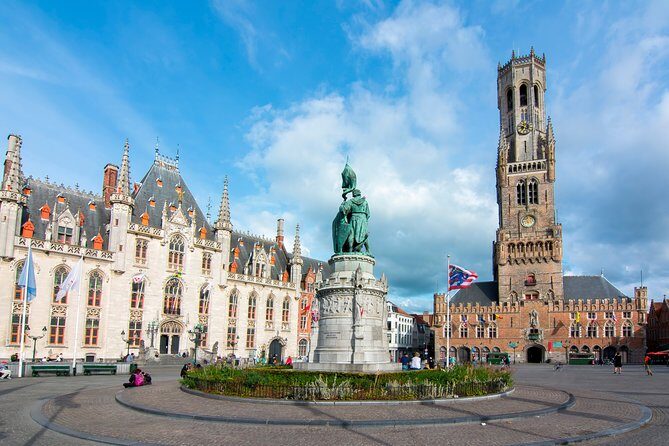
This is a full-day route with many short stops. That means you’ll keep moving, even though each attraction doesn’t swallow the entire visit time. If you’re prone to getting sore legs, plan to take it slower than you think you should once you’re in Bruges.
Crowds can also be part of the equation in these cities, especially in the central areas and around the most photographed church-and-square zones. Having a guide and radios helps you keep your bearings and avoid wasting time trying to re-find the next stop.
On the equipment side, the coach is air-conditioned, and the guide system with radios helps communication stay smooth.
Who This Tour Fits Best (and Who Might Skip It)
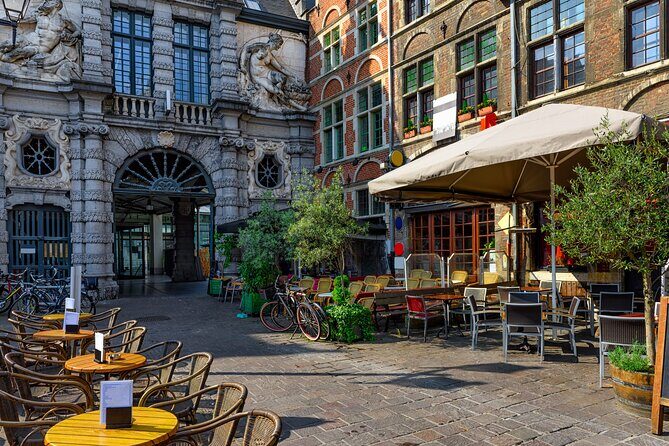
This tour is ideal if you want both Ghent and Bruges in one trip and you don’t want to juggle transportation and timing yourself. You’ll likely enjoy it most if you like walking through historic streets and you appreciate a guide explaining what you’re looking at.
It’s also a good pick for people who want flexibility through short personal breaks. You get included sightseeing, plus breathing room to handle your own priorities.
If you need a fully wheelchair-friendly or very low-walking setup, note that the tour is not recommended for individuals with disabilities or difficulty walking. Also, you should have a moderate fitness level due to walking distances and the nature of city streets.
Should You Book Private Tour: Bruges and Ghent, Our Fairytale Cities?
Yes, if you want a smooth, guided “two-city” day with most major sights covered and free admissions listed across the route. The $57 price can feel like you’re paying mostly for transport and interpretation, while the free-entry stops take pressure off your budget.
Book it especially if you’re short on time in Belgium and you want more than one iconic city without spending half your day on transit planning. The route also makes it easier to compare the two towns: Ghent’s civic-and-river energy first, then Bruges’ tower-and-canal atmosphere.
Think twice if you’re expecting lots of long lunch breaks or a relaxed pace with minimal walking. This is a day for people who like to keep moving, see a lot, and then make use of the free time when you’re ready.
If your Sunday plans include St. Bavo’s, remember that Mystic Lamb access isn’t possible on Sundays, so adjust what you hope to see inside.
FAQ
FAQ
How long is the tour?
The tour runs for approximately 10 hours 30 minutes.
Is this tour private?
Yes. It is a private tour/activity, so only your group participates.
What languages are available for the guide?
The guide can run the tour in English, French, or Spanish.
Does the tour include transportation from Brussels?
Yes. The tour includes an air-conditioned vehicle, and transportation from Brussels is part of the experience.
Are the admissions included?
Most of the listed stops show admission as free. The Bruges canal tour is not included.
Is food and drinks included?
No. Food and drinks are not included.
Will there be free time during the day?
Yes, you’ll have free time on the excursion. The amount can vary depending on the specific tour day plan, and your guide can share details on-site.
Can I book the canal tour in Bruges ahead of time?
No. The canal tour can only be booked with your guide, on the day of your trip.
Do I need to bring my passport?
There are no border controls inside the Schengen Area, but it’s advised to carry an ID at all times.
What if I’m late to the meeting point?
The provider can wait for 5 minutes if you let them know in advance about your delay.