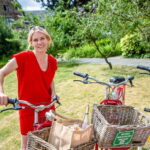
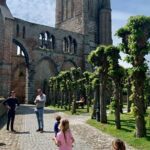
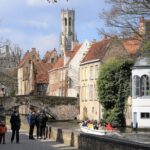
Bruges changes when you pedal. You get an easy, guided loop through the old harbour city, hitting the big squares and then cutting toward calmer streets where locals actually hang out. I like this setup because it mixes guided stops with the freedom to actually ride through Bruges.
Two things I especially like: first, the guide angle. On this tour you’ll get a well-spoken local who doesn’t just recite facts, they share practical advice for your time in town, plus stories that make places feel lived-in. Second, it’s a smart way to socialize with other sightseers who are into the same slow-travel mindset, which keeps the ride lively without turning it into a race. (I’m also seeing plenty of love for guides like Jost and Peter.)
One drawback to consider: this is not for anyone who can’t cycle. And if the weather is wet, cobblestones can be slippery—one review flagged a bike issue tied to brake/saddle problems, which is a good reminder to do a quick safety check before you roll.
In This Review
- Key Points at a Glance
- Getting Rolling in Bruges: Why This Bike Tour Works So Well
- Price and Value: What You’re Really Paying For
- The Local Guide Factor: Stories, Humor, and Real Advice
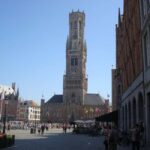
- Burg & Market Square: The Start of Bruges at Full Volume
- Church of Our Lady: More Than a Photo Stop
- The Bougienage: Canal-Quiet Bruges You’ll Remember
- Windmills and the Ride Pace: Comfortable, Not Exhausting
- Cobblestones and Bike Comfort: Safety First, Always
- Tips You’ll Actually Use After the Tour
- Timing and Weather: How to Plan Your Day Around It
- Who This Tour Suits Best (and Who Should Skip It)
- Should You Book This Bruges by Bike Tour?
- FAQ
- What is the duration of the Bruges by bike tour?
- What time does the tour start?
- Where does the tour meet, and where does it end?
- How much does it cost per person?
- Is a bike included in the price?
- Is the tour offered in English?
- Are coffee or bottled water included?
- Do I need to be an experienced cyclist?
- What’s the cancellation policy?
- How will I receive my ticket?
Key Points at a Glance
- Bikes are included, so you don’t waste time or budget on rentals
- Local guide tips for the rest of your Bruges day and beyond
- Stops include Burg & Market Square, Our Lady’s Church, the Bougienage, and windmills
- You’ll ride at a comfortable pace with breaks for photos and explanation
- It’s a strong way to see more than walking, especially in a compact, cobbled city
Getting Rolling in Bruges: Why This Bike Tour Works So Well
Bruges is the kind of city where walking can feel like it takes forever, mostly because you keep stopping to look at everything. Cycling flips that. In about 2 hours 30 minutes, you cover a lot of ground while still taking the time to understand what you’re seeing.
The tour starts at Predikherenstraat 28 (10:00 am) and ends back there, so you’re not juggling transport or worrying about where you’ll end up. You’ll also get a mobile ticket, which is handy if you’re bouncing between museums, chocolate shops, and canals.
One of the smartest parts here is the rhythm. You’re not just being herded from one photo spot to another. You’ll ride through the inner city, stop to learn, then ride again. That mix matters in Bruges because the “wow” moments come in bursts—squares, churches, canal corners—then you need those short stretches where you can simply move through the town.
You can also read our reviews of more cycling tours in Bruges
Price and Value: What You’re Really Paying For
At $50.79 per person, this isn’t a bargain tour in the bargain-tour sense. But it’s good value in the way that counts: you’re paying for a local guide, a set route with meaningful stops, and bike use included.
Here’s the practical tradeoff: if you had to rent a bike on your own, you’d likely spend time booking, picking it up, dealing with gear, and figuring out where to go. This tour handles the bike side and gives you the structure, including stops like Burg & Market Square and the Church of Our Lady—places you’ll want to understand, not just glance at.
Drinks aren’t included (coffee/tea and bottled water are not listed as included). That actually gives you control. If you want coffee, you can grab it during a warm-up or break. If you prefer plain water or tea, you’ll know what to budget. One of the guides’ stop patterns seems to include a place to warm up, and that came up in the feedback, but you should plan on paying for your own drink.
Bottom line: the price makes sense when you treat this as an orientation plus highlights tour, with the added benefit of local tips you can use right away.
The Local Guide Factor: Stories, Humor, and Real Advice
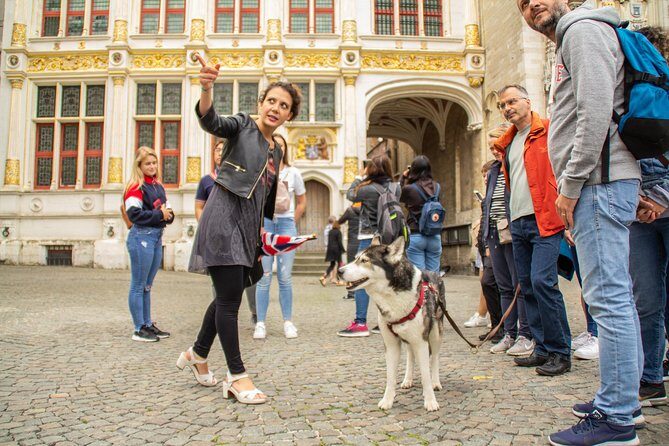
What makes this tour feel different from a basic “look at that building” walk is the guide personality. Several reviews call out guides like Jost and Peter as funny, friendly, and genuinely into Bruges. That matters because Bruges can be visually perfect but emotionally flat if you only read plaques.
On the ride, you’re not just hearing history. You’re getting context about daily life—how the city works now, how locals think about the old harbour identity, and what’s worth your time when you’re not on the tour. That is one of the most useful souvenirs you can bring back: a list of places to hit next, plus a sense of what to skip.
A specific example from the feedback: people loved the way the guide seemed to bring Bruges to life even in cold weather, with a tone that kept the ride enjoyable rather than stiff. Another review highlighted a history professor calling the guide accurate and engaging, which is basically your reassurance that the information is measured and not just vibes.
If you want a tour where you come away thinking, I can navigate this city better now, this is that.
Burg & Market Square: The Start of Bruges at Full Volume
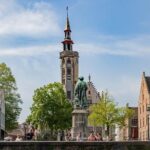
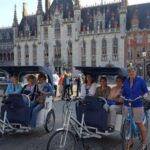
Your route includes Burg & Market Square, and this is a sensible place to begin because squares are Bruges’ social engine. You’ll see grand architecture and a sense of the city’s authority—what used to matter politically and commercially.
What I like about starting here (even if you arrive already knowing you want photos) is that the guide can give you the “why” behind the look. Bruges doesn’t feel like one monument; it feels like a system. Squares connect that system. From there, you’ll ride into the next layers of the city with a clearer mental map.
Possible drawback: squares can mean open space and wind. If you’re sensitive to cold or heat, plan your layering for stops like this. Since the tour is about 2.5 hours, you’ll want to stay comfortable during those pauses so you don’t rush the learning part.
Church of Our Lady: More Than a Photo Stop
Next up is the Church of Our Lady. Churches in Bruges are not just impressive. They’re anchors. Even if you don’t get into every detail, seeing the church at the right point in the route helps you understand why the city’s shape feels the way it does.
This stop tends to work well on a bike tour because it breaks the ride without breaking your momentum. You’re not sprawled on a bench losing the plot. You stop, learn what you’re looking at, then you roll forward again.
In practical terms: if you want to photograph well, bring an eye for angles. Bike tours typically place you at vantage spots where you can take pictures without forcing you to fight through crowds. And that connects to one of the most praised themes here: guides show you favorite spots away from the densest tourist flow.


The Bougienage: Canal-Quiet Bruges You’ll Remember
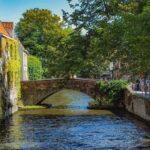
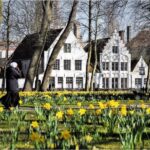
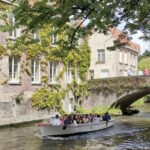
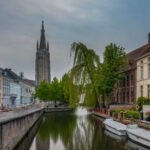
One of the most interesting scheduled stops is the Bougienage. Even if you know Bruges from postcards, canal neighborhoods like this are where the city feels more intimate. The setting gives you a different mood than the big squares, and that mood shift is part of what makes this tour effective.
Why this stop matters: Bruges isn’t just monumental. It’s lived-in. The canal-side detail helps you picture the city’s harbour roots in an everyday way, not a museum way.
Also, this is where the bike format helps again. You’re not walking linearly through the city. You’re circulating. That means you can look around from different angles without feeling like you’re backtracking over the same cobblestones.
If you’re the type who wants a mix—one or two “big names,” plus quieter corners—this is one of the places that delivers.
Windmills and the Ride Pace: Comfortable, Not Exhausting
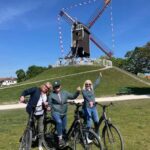
The tour also includes windmills. Windmills in the Bruges orbit are a classic visual cue, and they tend to add a sense of history tied to the city’s old industries and landscape. On a bike tour, they’re useful because you experience them as part of your journey, not just as a distant target.
The pacing is one of the reasons this tour earns such high scores. Several notes point to a ride that isn’t too strenuous, with lots of short stops for discussion. That also means you can keep your attention on the story, rather than on surviving the cobbles.
Still, I’d keep one consideration in mind: cobblestones exist, and that means your comfort depends on bike setup and your own cycling comfort. Which brings us to a key practical topic.
Cobblestones and Bike Comfort: Safety First, Always
Bruges is cycle friendly, but cobblestones can be a test even on a good day. This tour is designed for regular cyclists, and it’s clearly not recommended if you can’t cycle. If you’re comfortable riding on uneven surfaces, you’ll probably feel in control for the entire loop.
A key lesson from the feedback: bike condition matters. One review described problems with the brake and a saddle that felt unstable, resulting in an unsatisfactory ride. The provider responded apologetically, saying they try to maintain bikes well but that the issue slipped attention. That’s a rare but important reminder.
Before you start, do a simple check:
- Test the brakes lightly.
- Check that your saddle feels stable.
- Make sure your bike fits you well enough that you can pedal comfortably over short rough stretches.
If it’s wet, be extra cautious. Even if everything is maintained, slick cobbles can change how the bike feels. Your guide can usually help you get sorted quickly, but you don’t want to wait once you’re rolling.
Tips You’ll Actually Use After the Tour
One of the most practical parts of this experience is that your guide is positioned to help you right after the ride. You’ll get tips for the rest of your trip, and that can save real time later—especially if you’re deciding between a few competing day plans.
This matters because Bruges can tempt you into over-scheduling. The best tours don’t just show highlights; they help you pick what comes next. That’s exactly what this one aims for with local stops and off-crowd favorite spots.
And you’ll also come away with a sense of how the city flows—where you can wander and where you might want to head next. That mental map is gold if you’re trying to hit museums, food spots, and canal areas without crisscrossing constantly.
Timing and Weather: How to Plan Your Day Around It
The start time is 10:00 am, and the tour lasts about 2 hours 30 minutes. That makes it a strong “first half of the day” activity. You’ll still have plenty of time afterward for walking, checking out a museum, or doing a chocolate-and-coffee crawl.
Weather matters. This experience requires good weather, and if it’s canceled due to poor conditions you’ll be offered a different date or a full refund. The tour being bike-based means you should think of it as dependent on rideable conditions, not just typical city sightseeing.
If you’re traveling in cooler months, bring layers. A few of the most positive notes specifically mention cold weather but still highlight how enjoyable the tour felt because the guide kept the vibe upbeat and the stops were well paced.
Who This Tour Suits Best (and Who Should Skip It)
This tour fits best if you want:
- A guided highlights route without the stress of bike logistics
- A local voice with practical advice, not just facts
- A social-but-not-chaotic group vibe
- A comfortable pace with frequent stops for learning and photos
It’s also a great match if you’re curious about both grand sights and quieter areas like the Bougienage.
You might skip it if:
- You can’t cycle confidently (it’s explicitly not recommended for non-cyclists)
- You’re dealing with limited mobility or balance issues over cobblestones
- You’re arriving with a strong need for fully independent pacing (the guided stops are part of the value)
Should You Book This Bruges by Bike Tour?
If you want an efficient, local-led way to see Bruges without spending your brainpower on routes, bikes, and crowd navigation, I’d book this. The 98% recommendation rate and a 4.9 rating aren’t just numbers—people are consistently praising guides like Jost/Joost, Peter, and Kim for humor, knowledge, and a real love for the city. Add in bike use included, plus classic stops like Burg & Market Square and the Church of Our Lady, and you get a solid half-day plan that pays off immediately.
The only real reason to hesitate is bike comfort and weather. Check that you can ride, and if conditions look sketchy, go into it with caution. If that’s all good, this is an excellent way to get your bearings fast and start enjoying Bruges like a local.
FAQ
What is the duration of the Bruges by bike tour?
It lasts about 2 hours 30 minutes.
What time does the tour start?
The start time is 10:00 am.
Where does the tour meet, and where does it end?
You meet at Predikherenstraat 28, 8000 Brugge, Belgium, and the tour ends back at the same meeting point.
How much does it cost per person?
The price is $50.79 per person.
Is a bike included in the price?
Yes. Use of bicycle is included.
Is the tour offered in English?
Yes, it’s offered in English.
Are coffee or bottled water included?
No. Coffee and/or tea and bottled water are not included.
Do I need to be an experienced cyclist?
Most travelers can participate, but it’s not recommended for travelers who can’t cycle.
What’s the cancellation policy?
You can cancel for a full refund up to 24 hours before the experience starts. Changes within 24 hours aren’t accepted, and weather can affect whether the tour runs.
How will I receive my ticket?
You’ll get a mobile ticket, and you should receive confirmation at the time of booking.