REVIEW · BRUSSELS
Brussels: 2-Hour Walking Tour of the Historic Center with a Local Guide
Book on GetYourGuide →Operated by Free Tour Europe · Bookable on GetYourGuide
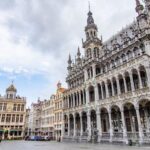
A square so famous, you’ll feel it fast. This 2-hour historic center walk turns Brussels landmarks into a simple story you can follow, from the Grand-Place to the views at Mont des Arts. I especially like the stop-by-stop rhythm (you always know what you’re looking at) and the fact the guide focuses on clear, concrete details like the Stock Exchange and comic culture. One thing to consider: this is Spanish-first guidance, so if you need English, this may feel slower than you want.
You’ll get a practical way to see the city without bouncing between buses and tickets. The route is built around iconic photo points plus one fun cultural detour: Delirium Café. Expect mostly standing and short walks between stops, with no museum entrances included.
Key moments to watch for
- Grand-Place: learn what you’re seeing around the City Hall, not just take photos.
- Tintin Comic Mural: a quick stop that connects Brussels to Belgium’s pop culture.
- Manneken Pis: the story behind the city’s irreverent reputation.
- Delirium Café: a beer-themed pause tied to Belgium’s brewing tradition.
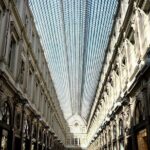
- Galeries Royales Saint-Hubert: a 19th-century covered arcade you can enjoy without fighting crowds.
- Mont des Arts: panoramic viewpoints plus key cultural institutions on a hill with a 1910 fair legacy.
In This Review
- A Two-Hour Route That Actually Helps You Understand Brussels
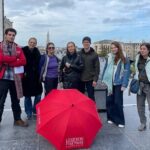
- Start at Grand-Place by City Hall Door, Umbrella in Hand
- Tintin Comic Mural Stop: A 10-Minute Hit of Belgian Pop Culture
- Manneken Pis: More Than a Photo, With a 15-Minute Story
- Stock Exchange Square (Bourse): Architecture Details You Can Actually Notice
- Delirium Café: Beer-Spotting With a Real Brewing Story (15 Minutes)
- Saint-Hubert Royal Galleries: A 19th-Century Arcade Worth Slowing Down For
- Mont des Arts Panoramas: World’s Fair Legacy and a 360-View Moment
- Spanish-Only Guidance: How to Use It Without Stress
- Price and Value: Why This Feels Like a Smart Budget Move
- Who Should Book This Brussels Historic Center Walk
- Should You Book This Tour?
- FAQ
- What’s the meeting point for the Brussels walking tour?
- Where does the tour end?
- How long is the tour?
- What language is the guide?
- What are the main stops on the walk?
- Are museum tickets or entrance fees included?
- Does the price include meals or drinks?
- Is public transportation included?
- Can I bring a stroller or a bike?
- Is there a cancellation option?
A Two-Hour Route That Actually Helps You Understand Brussels
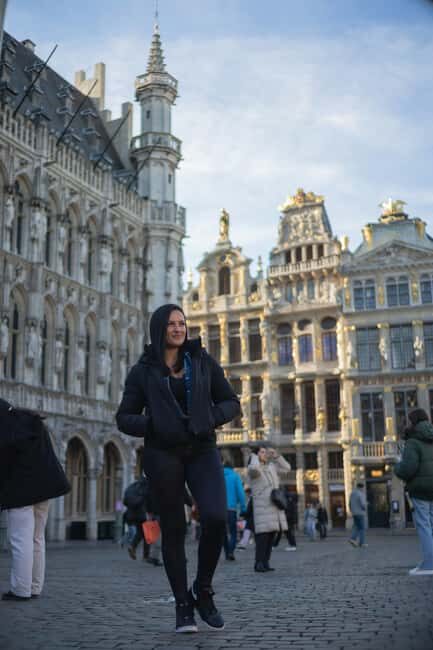
Brussels can feel like two cities in one: grand squares and serious architecture on one hand, and cartoons, beer, and everyday street life on the other. This tour handles that mix in a tight 2-hour format. The best part is the pacing. You get enough time at each stop to register the details, but not so much that the route drags.
If you’re doing Brussels for a day, you also need a mental map. This walk builds one fast: it strings together the city’s most recognizable sights in a way that makes later exploring easier. And since it’s on foot, you’ll notice street-level scale and how buildings relate to each other, which you miss when you only ride.
One practical note: it’s a walking tour. Comfort matters. If you’re the type who hates even short stretches, plan for it. The route includes multiple landmark clusters close together, but you’ll still be walking the whole time.
Start at Grand-Place by City Hall Door, Umbrella in Hand
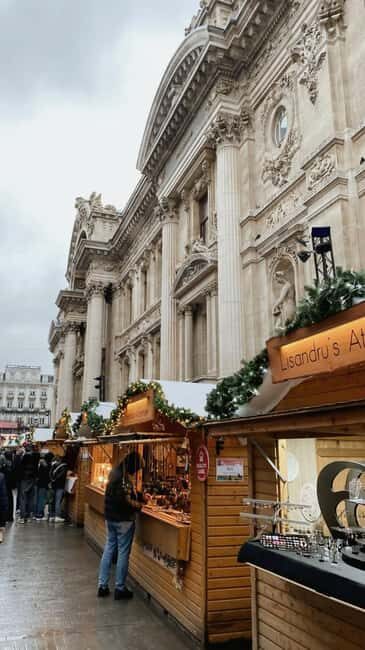
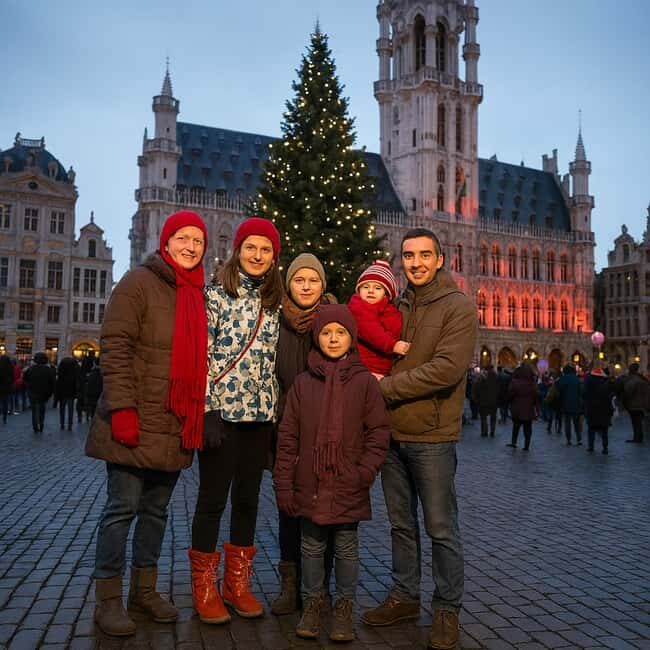
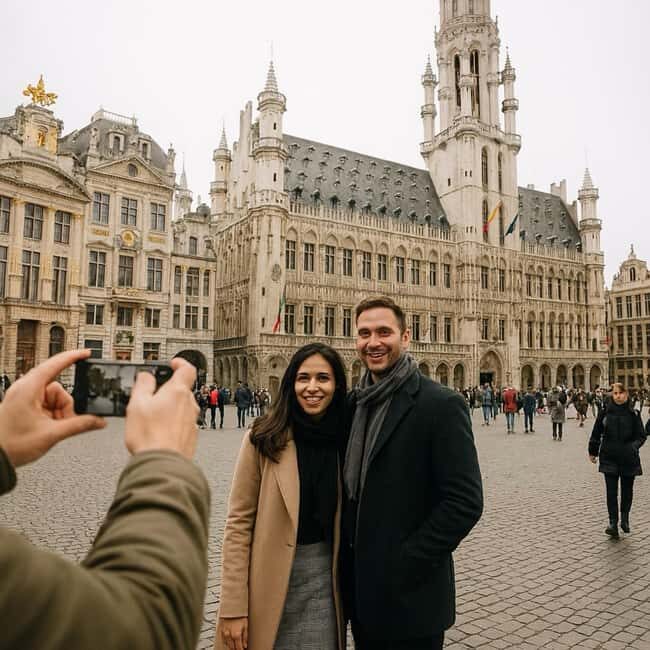
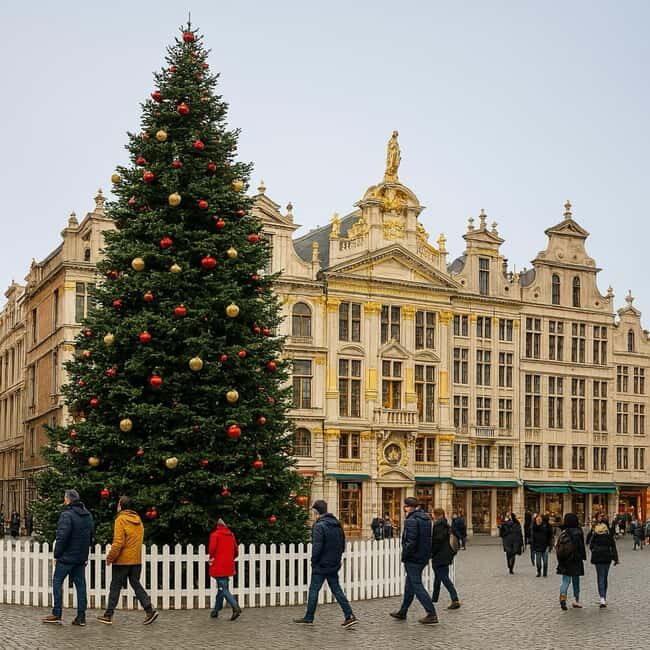
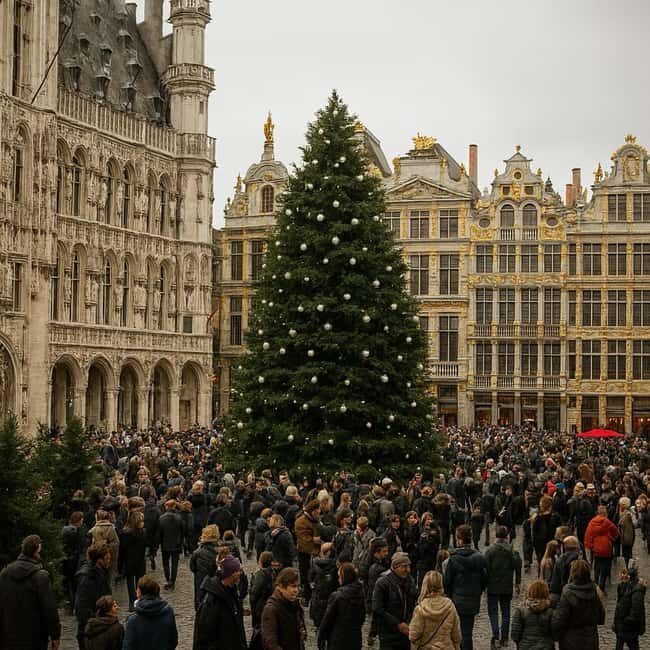
Your tour begins at Grand-Place, at the main door of the City Hall. This matters more than it sounds because Grand-Place is packed and visually chaotic. If you show up late, you’ll lose time sorting out where your group is.
Here’s the tip you’ll want: look for an umbrella with the colors black, yellow, and red, the Belgian flag. Arrive at least 10 minutes early so you’re not standing in the middle of the square trying to match up faces with umbrellas.
This start also sets the tone. Grand-Place isn’t just pretty; it’s a blueprint for why Brussels looks the way it does—tight blocks, ornate facades, and a sense that the city takes pride in public space. Once you’ve oriented yourself here, the rest of the walk feels like a guided zoom-out.
You can also read our reviews of more walking tours in Brussels
Tintin Comic Mural Stop: A 10-Minute Hit of Belgian Pop Culture
After Grand-Place, you’ll head to the Tintin Comic Mural for about 10 minutes. This is a short stop, but it works because it’s not random. Comics in Belgium aren’t a side hobby; they’re part of how the country connects art to identity.
In a practical sense, this stop does two things:
- It breaks up the heavier architecture moments without losing context.
- It gives you a reference point you can recognize later while wandering.
If you’re a Tintin fan, you’ll likely enjoy the fast, focused framing. If you’re not, it still helps, because you’ll learn how pop culture can be used as a lens for reading a city. Sometimes that’s the difference between seeing murals as decoration and seeing them as meaning.
The only downside is time. It’s brief by design. So if you want a long look or extra photos, you’ll need to come back later on your own.
Manneken Pis: More Than a Photo, With a 15-Minute Story
Next up is Manneken Pis, with about 15 minutes of guided time. Yes, it’s famous. But the value here is that the guide doesn’t treat it like a mere landmark sticker. You’ll get the story behind its reputation for irreverence, and that changes how you see the statue.
What I like about this kind of stop is the way it teaches you city attitude. Brussels is not all stiff grandeur. Even its most recognizable icons have a playful edge. Manneken Pis fits that perfectly.
At this stage in the tour, you’ll also learn how to look. Instead of just spotting the figure, you start noticing the relationship to the surrounding streets and the way people gather around it. That matters because later, when you’re exploring independently, you’ll know where the city’s natural “meeting points” are.
If you’re sensitive to crowds at popular monuments, plan for it. This stop is a magnet. The tour timing helps, but you still may share space with other visitors.
Stock Exchange Square (Bourse): Architecture Details You Can Actually Notice
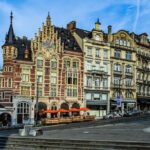
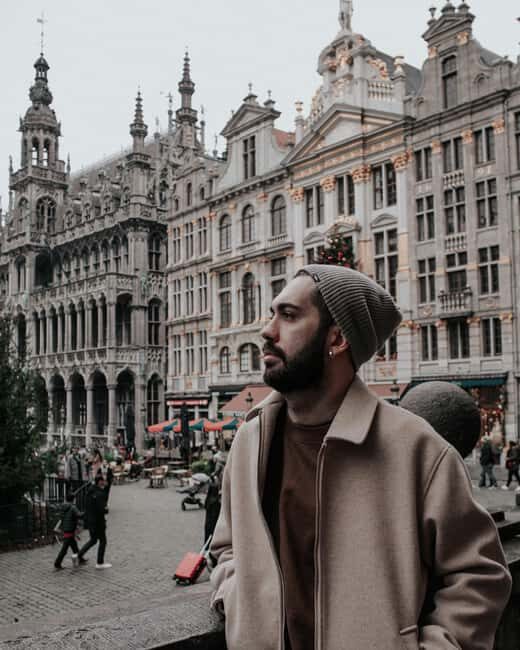
Your route then brings you to Bourse, Brussels for about 15 minutes. The tour focuses on the Stock Exchange Square and its architecture. This is a smart choice because it gives you a high-impact “Brussels looks like this” moment without requiring a museum ticket.
Here’s what this stop can do for you: it trains your eye. Even if you’re not an architecture nut, you’ll start seeing patterns—façade rhythm, window lines, and the way the square feels planned rather than accidental. Brussels has plenty of beautiful buildings, but not every tour helps you understand the difference between decorative and meaningful design.
The guided framing also helps if you’re traveling with someone who likes facts. You’ll leave with at least a few pieces of information you can use when you’re pointing at buildings later.
One consideration: if you’re mostly there for quick photos, this may feel more talk-heavy than some other stops. Still, it’s one of the best “slow down and notice” parts of the route.
Delirium Café: Beer-Spotting With a Real Brewing Story (15 Minutes)
Then there’s Delirium Café for about 15 minutes. This stop is designed as a break, but it’s not just a random photo stop. The idea is to connect the legendary beer culture of Brussels to a broader brewing tradition.
Delirium Café is described as home of the world record-holding beer. Even if you don’t order anything, the guided explanation gives context. And if you do want to taste something, you’re positioned in a place that already has a built-in culture.
Why this stop is valuable: it reminds you Brussels is lived-in. Cities with famous squares also have everyday rituals—here, one of those rituals is beer. A lot of visitors only scratch the surface by treating it as a theme bar. With the guided context, you can interpret it as part of Belgium’s identity.
Time is tight, though. Fifteen minutes is enough for orientation and quick browsing, not a full sit-down. If you want a proper drink experience, treat the tour stop as the starting signal and plan your own longer visit afterward.
You can also read our reviews of more guided tours in Brussels

Saint-Hubert Royal Galleries: A 19th-Century Arcade Worth Slowing Down For
Next is the Saint-Hubert Royal Galleries (about 15 minutes). This covered shopping arcade dates back to the 19th century, and the value here is twofold: architecture and comfort.
On a tour, galleries like this do something special. Because they’re roofed and enclosed, they create a different mood from the open square streets. You’ll get to admire details while escaping street noise and weather pressure. Even if you’re not shopping, it’s a strong place to pause, look up, and reset your energy.
This stop also helps you understand Brussels as a city of corridors and transitions. The layout shifts how people move through downtown. It’s not only about monuments; it’s about the everyday routes that connect them.
If you don’t like shopping areas, you might feel impatient. But since the focus is architecture and strolling, it usually works better than you might expect.
Mont des Arts Panoramas: World’s Fair Legacy and a 360-View Moment
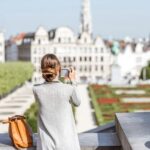
The tour finishes at Mont des Arts, with time for guided framing and panoramic views. This hill area is culturally significant and home to institutions like the Royal Library and the Magritte Museum. It was originally designed for the 1910 World’s Fair, which gives this place a strong “designed for public gathering” backstory.
This is a great end point because you can finally zoom out. After walking through iconic points, the view ties them together. You’ll see how the city’s layout pulls you from square to square, roofline to roofline.
What I like here is the balance of culture and practicality. Even though museums are mentioned, entrance fees aren’t included, so you’re not pressured into buying tickets. You’re simply getting the context and the viewpoint.
And since the activity is described as ending back at the meeting point, you’ll likely return toward Grand-Place after the Mont des Arts moment. That wrap-around helps you land back in the most useful starting hub for the rest of your day.
Spanish-Only Guidance: How to Use It Without Stress
The tour lists a professional local guide with language described as Spanish only, and French also appears as an available language. Either way, assume the core explanations are aimed at Spanish listeners.
How to make that work:
- Watch for the guide’s pointing and the stop order. The route is the “translation” that keeps you oriented.
- Focus on visuals during key moments like Grand-Place, Manneken Pis, and the Bourse architecture.
- Use the end-of-tour advice part to ask in Spanish if you can, or use simple questions in French if that’s your comfort zone.
If you’re traveling with a group member who needs English, this could be the main mismatch. The rest of the tour is strong, but language affects how much you absorb from each stop.
The upside: a local guide approach can make facts feel street-level instead of academic. The short time at each landmark keeps the story digestible, which helps even when you don’t catch every word.
Price and Value: Why This Feels Like a Smart Budget Move
The price is listed at $3.97 per person for a 2-hour walking tour. That’s extremely low for a guided route that hits multiple recognizable Brussels icons plus two notable stops like Delirium Café and the Galeries Royales Saint-Hubert.
Why it’s good value:
- You’re paying for guidance and context, not just entry tickets. Museum entrances aren’t included.
- You get a structured walk through the city center, which saves time when you’d otherwise be figuring things out alone.
- You also receive personalized advice and recommendations at the end, which can multiply the value of the tour.
If you’re comparing this to paying for transportation, or to separate paid tours that only cover monuments, the math usually favors this option. You get a route that hits both the famous and the useful, at a cost that doesn’t wreck your budget.
One caution: because it’s a walking route, don’t book it as your only Brussels plan. You’ll still want extra time afterward to revisit favorite places, especially if a stop becomes a longer photo moment on your own time.
Who Should Book This Brussels Historic Center Walk
This tour is a good fit if you want:
- A tight 2-hour way to orient yourself in central Brussels.
- A mix of famous sights and culture stops, including Tintin, beer culture at Delirium Café, and the arcade at Saint-Hubert.
- Guidance that helps you interpret what you’re seeing, not just where to stand for a picture.
It may be less ideal if:
- You require an English-speaking guide (the tour language is Spanish-focused).
- You need a slower pace with lots of seated time, since the stops are timed and the format stays on the move.
- You travel with baby carriages or bikes, since those are not allowed.
You should also think about age and comfort. It’s noted as not suitable for babies under 1 year and not suitable for people over 95 years, which suggests the walking demands may be hard for very young or very elderly travelers.
Should You Book This Tour?
I’d book it if your goal is to get your bearings fast and learn how Brussels tells its story through landmarks. The itinerary is well-chosen: Grand-Place sets the scene, Manneken Pis and Tintin add character, Bourse trains your eyes, and the end at Mont des Arts gives you the big-picture payoff.
If you’re comfortable with Spanish-first explanations (or you’re okay using visuals and a few key words), this is a strong value pick. If you need English and you’re hoping for deep translation at every stop, you may want to look for an alternative language tour before committing.
FAQ
What’s the meeting point for the Brussels walking tour?
You meet at the Grand-Place, at the main door of the City Hall. Look for an umbrella with the colors black, yellow and red.
Where does the tour end?
The activity finishes at Mont des Arts and is also described as ending back at the meeting point.
How long is the tour?
The tour duration is 2 hours. Starting times vary by availability.
What language is the guide?
The guide is listed as Spanish, and French is also mentioned as a language option.
What are the main stops on the walk?
The tour includes Grand-Place, Tintin Comic Mural, Manneken Pis, Bourse (Stock Exchange Square), Delirium Café, Saint-Hubert Royal Galleries, and it finishes at Mont des Arts.
Are museum tickets or entrance fees included?
No. Entrance fees to museums or specific attractions are not included.
Does the price include meals or drinks?
No. Meals and drinks are not included.
Is public transportation included?
No. Public transportation is not included.
Can I bring a stroller or a bike?
No. Baby carriages and bikes are not allowed.
Is there a cancellation option?
Yes. Free cancellation is offered up to 24 hours in advance for a full refund.