REVIEW · BRUSSELS
Brussels: Art Nouveau Walking Tour with a Local Guide
Book on GetYourGuide →Operated by Pachadunia · Bookable on GetYourGuide
Art Nouveau feels like a secret you can walk to. This 3-hour Brussels Art Nouveau tour uses a local guide, Eric, to show you Victor Horta-style ideas in real buildings, plus equally talented work outside the usual tourist bubble. I especially liked how Eric tells the story of the architecture in a way that clicks fast, even if you’re not an architecture nerd. I also liked the personal feel: Eric can adjust the pace and focus to what you care about.
One thing to plan for: this is a walking tour through areas that are not ideal for mobility devices. Even with short public-transport legs, you’ll want comfortable shoes and realistic expectations about time on uneven streets. Also note that public transport tickets aren’t included.
In This Review
- Key highlights worth picking up on
- The vibe: Belle Époque architecture you can read on foot
- Where to meet: two easy pickup points
- Stop 1: Cauchie House and the art of a strong first wow
- The short public-transport legs: why they work
- Square Ambiorix: where the walking gets more interesting
- Stop 5: another guided Art Nouveau pause
- Ixelles for about an hour: seeing the style beyond the postcard
- Hôtel Solvay: the finale that makes you slow down
- Optional Art Nouveau meal: keep the mood going (if you want)
- Price and value: what you’re really paying for
- Who this tour suits best (and who might want to skip)
- Practical tips so your day stays smooth
- Should you book this Art Nouveau walking tour?
- FAQ
- How long is the Art Nouveau walking tour?
- What does the tour cost?
- Where are the pickup locations?
- What are some of the stops on the tour?
- Is a meal included?
- Are museum entrance fees included?
- Are public transport tickets included?
- What languages are available for the guide?
- What should I bring?
- Is it suitable for wheelchair users?
Key highlights worth picking up on
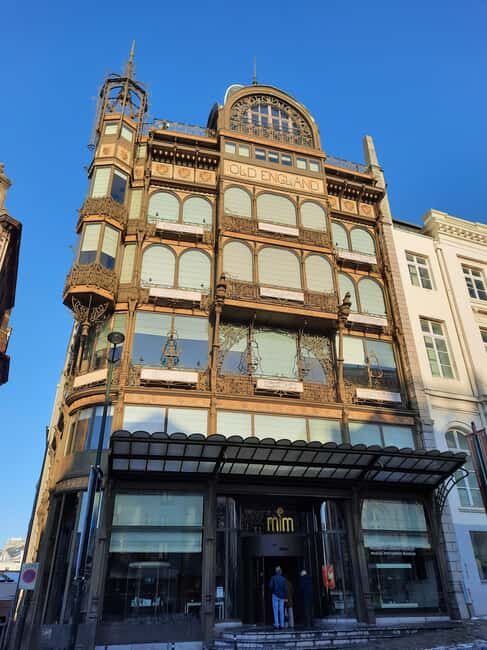
- Victor Horta focus with a guided explanation you can actually use
- Eric’s storytelling connects design details to the bigger picture of Art Nouveau
- Cauchie House as your early “wow” stop, not a random starter photo spot
- Square Ambiorix + Ixelles for a shift from the center to lesser-frequented streets
- Hôtel Solvay as a strong architectural finale
- Optional Art Nouveau meal (not included) if you want the vibe to continue
The vibe: Belle Époque architecture you can read on foot
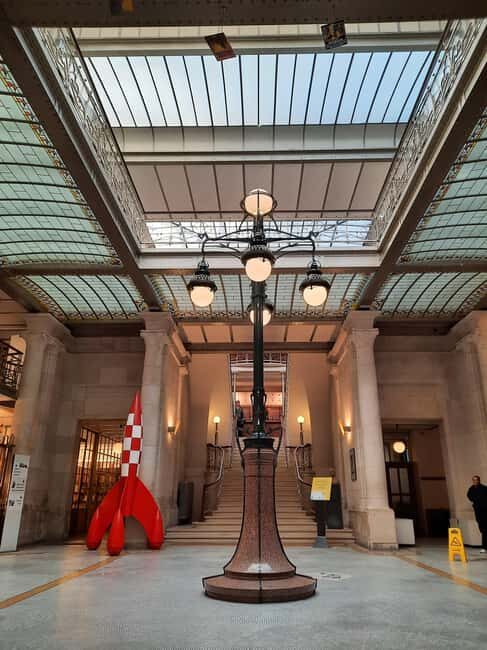
Brussels is one of those cities where Art Nouveau isn’t stuck behind a museum door. It’s on the street, on corners, and across whole blocks—faces, balconies, staircases, and window rhythms that look like they’re still thinking. That’s why I like this tour format: you’re not hunting alone. Eric walks you from building to building and helps you notice what matters instead of just staring at pretty facades.
At a practical level, this is also a well-paced way to cover ground. You get a historic-center start, then you move into districts most visitors skip, like Etterbeek, Schaerbeek, Ixelles, and St Gilles. The tour even uses short public-transport hops so you spend less time in transit and more time looking closely.
You can also read our reviews of more walking tours in Brussels

Where to meet: two easy pickup points
You have two pickup options, which makes it simpler if you’re staying near the Grand Place area or closer to public transit:
- Hilton Brussels Grand Place (for a center-focused route)
- Nona Pizza Merode at the metro station Mérode (for a route that passes through Etterbeek and Ixelles)
If you’re trying to keep your day stress-free, choose the pickup that matches where you’re already positioned. You’ll also save time by arriving a few minutes early—street grids can be confusing the first time, and you want a calm start.
Stop 1: Cauchie House and the art of a strong first wow
The tour starts with a guided visit to Cauchie House, about 20 minutes. This is a great opener because it sets the tone for what you’ll keep seeing: Art Nouveau isn’t just decorative. It’s built to create a mood—curves, ornament, and a sense of movement that shows up in how the building meets the street.
A short guided window here is smart. If you try to figure out everything without context, you miss the point. Eric’s explanation gives you a lens, so when you see the next exterior, you know what to look for: how form, materials, and design choices communicate the style’s personality.
The only downside to an opening stop is that you’ll feel tempted to photograph nonstop. That’s fun, but keep your eyes open too. Use your first 10 minutes to learn what Eric wants you to notice, then shoot with intention.
The short public-transport legs: why they work
You’ll use public transport twice during the tour—first for about 10 minutes, later for about 25 minutes. The goal is simple: you’re covering several neighborhoods without turning this into a marathon of walking.
This also affects your planning. Public transport tickets aren’t included, so bring a little extra money or whatever payment method your travel day uses. Think of it as part of the cost of seeing a wider spread of Brussels architecture.
If you’re the type who gets impatient on buses or trams, that’s the only real tradeoff: the design stops are the highlight, but you do have those transit segments in between.
Square Ambiorix: where the walking gets more interesting
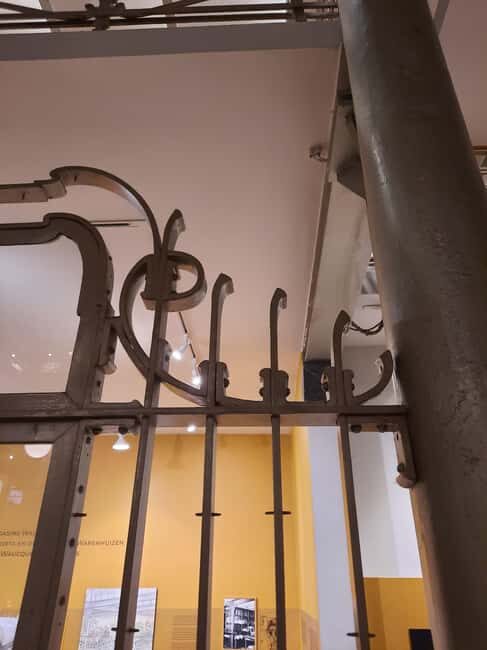
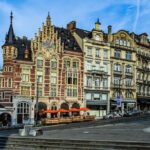
Next comes Square Ambiorix, with about 40 minutes of guided time. This stop matters because it’s not only about a single building. It’s about location and atmosphere: you’re seeing how Art Nouveau fits into daily city life—street scale, neighborhood character, and how the style looks when it’s not a standalone landmark.
This is also where Eric’s approach really shows. Instead of reciting facts, he helps you connect the dots between what you’re seeing and what was happening in design and taste at the time. You start to recognize patterns: certain motifs, the logic of facades, and how different architects interpreted the same broad Art Nouveau language.
If you like architecture but struggle with names and dates, this is your sweet spot. Eric’s tone tends to make it understandable without making you feel behind.
You can also read our reviews of more guided tours in Brussels

Stop 5: another guided Art Nouveau pause
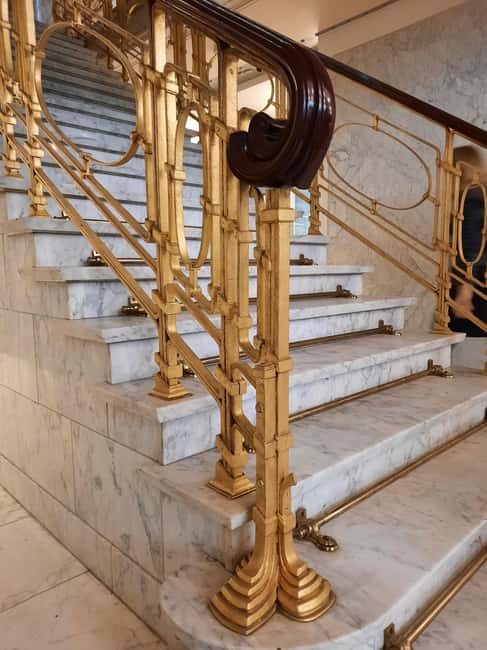
Your itinerary includes one more guided pause (the specific building name isn’t listed in the details you’re given). I’d treat this as a reminder to stay switched on. Tours that move from famous addresses to lesser-known ones are at their best when you pay attention even when you haven’t heard the name before.
Even when it’s not a headline landmark, a guided explanation can reveal why the building matters: small design decisions, how the facade is composed, or what renovation might have preserved—or changed—the original look.
Ixelles for about an hour: seeing the style beyond the postcard
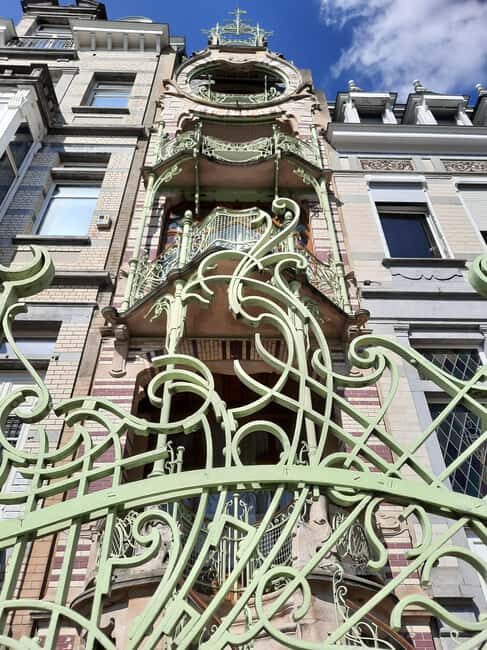
Then you shift into Ixelles with a 1-hour guided exploration. This is one of the tour’s strongest value points because it widens the lens. If you’ve only seen Art Nouveau from the center or from a handful of famous sites, Ixelles helps you understand how widespread the style really was.
What I like about using time here is that you’re not rushed. An hour is long enough to notice multiple buildings and patterns in the way architects handled streetscape elements—balconies, window rhythm, and the way ornament interacts with the urban setting.
Ixelles also tends to give you a more “lived-in” feeling to the architecture. It’s not only a set of exhibits; it’s part of a neighborhood. That’s a big part of why walking tours work so well for Art Nouveau.
Hôtel Solvay: the finale that makes you slow down
The last major architectural moment is Hôtel Solvay, with about 20 minutes guided. This stop is a classic end-of-tour move because it’s designed for attention. When you reach a stronger, more iconic building after learning how to look, the impact lands harder.
By the time you’re here, you’ve usually picked up a few visual cues: where ornament begins to look like structure, how form guides the eye, and how different architects can share an artistic language while still feeling distinct.
If you want a practical photo tip: don’t just shoot straight-on. Look for angles where you can see how details align across levels—those design relationships are often what make Art Nouveau feel like a coordinated idea instead of isolated decoration.
Optional Art Nouveau meal: keep the mood going (if you want)
There’s an option to add a meal in a period Art Nouveau restaurant with decor described as surprising and with the look remaining close to how it was for a long time. The key point is that this is not included, so you’ll want to budget extra.
I like optional meal add-ons when they’re not a forced tourist trap. If you’re enjoying the theme, it’s a smart way to extend the experience beyond architecture into everyday ambiance. If you’re not a meal person, you can also treat the suggestion as a prompt to keep looking for Art Nouveau details in where you eat and sit afterward.
Price and value: what you’re really paying for
At $91 per person for about 3 hours, this tour isn’t trying to be a budget bus ride. You’re paying for a local guide—Eric—and for a route that mixes famous Art Nouveau with less-celebrated buildings across several neighborhoods. That combination matters.
Here’s the value math that makes sense for me:
- You get guided time at specific standout stops like Cauchie House and Hôtel Solvay
- You also get time in districts like Etterbeek, Schaerbeek, Ixelles, and St Gilles, which helps you understand the style’s spread
- You learn how to look at architecture, not just where to take photos
There are a couple cost add-ons to keep in mind. Public transport tickets aren’t included, and meals aren’t included. But compared with the cost of entry tickets to multiple attractions, the “pay once and walk into the city” approach is often a good deal—especially if you enjoy architecture enough to want context.
Who this tour suits best (and who might want to skip)
This tour fits best if you:
- Like seeing buildings at human scale and want help understanding what makes them Art Nouveau
- Prefer a guided narrative over trying to DIY a route
- Want a mix of major landmarks and places most people don’t go
If you’re mostly into museums, and you’d rather spend the whole day inside one building with climate control, this might feel too street-focused. Also, if walking is a challenge for you, you’ll want to think hard—Brussels streets aren’t described as wheelchair-friendly in the tour info, and even able-bodied walkers will find it a hands-on day.
Practical tips so your day stays smooth
A few small things can make the difference between a great architecture day and a sore-foot day:
- Wear comfortable walking shoes. You’ll be on your feet for hours, with additional walking around stops.
- Bring water. It’s recommended, and you’ll appreciate it as the tour moves through multiple neighborhoods.
- Bring a camera. You’ll get plenty of facade time, and it’s better to shoot deliberately than in a rush.
- Dress for weather. The tour is outdoors with walking breaks.
- If you need to adjust plans, tell the guide early. Eric’s style is personal and flexible, and the pace can match your interests.
Also, remember the tour has boundaries: weapons or sharp objects aren’t allowed, smoking indoors or in vehicles is not allowed, and party groups like bachelor and bachelorette groups are not permitted.
Should you book this Art Nouveau walking tour?
If you care about architecture, and you want Brussels Art Nouveau explained in a way that makes you look differently afterward, I’d book this. The Victor Horta focus plus the switch into neighborhoods like Ixelles makes it feel like more than a checklist. And Eric’s approach—friendly, story-driven, and able to adjust to what your group wants—adds real value to a tour that could otherwise be just walking and photos.
I’d skip it only if you strongly dislike walking, can’t handle uneven city streets, or you’re looking for an indoor museum-heavy day instead. For most people who want the Belle Époque vibe on foot, this is a solid use of a half-day.
FAQ
How long is the Art Nouveau walking tour?
The tour lasts about 3 hours.
What does the tour cost?
The price listed is $91 per person.
Where are the pickup locations?
You can start at either Hilton Brussels Grand Place or at Nona Pizza Merode at the metro station Mérode.
What are some of the stops on the tour?
The tour includes visits to Cauchie House, a guided stop at Square Ambiorix, a guided exploration in Ixelles, and a guided visit to Hôtel Solvay. It also includes public-transport segments between stops.
Is a meal included?
No. An Art Nouveau meal can be added if you wish, but it is not included.
Are museum entrance fees included?
No. Entrance fees to any museums or attractions are not included.
Are public transport tickets included?
No. Public transport tickets are not included.
What languages are available for the guide?
The guide is available in Dutch, English, French, and Spanish.
What should I bring?
Wear comfortable walking shoes, dress for the weather, and bring a camera. Water is recommended.
Is it suitable for wheelchair users?
The tour info notes that Brussels streets are not quite adapted for wheelchairs.