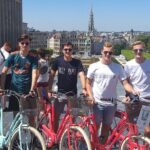
Pedal through Brussels in one bite. This 3.5-hour small-group ride stitches together major sights and lesser-known neighborhoods, with bike rental included so you can focus on the city.
I like that you roll past key central landmarks fast, starting at the historic Grand Hospice meeting point and hopping through major areas without paying for entries at the stops. I also love the variety: you’ll see everything from the Palace of Justice viewpoints to industrial stories around La Fonderie Bruxelles and the Tour & Taxis area.
One consideration: this tour works best if you’re comfortable riding a city bike for about 10 miles, because cobblestones and a few hills can make the ride feel bumpy and you’ll need to keep up.
In This Review
- Key Things To Know Before You Go
- How This Brussels Bike Tour Fits Into a Short Trip
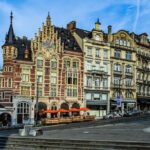
- Start at Grand Hospice: The Neoclassical Launch Point
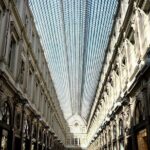
- La Bourse de Bruxelles: A Strong First Impression Without Ticket Hassles
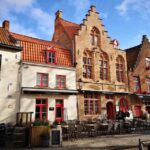
- Place Sainte-Catherine and Church Sainte-Catherine: The Old Fishmarket Area
- La Fonderie Bruxelles: Industrial Brussels You Might Miss Alone
- Palace of Justice at Place Poelaert: Views That Explain the City
- Quartier Marolles: Flea Market Area and Everyday Brussels
- Gare Maritime and Tour&Taxis: Logistics to New Life
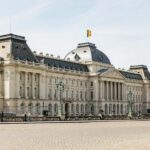
- Palais Royal de Bruxelles and Royal Park: Formal Brussels, Up Close
- What the Ride Feels Like: Hills, Cobblestones, and Staying Together
- Price and Value: What You Get for $39.92
- Who Should Book This Brussels Bike Tour
- Should You Book It: My Decision Rule
- FAQ
- How long is the Brussels bike tour?
- What’s included in the price?
- Do I need to buy admission tickets for the stops?
- What language is the tour offered in?
- How many people are in the group?
- Where does the tour start and end?
- Is there a break during the ride?
- Is the tour suitable for beginners?
- What if the weather is bad?
- Can I cancel for a full refund?
Key Things To Know Before You Go
- Small group (max 14): easier pacing and better chances to stay together on busy streets.
- Bike and helmet included: you just show up ready to ride.
- No-entry-fee stops: each listed sight stop is free at the time of your visit.
- A mix of old center and industrial Brussels: not just the usual postcard views.
- Real streets, cobbles, hills: if your bike skills are shaky, consider that up front.
- Volunteers guide the way: you may ride with people like Andrea, Jessica, Mauro, Vito, Philippe, or Renaat, and they tend to bring strong local stories.
How This Brussels Bike Tour Fits Into a Short Trip
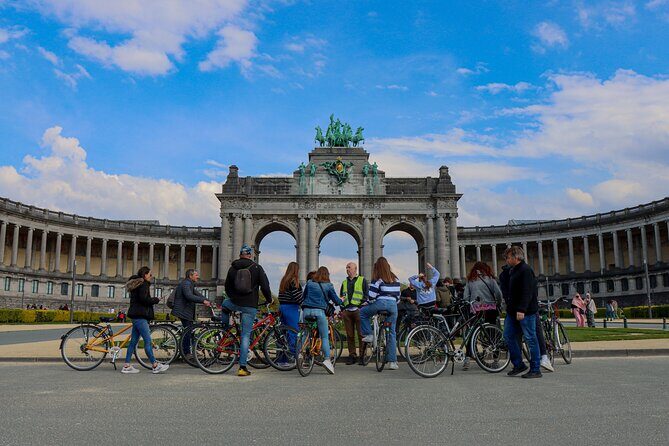
If you want Brussels to feel real, this kind of bike tour is a smart move. In just 3 hours 30 minutes, you get a fast sweep of the city’s core landmarks plus neighborhoods that many walking tours skip. It is not about racing to the next photo; it is about building a mental map of Brussels while you ride.
What I like most is the balance. You cover big-ticket locations like La Bourse and the Palace of Justice, but you also spend time in areas where the atmosphere changes quickly, like the old fish-market zone of Place Sainte-Catherine and the Marolles area. That combo is great value because it helps you decide what to revisit later.
The route also makes sense for practical travelers. Almost all the stops are close together in the central city, so after the tour you can keep exploring on your own without feeling lost. And since bike rental plus a helmet (Fietshelm) are included, you avoid the annoying add-on costs that pop up on some tours.
You can also read our reviews of more cycling tours in Brussels
Start at Grand Hospice: The Neoclassical Launch Point
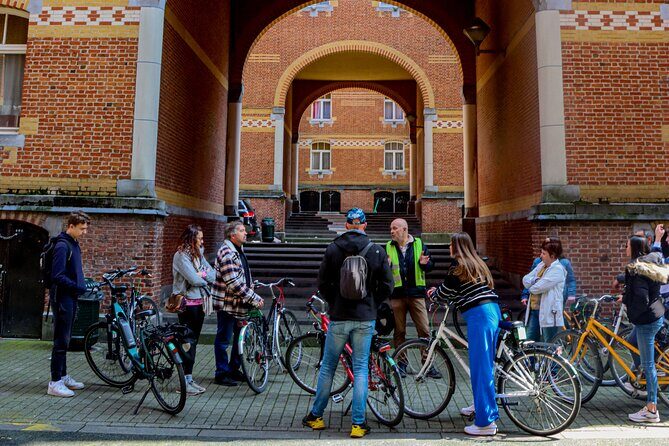
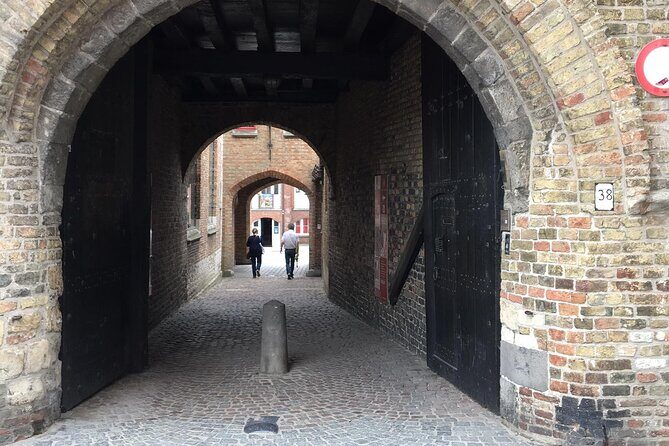
Your tour meets at Rue du Grand Hospice 7, 1000 Bruxelles, Belgium, at the Grand Hospice—a neoclassical building that dates to nearly 200 years old. This is a good meeting point because it is specific and easy to find once you arrive in the area, and it gives you a proper “you’re in Brussels” feeling before you roll.
It also sets expectations for the tour’s style. Guides keep things organized, with clear safety guidance and a focus on moving as a group. Multiple guides have been mentioned by name in past tours (Philippe, Andrea/Andréa, Jessica, Mauro, Vito, and Renaat among them), and the common thread is that they do more than read facts from a script. You get context that helps you understand what you’re seeing: why a place matters, how a neighborhood developed, and what daily life feels like in different parts of the city.
If you are arriving by public transport, this start point is a convenient one. The tour notes that it is near public transportation, so you are not forced into a long walk just to begin.
La Bourse de Bruxelles: A Strong First Impression Without Ticket Hassles
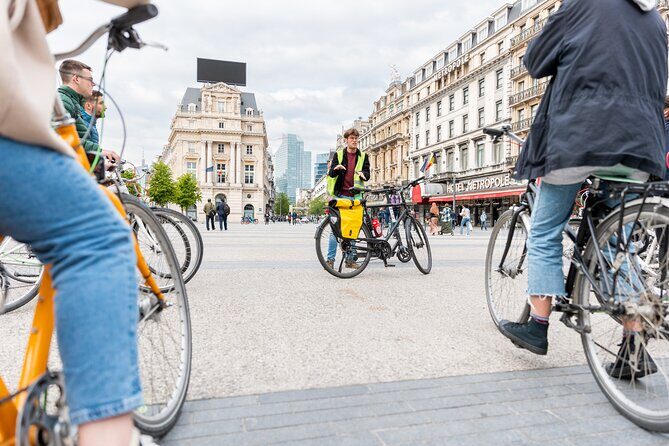
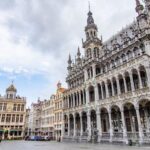
Stop 1 is La Bourse de Bruxelles on Place de la Bourse, in the heart of the city. This is where you get that classic Brussels energy right away—stone, grand architecture, and a central square that feels like a hub.
The practical win here is that it’s a stop that works even if you are arriving with jet lag. In about 10 minutes you can absorb the vibe, snap a few pictures, and get a storyline from your guide so the building and square do not just feel like scenery.
Another value point: the stop is listed as free, so there is no entrance ticket to manage. That matters because tours often charge extra at the most inconvenient moment. Here, you keep momentum.
Place Sainte-Catherine and Church Sainte-Catherine: The Old Fishmarket Area
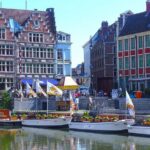
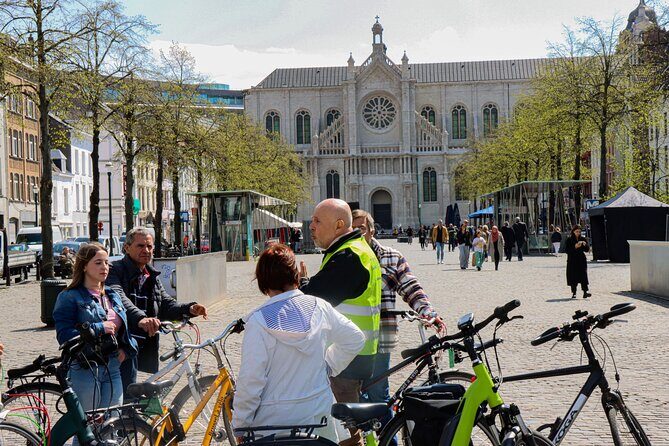
Next up is Place Sainte-Catherine, tied to the old fish-market area, plus Church Sainte-Catherine. This stop gives you a different side of the city—less about official monuments and more about the kind of neighborhood history that shapes streets, commerce, and community.
You typically get around 10 minutes here. That is long enough to take in the square and the church presence, but short enough that you are not stuck waiting while the group reforms. If you like architecture and atmosphere, this is an early highlight because it feels distinct from the business-center feel near La Bourse.
One practical thing to keep in mind: since the tour is cycling-based, your guide’s timing matters. Cobblestones and street crossings can slow people down, so arriving with a steady pace (and keeping an eye on the group) helps you enjoy every stop.
La Fonderie Bruxelles: Industrial Brussels You Might Miss Alone
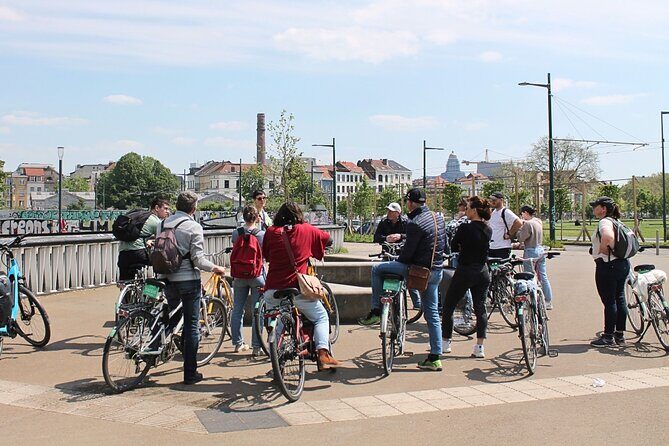
This is where the tour starts feeling like more than a highlights loop. Stop 3 is La Fonderie Bruxelles (Musee bruxellois des industries et du travail), described as a real quieter corner of Brussels’ industrial heritage.
Even with only about 5 minutes here, the idea is smart. The guide points you toward the significance of the place, so you understand why this kind of museum matters to a city that is not only known for politics and royal buildings. If you like industrial design, labor history, or the way cities repurpose old spaces, you will likely enjoy this moment.
No ticket cost is listed for the stop. That’s ideal when you want the story without turning the ride into a long museum day.


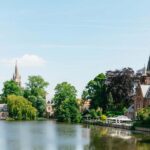

Palace of Justice at Place Poelaert: Views That Explain the City
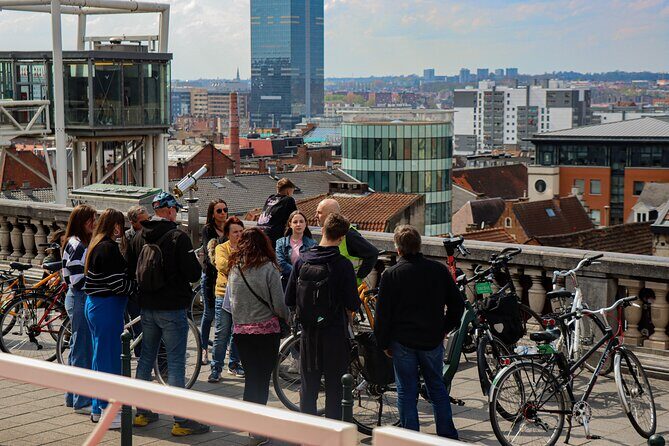
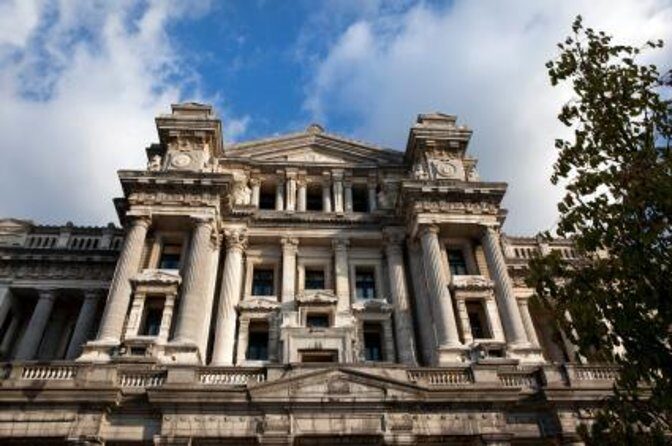
Stop 4 is the Palace of Justice, viewed from Place Poelaert with perspectives on Les Marolles and the wider city. This is one of the reasons I like biking for city learning: you can reach viewpoints that would take longer to get to by foot, and you get a built-in explanation of what you’re looking at.
You’ll pause for about 10 minutes. That is enough time to take in the scale and to listen for the guide’s key point: why this area feels like a dividing line in the city’s geography and identity. It is the kind of place that makes you understand Brussels in layers—official power above, everyday neighborhoods nearby.
Also, this stop is listed as free. So you get the viewpoint without ticket hassles.
Quartier Marolles: Flea Market Area and Everyday Brussels
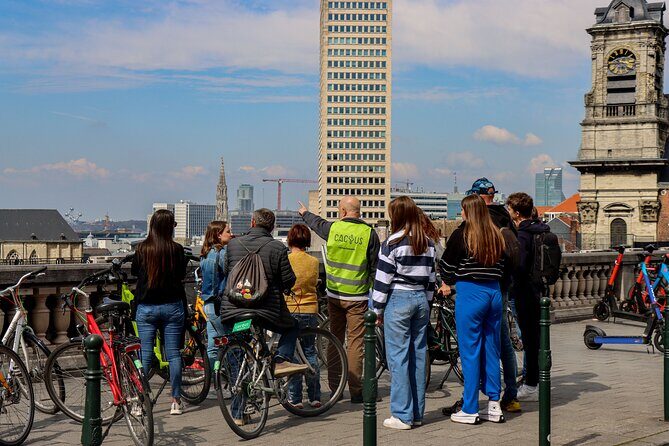
Stop 5 is Quartier Marolles, including the flea market area and the wider view connection to the Palace of Justice. Marolles is where Brussels often feels less polished, more lived-in, and more interesting if you want the city’s contrast.
This is also a helpful stop for planning. After you see Marolles from a couple angles, you are better set up to choose what to do on your own later—wander streets, look for local markets, or simply return for a different time of day.
The guide tends to connect what you see to social and economic contrasts across Brussels. One guest feedback singled out that the tour can lean into social perspective when explaining neighborhoods of immigration and contrasts. If that framing appeals to you, great. If you prefer only monument-style storytelling, it’s worth knowing the tour tries to represent different parts of the city, not just postcard scenes.
Gare Maritime and Tour&Taxis: Logistics to New Life
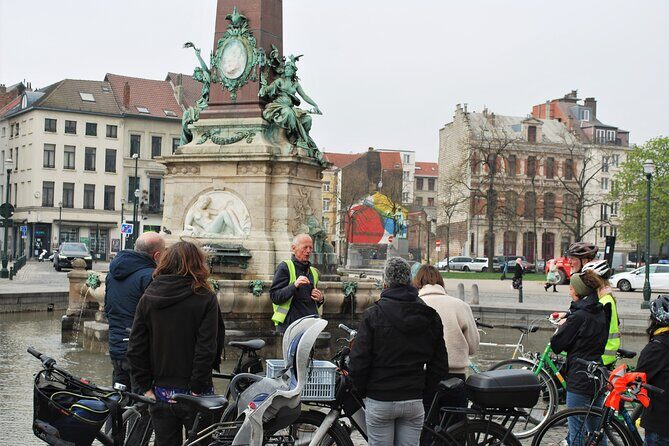
Stop 6 is Gare Maritime, plus the Tour & Taxis area and how this historic logistics and industrial zone has transformed into a new multifunctional district. This is another stop where you get the practical-brain version of Brussels: how a city uses old infrastructure for new purposes.
You’ll have about 10 minutes. That is enough time to orient yourself visually, then rely on your guide to stitch the story together: what the site was built for and how that history still shows up in the layout.
This is a strong stop if you like urban change and re-use. The tone tends to be explanatory, and biking makes it easier to keep your momentum rather than turning the day into a long detour.
Palais Royal de Bruxelles and Royal Park: Formal Brussels, Up Close
Stop 7 brings you to Palais Royal de Bruxelles, with a stop by the Royal Park next to the Royal Palace. This part shifts the mood again—more ceremony, more symmetry, more official symbolism.
You get around 10 minutes. That is enough to absorb the atmosphere and to understand why this area matters in the Brussels story. It’s also a good mid-to-late tour stop because it breaks up the more gritty-feeling neighborhoods and gives your legs a moment of slower pacing and regrouping.
Again, listed access at the stop is free, keeping the tour feeling straightforward.
What the Ride Feels Like: Hills, Cobblestones, and Staying Together
The biggest “how it feels” factor is cycling surface and group pacing. In past tours, people have noted cobblestones that make the ride bumpy, plus hills that can feel long even if they are not extreme. Some guests said the route is about 10 miles with up-and-down sections. Another review mentioned about 11 miles.
So here is the honest planning tip: wear shoes that grip well, and keep a relaxed grip on the handlebars. If you have trouble on cobbles, you might notice it more than on smooth bike paths. If you are a confident city rider, you’ll likely find the ride manageable.
Also, the group size cap of 14 helps. It is small enough for the guide to keep eyes on everyone, but not so tiny that the ride feels like a private stroll. In most cases, the guides aim to keep people together and are attentive at stops. Still, one complaint mentioned a guide who did not check on the group during the ride. That is not something I would ignore. If you are easily dropped behind or have slower endurance, communicate your comfort level before you roll, and stay near the guide.
And yes, the tour is intended for people who can participate comfortably. The tour notes that most travelers can participate, but another guest made it clear it is not ideal for nervous or inexperienced riders. If that is you, ask in advance about ride options.
Price and Value: What You Get for $39.92
At $39.92 per person, this tour lands in the budget-friendly range for a guided ride that covers multiple key areas. The big reason it feels fair is what is included: bicycle rent and a Fietshelm helmet.
That means you do not have to hunt for rental shops or pay separate fees. It also lowers friction, especially if you are on a tight schedule. When tours include the bike, they typically protect the timing. Here, the stops are structured so you can get a lot of “where should I go next” value quickly.
What is not included is optional coffee or a drink during the break. You might still stop for a cafe moment if your guide builds in a pause, but you should bring a little cash or card for yourself.
Also check your expectations on entrances. Each listed stop is marked free for admission ticket. That’s rare enough to mention, because it keeps the day from turning into “add-on costs, surprise entry fees, and wasted time.”
Who Should Book This Brussels Bike Tour
This is a strong fit if you want:
- A small-group way to see central Brussels fast
- A ride that mixes landmarks with quieter, off-the-beaten-path neighborhoods
- A guide who can explain why a place matters, not just what it looks like
It is also a good choice for “first-time Brussels” travelers who want orientation. One guest summed it up as a best early-trip activity, because after the tour you know where to return.
On the other hand, you should think twice if:
- You are not comfortable cycling on streets with cobbles
- You cannot keep pace for roughly 3.5 hours and about 10–11 miles
- Hills make you anxious, or you have no city-bike experience at all
If you are on the edge, you can look into e-bike options. There is mention that e-bikes exist but are only bookable directly through the company’s website, not through the standard tour booking flow. If you care about that option, plan ahead rather than assuming one will be available on the day.
Should You Book It: My Decision Rule
Book this tour if you want Brussels to make sense quickly. This one works because it combines major sights—La Bourse and the Palace of Justice—with neighborhood texture like Marolles and industrial transformation around Tour & Taxis. With bike and helmet already included, it is an easy yes for many travelers who want value.
Pass or choose a different option if you know you will struggle with bumpy surfaces and hills, or if you want only top-of-the-list monuments with no social or neighborhood context. Also, because the tour requires good weather, you should be ready to reschedule if conditions are poor.
If you are the kind of traveler who likes getting a map of the city in your head while moving through it, this is a solid way to do Brussels in a half day. You end with a sense of direction and several ideas for where to go next—by bike if you’re brave, or by foot if you want to slow down and linger.
FAQ
How long is the Brussels bike tour?
It lasts about 3 hours 30 minutes.
What’s included in the price?
Bike rental and a Fietshelm (helmet) are included.
Do I need to buy admission tickets for the stops?
The listed stops are marked as free for admission ticket, and there are no entrance fees noted.
What language is the tour offered in?
The tour is offered in English.
How many people are in the group?
The tour has a maximum of 14 travelers.
Where does the tour start and end?
It starts at Rue du Grand Hospice 7, 1000 Bruxelles, Belgium, and ends back at the meeting point.
Is there a break during the ride?
There can be a pause, but coffee or tea is optional and not included in the price.
Is the tour suitable for beginners?
Most travelers can participate, but you should be comfortable enough to ride on city streets for the full ride length, including cobblestones and some hills.
What if the weather is bad?
The tour requires good weather. If it is canceled due to poor weather, you’ll be offered a different date or a full refund.
Can I cancel for a full refund?
Yes. You can cancel up to 24 hours in advance for a full refund.