REVIEW · BRUGES
Private Guided Historical Walking Tour in Bruges Belgium
Book on Viator →Operated by VIGOR CLIUS · Bookable on Viator
Bruges turns into a timeline on your feet. This private guided historical walking tour links the city’s trading power, religious life, and daily routines into one easy route, guided in English for about 2 hours 30 minutes. You start at the Markt and end back near it, so you can keep wandering afterward without a long detour.
I like two things a lot: you get a local historian-style guide who slows down for questions, and the stops are practical and varied, from major monuments (like the Belfort) to lesser-seen places (like a 15th-century almshouse and a hospital from the 12th century). The pace also works for most people with moderate fitness, not a “power walk” marathon.
One thing to consider: it’s still a walking tour in a compact historic center. If you don’t do well with cobblestones or you need frequent long breaks, plan for some extra time at photo stops and go into it expecting about 2.5 hours on your feet.
In This Review
- Key highlights worth circling on your Bruges map
- A medieval walk that actually makes sense
- Why the Markt is the right place to begin
- Belfort: the tower that signaled power
- Gruuthusemuseum: family power plus a needed break
- Sint-Janshospitaal: a 12th-century view of sick care
- Princely Beguinage Ten Wijngaarde: faith as community living
- Minnewater Lake: pause for a real view
- De Halve Maan Brewery: beer history with a twist
- Almshouses Rooms Convent: what’s behind the facades
- Onze-Lieve-Vrouwekerk: a church story that feels magical
- Rosary Quay and Boniface Bridge: the postcard route, explained
- Burg Square: end where the story feels complete
- Price: what $118.82 buys you (and what it doesn’t)
- Timing and guides: plan it early, and ask for what you care about
- Who this walking tour is best for
- Quick practical tips before you go
- Should you book this private Bruges walking tour?
- FAQ
- How long is the Bruges historical walking tour?
- Is this a private tour?
- Where does the tour start and end?
- Is hotel pickup available?
- What language is the tour offered in?
- Are admission tickets required for the stops?
- Is there time to use the restroom?
- Is it suitable for people with mobility limits?
- Are service animals allowed?
- What’s the cancellation policy?
Key highlights worth circling on your Bruges map
- A clear medieval storyline that connects trade, power, religion, and everyday care in one route
- Multiple “real places,” not just viewpoints: hospital, beguinage, brewery, church, quay, and squares
- Toilet break built in at the Gruuthusemuseum stop
- Free admission listed for each stop, so your money goes to the guide and time, not tickets
- Small-group feel inside a private tour, with guides who adapt to what you want to know
A medieval walk that actually makes sense
Bruges has that postcard charm, sure. But on this tour, the charm gets a spine. You don’t just “see buildings.” You learn why they mattered, how they were used, and what people’s lives looked like in the Middle Ages.
The setting helps. You’re walking through the city’s historic core, starting at the Markt—the kind of square where commerce and civic life naturally overlap. Then the route fans out to places tied to wealth (family history), care (a long-running sick-care hospital), faith (a church and beguinage community), and even beer production (yes, there’s a brewery story).
And because it’s private, your guide can shape the walk around your pace and questions. I especially like that guides connected with this tour show up in reviews as story-forward and question-friendly—people have even pointed out guides like Koen, Raf, Raphael, and Dmitri for making the city feel personal, not like a memorized script.
You can also read our reviews of more walking tours in Bruges
Why the Markt is the right place to begin
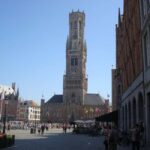
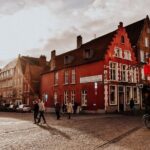
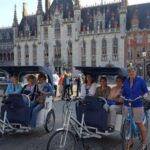
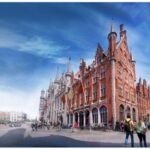
You start at the Markt, Bruges’ central square. This is a smart kickoff because the Markt acts like a “chapter one” of the city: a place where trading energy made the city matter far beyond Belgium.
Expect a short introduction that sets the tone: how Bruges rose as a trading hub in the Middle Ages, and why that gave the city money, influence, and ambition. Even if you’ve been to other European medieval towns, the details here help you spot what’s going on when you look at old brick and stone. Instead of just admiring, you start reading the city.
And the practical part: meeting at the Markt keeps you oriented. You’ll end the tour back near the same start point, about 200 meters away, which means you don’t have to “re-navigate your way home” while your feet are tired.
Belfort: the tower that signaled power
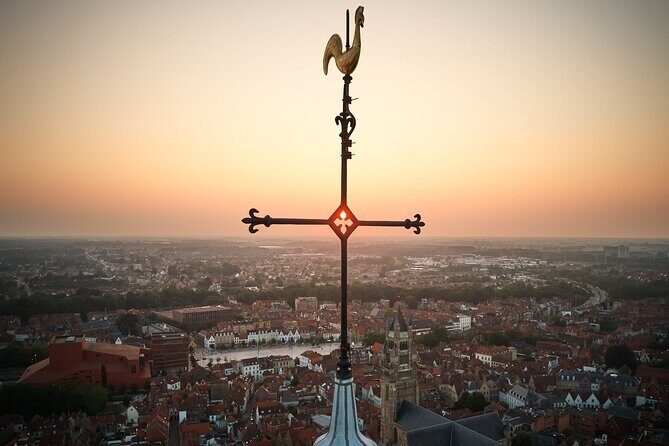
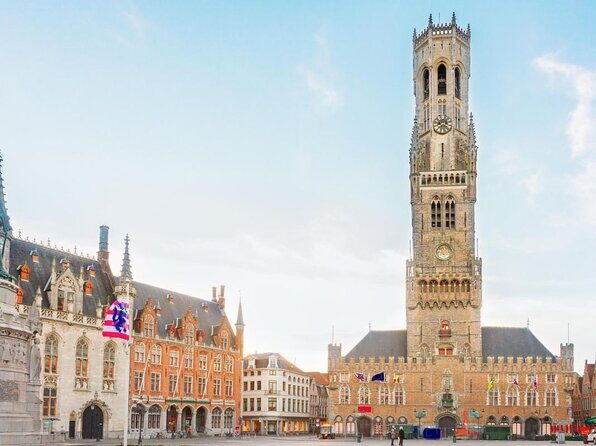
Next up is the Belfort, tied to the market halls and the famous medieval belfry story. This tower isn’t just tall for decoration. A belfry like this represents a city’s voice—its civic identity—along with the sort of authority merchants and officials wanted to show.
Your guide focuses on what the tower tells you about the Middle Ages: why it exists where it does, and how it fit into the economic rhythm of the city. It’s a good stop for a quick mental reset—especially if you’ve been thinking only about chocolate shops and canals.
Time here is brief, but it’s the kind of stop that pays off later when you see other civic buildings in Bruges.
Gruuthusemuseum: family power plus a needed break
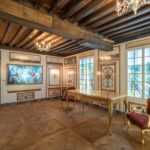
At the Gruuthusemuseum, the tour shifts into people—specifically one of the city’s important Middle Ages families. That matters because Bruges didn’t run on anonymous history. It was built and maintained by real families, with real choices, wealth, and influence.
This is also where you get a break, including the chance to use the toilet. That sounds small, but it genuinely improves a walking tour. It means you’re not searching for facilities mid-route, while also trying to remember what you’re supposed to be looking at.
If you enjoy history that connects names to architecture, this is a highlight. It also helps you understand why certain buildings and institutions were shaped the way they were.
Sint-Janshospitaal: a 12th-century view of sick care
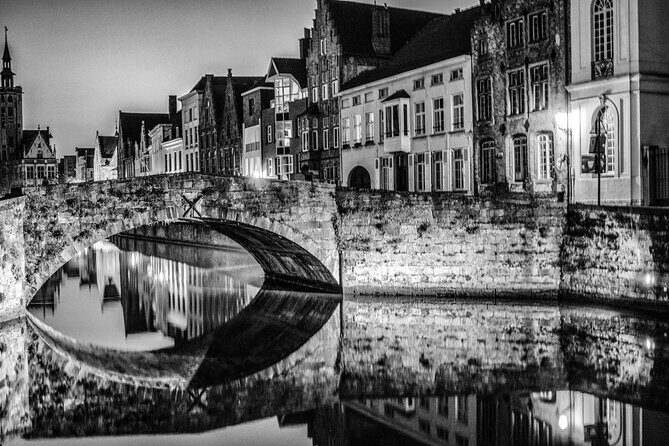
The Sint-Janshospitaal stop is one of the tour’s more human moments. You’re looking at a hospital that dates to the 12th century, and the focus is on sick care—how people were treated, and what “health” meant in that era.
If medieval history sometimes feels like it’s all battles and bishops, this helps balance the picture. It reminds you that cities were also built to care for illness, dependency, and vulnerability, even if the methods were very different from modern care.
Even if you’re not a museum person, this stop works because it’s short, focused, and explained in plain terms.
You can also read our reviews of more guided tours in Bruges


Princely Beguinage Ten Wijngaarde: faith as community living
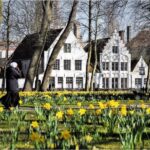
Next is the Princely Beguinage Ten Wijngaarde, a place where women lived together as a community for more than 800 years. The idea of the beguinage can be confusing if you’ve never heard of it—this stop clears it up.
Your guide shows the atmosphere and the purpose behind this long-running way of life. It’s a different “side” of medieval Europe than castles or guild halls. Here, you see how faith, work, and daily routine can be shaped into a stable community over centuries.
If you like quieter stops that slow your mind down, this is it. It also gives you a break from the busiest parts of town without going off the main route.
Minnewater Lake: pause for a real view
At Minnewater Lake, the tour gives you a breather: about 10 minutes to enjoy the view. This isn’t just a pretty intermission. By now you’ve moved through civic power, family influence, faith communities, and care. Looking at the lake after that helps you reset.
If you’re taking photos, aim for the edges where you can frame reflections and bridges rather than only the center of the water. It’s also a good spot to just stand and let the city sounds sink in for a moment.
De Halve Maan Brewery: beer history with a twist
Then you head to De Halve Maan Brewery, where the story includes one of the two city breweries and the tale of an underground beer pipeline.
That’s the kind of detail that makes Bruges feel specific instead of generic. Beer production connects to trade, storage, and the physical systems cities built to keep things running. And an underground pipeline is exactly the sort of practical-but-surprising medieval detail that makes your guide’s narration worth listening for.
If you like food-and-drink history, this stop will land well. If you don’t, the explanation still helps you see why medieval cities engineered systems beneath the streets.
Almshouses Rooms Convent: what’s behind the facades
The Almshouses Rooms Convent is a fascinating contrast to the grand monuments. You actually enter a 15th-century almshouse and hear about what’s hidden behind the facades.
This is where you start appreciating the city’s “everyday architecture.” Bruges isn’t only about the famous towers and big churches. It’s also about where people lived, worked, and survived—often in structures that look modest from the street but carry serious meaning.
Because this stop is about hidden spaces, I suggest paying attention to what your guide points out, not only what you see. A building like this becomes more interesting when it’s explained like a small world.
Onze-Lieve-Vrouwekerk: a church story that feels magical
At Onze-Lieve-Vrouwekerk, your guide tells the “magical story” of the dear lady church. That phrasing matters: instead of making the church feel like a cold catalog of architecture, the focus is on narrative—why people revered it, how it shaped the city’s religious imagination, and what you can notice as you look around.
This stop is about how to look. If you’ve ever walked into a famous church and thought, I wish someone would tell me where to focus, this is the solution. You leave with better eyes for details you’d otherwise miss.
Rosary Quay and Boniface Bridge: the postcard route, explained
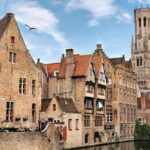
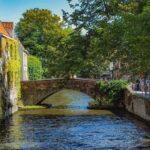
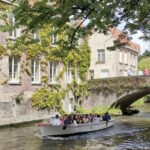
Then you cross Boniface Bridge and walk along the Rosary Quay. The tour frames the area as picturesque and romantic, but the real value is how it fits into the story of Bruges as a place of movement—water routes, trade connections, and city life along the edges.
You’ll likely take some photos here. Also, this is a good moment to slow down because the walking terrain and crowd levels can make it harder to focus when you’re rushing.
Burg Square: end where the story feels complete
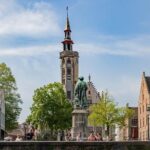
You finish at Burg Square, the city’s oldest square and the natural “ending point” after a loop through major institutions. The fact that it’s about 200 meters from where you started is more than convenience. It reinforces the feeling that you walked a complete circuit of core Bruges.
By now, you understand the city’s shape: civic identity (Belfort and Markt), social structures (family history and almshouses), daily care (hospital), and community faith (beguinage), plus the city’s practical systems (like brewing).
So the square doesn’t feel like an end stop. It feels like a final page you can reread in your head while you keep exploring.
Price: what $118.82 buys you (and what it doesn’t)
At $118.82 per person for about 2 hours 30 minutes, this is not a budget group tour price. The value is in the format: a private walking experience that starts and ends in the historic core, with free admission listed for the tour’s stops.
Here’s how I’d think about it:
- If you want a guide who can answer your questions and adjust the pace, private tours often feel like the better deal.
- If you’re traveling as a small group, the per-person cost can still feel reasonable compared to paying for multiple museum tickets plus guide time.
- If you’re happy with a self-guided stroll and you don’t care about structured context, you could spend less elsewhere.
But if you want Bruges to feel organized and understandable fast, the guide time is the product you’re paying for—and this tour aims squarely at that.
Timing and guides: plan it early, and ask for what you care about
The tour runs Monday through Sunday with hours listed from 10:00 AM to 3:30 PM. Booking is often made about 42 days in advance on average, which tells me this is a popular slot—especially for visitors who only have a day or two.
One smart strategy from how this experience is commonly used: schedule it earlier in your Bruges visit. Doing it first helps because the guide will point you to what to prioritize next, and you’ll recognize the “why” behind the landmarks you see later.
Also, you might notice a pattern in the names of guides praised in connection with this tour. People have called out guides such as Koen, Raf, Raphael, and Dmitri for turning streets into stories and answering lots of questions. Since this is private, you should treat the guide like a real resource. Ask what you should see next based on your interests—trade, religion, daily life, or simply what you’ll remember most.
Who this walking tour is best for
This experience fits best if you:
- Want a history-based walk without feeling stuck in a classroom
- Enjoy guides who tell stories and explain what you’re looking at
- Prefer a route that includes both big monuments and smaller, meaningful places
- Like the idea of free admission stops (so you can focus on your guide’s narration)
You might not love it as much if:
- You hate walking on cobblestones
- You need very frequent breaks
- You expect a full museum visit at each stop rather than short, explained viewing
Quick practical tips before you go
- Wear shoes you trust on uneven stone.
- Bring a light layer; Belgium weather can shift fast.
- If you have questions, jot them down. A private guide will happily spend time on what you care about.
- Use the built-in break at the Gruuthusemuseum wisely, then keep moving.
Should you book this private Bruges walking tour?
Yes, if you want Bruges to click quickly. This tour is built for visitors who want structure: a clear route, short stops, and explanations that connect the city’s medieval power to what you see today. The fact that the stops include civic sites, faith spaces, care institutions, and even beer production means you don’t get stuck in one narrow lane.
Book it especially if you’re the type who reads signs, loves local context, and would rather spend money on a great guide than on extra tickets. If you’re on a tight schedule, this also makes a smart “first day” move because it puts names and meanings to the sights you’ll encounter later.
FAQ
How long is the Bruges historical walking tour?
It runs for about 2 hours 30 minutes.
Is this a private tour?
Yes. It’s a private experience, so only your group participates.
Where does the tour start and end?
You start at the Markt (8000 Brugge) and the tour ends back at the meeting point area.
Is hotel pickup available?
Pickup is offered at your downtown hotel, or you can meet at the central market (Markt).
What language is the tour offered in?
The tour is offered in English.
Are admission tickets required for the stops?
Admission tickets are listed as free for each of the stops included on the tour.
Is there time to use the restroom?
Yes. There is a break at the Gruuthusemuseum stop, and you can go to the toilet.
Is it suitable for people with mobility limits?
The tour is for travelers with a moderate physical fitness level.
Are service animals allowed?
Yes, service animals are allowed.
What’s the cancellation policy?
You can cancel for a full refund up to 24 hours before the experience starts. If you cancel less than 24 hours before, you won’t receive a refund. Free cancellation is available up to 24 hours in advance.