REVIEW · GHENT
e-Scavenger hunt Ghent: Explore the city at your own pace
Book on Viator →Operated by Qula · Bookable on Viator
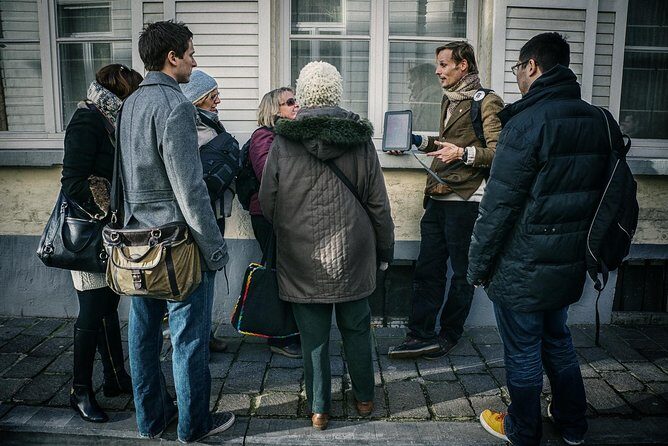
Ghent is made for a walking game. This e-Scavenger hunt turns the city center into a self-guided route, using a smartphone app so you can go at your own speed while still ticking off the big sights. It’s a family-friendly format, and the stops line up nicely with Ghent’s most recognizable landmarks.
I really like the way this experience mixes classic sights with hands-on clues. You’ll pass the Ghent Town Hall complex around Botermarkt and the Saint Bavo’s Cathedral area, but the app-style prompts help you notice details you’d otherwise breeze past. I also enjoy the focus on river views and old neighborhoods, so the walk feels like sightseeing plus a mission.
One thing to consider: you need your own smartphone and data to run the app. If your battery is shaky or your signal is spotty, plan ahead so the game doesn’t slow you down.
In This Review
- Key highlights you’ll feel right away
- Walking Ghent with a game plan from Sint-Baafsplein
- Vrijdagmarkt and Ghent Town Hall: oldest squares, best clue energy
- Saint Bavo’s Cathedral and Gheeraert Vilain, nicknamed the Devil
- Gravensteen: the medieval castle you can still really read
- The Ghent City Center loop: riverfront calm at Korenmarkt and Leie
- Belfry and the guild-and-trade power stops
- Patershol, the graffiti alley, and where you can slow down
- Fine arts stop and how to fit it into your 2 to 4 hours
- What’s included, what you must bring, and what makes it worth $37.24
- Who this e-scavenger hunt fits best
- Should you book e-Scavenger hunt Ghent?
- FAQ
- Where does the e-Scavenger hunt start?
- How long does the tour take?
- Is it available in English?
- Do I need a smartphone to use the app?
- Is this activity private?
- How many people can be in the group?
- Is there a ticket or confirmation?
Key highlights you’ll feel right away
- App-led route that keeps you moving while still letting you pause for photos
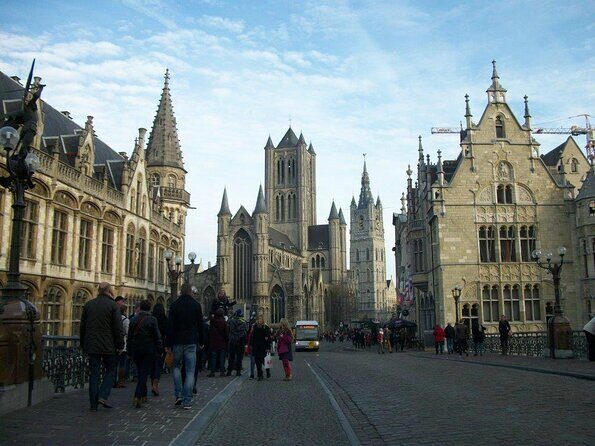
- Big medieval anchors like the Belfry (95 meters) and Gravensteen castle views
- Riverfront time along Gentse Graslei and Korenlei for terraces, boats, and classic Ghent scenes
- Cathedral stop with a story tied to Gheeraert Vilain, nicknamed the Devil
- Old lanes and textures in Patershol and the graffiti alley between Hoogpoort and Donkerstraat
- Small-group vibe (private for up to 6 in your party)
Walking Ghent with a game plan from Sint-Baafsplein

The hunt starts at Sint-Baafsplein, and that matters more than you might think. You begin in the thick of Ghent’s center, so you don’t waste time commuting between “major stops.” From there, the route naturally strings together squares, churches, bridges, and the castle area, which is the best way to see a compact city without feeling rushed.
The app format also helps you control the pace. You’re not stuck in a fixed group rhythm, and you can linger when something catches your eye—especially around the river. And since the activity is designed to be family-friendly, the clues are meant to be engaging rather than overly technical.
You’ll be using your own phone (the app is included, but smartphone and data are not), and that’s your main “gear check.” Bring a fully charged battery and consider offline planning for peace of mind.
You can also read our reviews of more city tours in Ghent



Vrijdagmarkt and Ghent Town Hall: oldest squares, best clue energy
Early on, you hit the Vrijdagmarkt. This square is described as one of Ghent’s oldest, and it’s about one hectare—big enough to feel like a true civic space rather than a quick photo stop. Squares like this are where cities show off their identity, and this one gives you a grounded sense of where you are in Ghent’s story.
Right from there, you move into the Ghent Town Hall area—a four-sided complex of buildings surrounded by Botermarkt, the Hoogpoort, Stadhuissteeg, and Poeljemarkt. That “four-sided” layout is useful while you’re playing the game: it makes it easier to orient yourself because you can take in the whole boundary of streets and entrances.
What I like here is how the clue-and-tip setup encourages you to look around instead of just straight-line walking. If you’re the kind of person who usually walks past facades because you assume you already know what you’ll see, the app prompts are a good nudge.
Possible drawback: if you’re not into clue games, some parts may feel like you’re stopping more often than “pure wandering” would require. The upside is that Ghent rewards attention to small details.
Saint Bavo’s Cathedral and Gheeraert Vilain, nicknamed the Devil
Next comes Saint Bavo’s Cathedral, described as the oldest parish church in Ghent’s lively heart. It’s built on the site of an earlier church history: a 10th-century church and a Romanesque church before the current cathedral. Even if you’re not a serious church architecture person, that layering makes the stop more interesting than a single “look and move on.”
Then there’s the standout name connection: the stone building is named after the builder, knight Gheeraert Vilain, nicknamed the Devil. The information you’ll see in your route narrative places the sale to the city of Ghent around 1328. That kind of detail is exactly why app-guided sightseeing often beats plain scrolling on a phone—your attention gets anchored to a story, not just a structure.
Practical tip: plan a few minutes of quiet here if you can. Churches tend to change the pacing of a walk, and Saint Bavo’s is the sort of place where you’ll notice more by slowing down for a moment.
Gravensteen: the medieval castle you can still really read
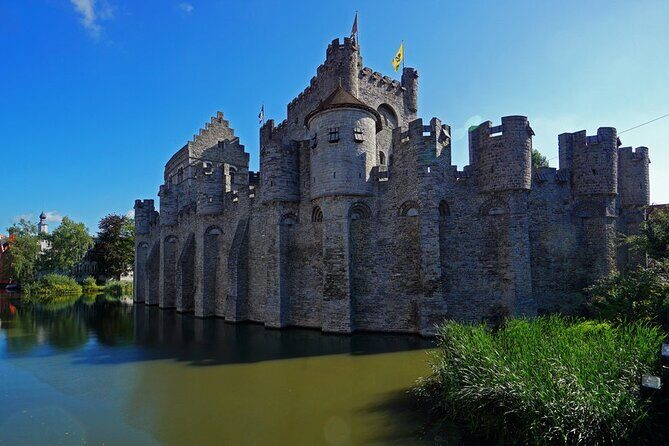
After the cathedral area, you’ll reach Gravensteen. This is billed as the only remaining medieval castle in Flanders, with an almost intact defense system. That’s a rare combination: not just “castle vibes,” but visible fortification logic.
Even if you don’t go deep into castle history, Gravensteen is valuable because it connects the medieval power theme of Ghent to something physical and hard-edged. A defense system makes the scale and purpose clearer than a single tower or wall fragment.
How to enjoy it during the hunt: keep the game moving, but don’t rush the visuals. The defense angles and the overall layout are what make this stop worthwhile, so let your eyes do the work while the app gives you the next prompt.
The Ghent City Center loop: riverfront calm at Korenmarkt and Leie
The heart of the route centers on the medieval city center around Korenmarkt and the river Leie, described as the main attraction area. There’s also a noted 2 hours for this central segment (with admission ticket free), which hints at how much you can get out of this part without paying for extra entrances.
This is where Ghent’s personality comes through: Gentse Graslei and Korenlei. You’ll be looking at historic buildings, terraces, the water, and boats. If you’ve ever visited cities where the river is just background scenery, Ghent is different. The waterline views are built into the city’s identity—perfect for a self-paced route because you can linger without feeling like you’re falling behind a group.
Add St-Michael’s Bridge (right by St Michael’s Church near Korenmarkt) and you get another classic river crossing viewpoint. Bridges give you a natural “look back” moment, which is great for the hunt because it helps you reposition your brain: you’re not only moving forward, you’re checking your surroundings.





Belfry and the guild-and-trade power stops

One of the biggest must-sees on your path is the Belfry of Ghent, described as a 95-meter-high tower and the middle tower in the famous row of Ghent towers. Even if you’re standing at street level, the sheer height makes it a visual anchor for the whole center.
Next you’ll pass a church existing since the 11th century, tied to wealthy merchants and the guilds of Ghent. That’s the social engine of medieval cities: trade money and organized crafts. It’s also a nice complement to the river stops—because the water routes brought business in, and guild power made the city run.
Then there’s a reminder that this wasn’t just pretty stone. You’ll be directed to a square that, since the 10th to 11th century, was the trading place for grain that arrived via the Leie or Scheldt. If your app prompts connect the clue to that kind of detail, you’ll see the square differently—more “working city” and less “photo backdrop.”
Patershol, the graffiti alley, and where you can slow down

Once you’ve handled the major landmarks, you get a change of mood with Patershol. This is an old neighborhood in the historic center, with narrow medieval streets and plenty of cafes and restaurants. In a self-guided hunt, that’s a smart design choice. It gives you a built-in “break zone” where you can reset, grab a drink, and continue the game without feeling like you’re rushing.
Then comes the lane you’ll probably remember after you leave: a winding alley between Hoogpoort and Donkerstraat, also called the graffiti street because of its look. Whether you like street art or not, it’s a useful contrast to the formal architecture stops. It also turns the hunt route into something more varied than cathedral-to-castle only.
If you’re short on time, don’t treat these as optional add-ons. This is often where your photos end up being the most “Ghent” because they show texture: doorways, street angles, and the feel of old lanes.
Fine arts stop and how to fit it into your 2 to 4 hours

The route also includes the Ghent Museum of Fine Arts, described as one of the oldest museums in Belgium. It includes paintings, sculptures, drawings, etchings, and tapestries.
Now, here’s how I’d think about it: the hunt works best when you match your museum energy to your day. If you’re museum-leaning, you’ll likely want to budget real attention here. If you’re more “walk-and-look,” you can treat it as a waypoint and keep moving, using the app clues to decide how deep you want to go. The structure of a 2 to 4 hour experience gives you flexibility either way.
Duration ranges from 2 to 4 hours, which is a sweet spot for Ghent. You won’t feel trapped in a half-day plan, and you still get a solid chunk of the medieval core.
What’s included, what you must bring, and what makes it worth $37.24
The price is $37.24 per group (up to 6). On the high level, that’s a group rate, not a per-person ticket. If you split it between a few people, the cost becomes much easier to justify versus paying per head for a guided walking tour. And because the hunt is self-guided, you’re not paying for constant narration—you’re paying for route design, app delivery, and the structure that helps you see more in less time.
Included:
- A City Trail for a team of max 6 people
- A free smartphone app
- A mobile ticket (so you won’t be hunting for paper)
Not included:
- Smartphone and data
That “smartphone and data” part is your key responsibility. Also note: the tour is a private activity for your group only, which usually makes a difference in comfort if you want to pause, take photos, or keep the pace family-friendly.
Value check: with the Belfry, Gravensteen, riverfront stops, Patershol, and a museum option on the same route, you’re paying for smart routing. This is the sort of experience that can save time and help you avoid the scattershot approach.
Who this e-scavenger hunt fits best
This one is a strong match if you:
- Want to see Ghent’s core sights without waiting on a larger tour group
- Like the idea of clues and tips to help you notice more
- Travel with family and want a game-like format rather than a lecture
It’s also a good fit if you’re the type who prefers flexible timing. The route runs essentially all day (listed as Monday to Sunday: 12:00 AM to 11:59 PM), which is handy when your travel schedule is messy.
You’ll also be fine if you need practical support: the info notes service animals allowed and that it’s user-friendly for hearing impaired. It’s also marked as near public transportation, so you can likely plan it around your arrival and departure without hassle.
Should you book e-Scavenger hunt Ghent?
If you want a way to see Ghent that feels fun and structured, I’d book it. The route is packed with top anchors—Vrijdagmarkt, Town Hall complex area, Saint Bavo’s Cathedral, Gravensteen, the Belfry, the Graslei/Korenlei riverfront, plus Patershol and that graffiti alley stop. That’s a lot of “big scenery” for a 2 to 4 hour plan.
I’d only hesitate if you hate app-based scavenger games or you don’t want to manage phone battery and data. Otherwise, this is a good value way to explore—especially because the best part isn’t just the sights. It’s the way the clues push you to walk through different parts of the city and actually pay attention while you do it.
FAQ
Where does the e-Scavenger hunt start?
It starts at Sint-Baafsplein, 9000 Gent, Belgium, and the activity ends back at the same meeting point.
How long does the tour take?
The duration is 2 to 4 hours (approx.).
Is it available in English?
Yes, it’s offered in English.
Do I need a smartphone to use the app?
Yes. The tour includes the free smartphone app, but a smartphone and data are not included.
Is this activity private?
Yes. It’s a private tour/activity, so only your group participates.
How many people can be in the group?
The trail is listed for a team of max. 6 people.
Is there a ticket or confirmation?
You’ll receive a mobile ticket, and confirmation will be received at time of booking.