REVIEW · GHENT
e-Scavenger hunt Kortrijk: Explore the city at your own pace
Book on Viator →Operated by Qula · Bookable on Viator
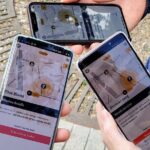
Play detective through Kortrijk, no guide needed. This e-Scavenger hunt turns landmark sightseeing into a smartphone game, so you’re not just walking, you’re answering prompts and learning while you go. I like that it’s truly at your own pace, with a route you can pause and restart whenever you want, and you still hit major sights like the Beguinage area and St. Martin’s Church.
I especially like how the stops mix “big postcard” places with smaller, local-feeling stops that make Kortrijk feel lived-in. The Beguinage and its court areas give you medieval atmosphere, while the game format keeps the walk from dragging. One catch: you’ll need your own smartphone and data, and if your phone’s GPS or navigation is flaky, you may spend extra time re-finding locations.
In This Review
- Key Things to Know Before You Start
- An App Game That Makes Sightseeing Feel Like a Walk With a Mission
- Price and Time: What You’re Really Paying For (and When It’s a Good Deal)
- Where You Start at Stationsplein 6 (and How to Set Up Fast)
- Beguinage UNESCO Calm: Courtyards, Mattheuskapel, and Medieval Everyday Life
- The Speytorre and the “Why” Behind City Towers
- Texture Museum Stop: From Flax to Linen, Linked to the Lys Valley
- Church of Our Lady (1199): Count Baldwin IX and the Grave Domain Setting
- Kortrijk 1302 and Groeninge Abbey: Myths Made Around a Battle
- Gothic-Renaissance Transitional Style and the Counts of Flanders Statues
- International Rose Garden and Castle ’t Hooghe: Color Break in the Route
- St. Martin’s Church: From Worship Around 650 AD to Great Views
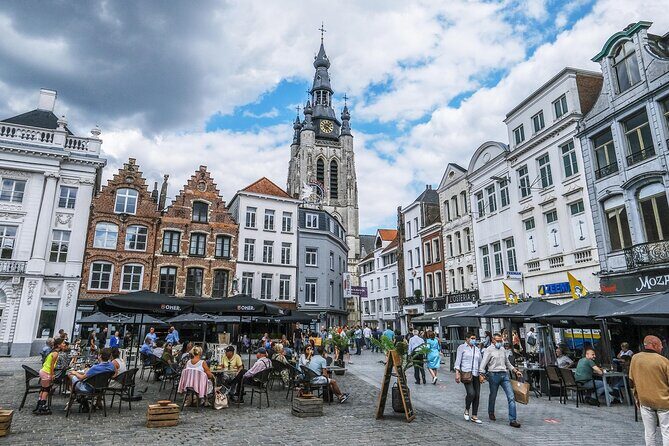
- Grote Markt Center Stage: Belfry (Belfort) and the Cloth Hall Link
- Baggaertshof and the 1638 Charity Story
- Astrid Park: Why the Park Has This Name
- Shopping Stops That Make Kortrijk Feel Current
- Groeningepoort, Groeninge Gate, and the 600th Anniversary Theme
- Kortrijk Theatre: A 1920 Building With an Italian-Style Shape
- Old Hospital Inner Courtyard: Hospitality, Not Illness
- Armorie Tower / Artillery Tower and Philip the Fair’s War Context
- Church of the Passionists (1874): Popular Devotion in a Late-19th-Century Form
- My Take: Who This e-Scavenger Hunt Is Perfect For
- Should You Book This Kortrijk e-Scavenger Hunt?
- FAQ
- How much does the Kortrijk e-Scavenger hunt cost?
- How long should I plan for?
- What language is the mobile game in?
- Where does the hunt start and where does it end?
- What do I need to bring?
- Is it a private experience for my group?
- Can I get a full refund if I cancel?
Key Things to Know Before You Start
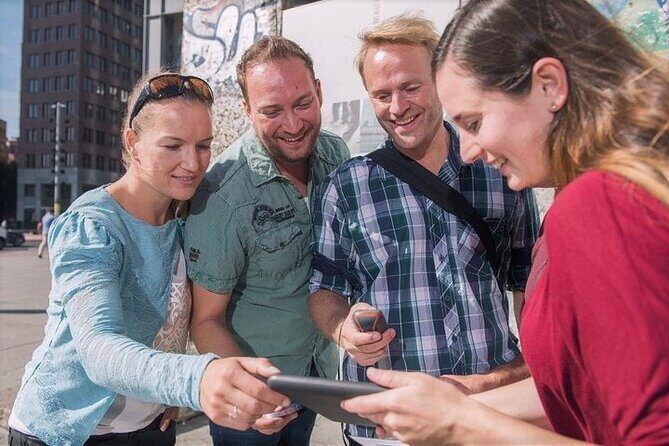
- Self-guided app trail: You control the order and pace; no guide talk required
- Game format at real landmarks: Questions are tied to places like the Beguinage, Belfry, and churches
- Built for groups up to 6: One price per group, so it can be a smart deal
- You bring the tech: Smartphone and data are not included
- Most travelers can join: Service animals allowed, and it’s described as user-friendly for hearing impairment
An App Game That Makes Sightseeing Feel Like a Walk With a Mission
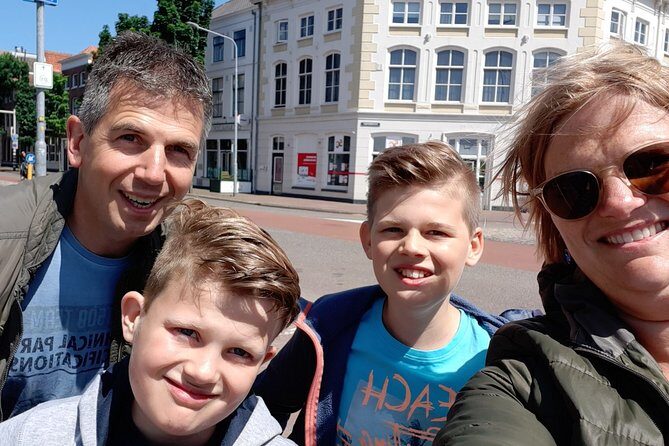
This isn’t a tour where someone talks at you for hours. Instead, you follow a route with prompts on your phone, turning a normal city walk into a sequence of small challenges. That changes the rhythm right away. You start paying attention to details—materials, façades, shapes of towers—because you’re trying to solve something at each stop, not just pass by.
I like that the experience is designed for independence. You don’t have to wait for a group to catch up, and you can stop for a coffee or linger by a viewpoint without feeling like you’re holding up a schedule. With a route like this, that matters. Kortrijk is compact enough to enjoy slowly, and the self-guided setup lets you match the city to your energy level.
The trail also feels like a mix of “yes, I’m seeing the famous things” and “oh wow, I didn’t expect this.” Stops include major landmarks such as the Belfry (Belfort) in the Grote Markt, plus places tied to local identity, like textile history and charitable architecture. It’s the kind of combination that helps a city click faster.
You can also read our reviews of more city tours in Ghent


Price and Time: What You’re Really Paying For (and When It’s a Good Deal)
The price is $37.33 per group, up to 6 people. That’s the key to value. If you travel as a small group or as a family, you can effectively split the cost and make the price per person feel very reasonable for a structured 2–4 hour activity.
Expect about 2 to 4 hours. In practice, the game makes that time feel shorter because you’re constantly doing something small at each location—reading the prompt, checking the answer, moving on. Still, plan for the full range. If you pause often, explore photos, or get stuck for a minute on a location, you’ll land closer to the longer end.
This is also a good fit if you’ve already done a walking loop on your first day and you want something different. A self-guided hunt gives you a second look at the same streets with new eyes, without forcing you into a strict group agenda.
Where You Start at Stationsplein 6 (and How to Set Up Fast)
You begin at Stationsplein 6, 8500 Kortrijk, and the route ends back at the same meeting point. The activity is listed as running essentially all day (Monday through Sunday, 12:00 AM to 11:59 PM), which makes planning easy—especially if you’re mixing it with museums or meals.
Here’s what you should do before you start:
- Charge your phone fully. You’ll use it for navigation and the app game.
- Accept that you’re responsible for smartphone and data. Bring a data plan or use offline options you already trust.
- If you’re sensitive to delays, keep a backup habit ready: if GPS fails or drifts, using a map app like Google Maps is the practical fallback.
One review noted that GPS didn’t function properly during their trail, and they had to trace locations another way. That’s not uncommon with city walking games. The good news is the overall experience still works if you adapt quickly.
Beguinage UNESCO Calm: Courtyards, Mattheuskapel, and Medieval Everyday Life
Your trail starts in the Beguinage zone, a UNESCO World Heritage Site since 1998. It dates back to the 13th century, and the atmosphere is what you’re really here for: small houses, a quieter courtyard feeling, and a sense that this is a different pace than the street outside.
You can stroll past the small houses and spend time in the courtyard area or visit the Mattheuskapel. Even if you don’t know the story, the physical layout helps you understand the purpose: a secluded community space where everyday life mattered. For many people, this is the first stop where the game prompt turns into real curiosity—because the space invites you to look around.
Also watch for the layered history. The Beguinage was destroyed several times: in 1302 during the Battle of the Golden Spurs, again in 1382 after the Battle of Westrozebeke, and later by the French in 1684. You’ll also see that the 41 cottages date back to the 17th century. That mix—old in origin, later in rebuilding—makes the area feel like a living timeline, not a museum set.
The Speytorre and the “Why” Behind City Towers
Next comes the Speytorre, a tower built of limestone and sandstone. It was constructed in 1385 to help control traffic on the Lys. That detail matters because it changes what you think a tower is for. It’s not just decorative. It has a job—managing movement and power in a working river city.
When the app prompts you here, you’re being nudged to read the tower like evidence. Pay attention to the materials and the tower’s strong, functional shape. It’s an easy stop to speed through, but it’s also one of the most interesting for people who like the practical mechanics behind medieval cities.



Texture Museum Stop: From Flax to Linen, Linked to the Lys Valley
The trail includes Texture, a museum focused on flax cultivation and processing into linen fabric. The story is connected to the Lys Valley and how that local resource shaped Kortrijk’s development.
Even if you don’t spend hours inside, the stop makes sense because linen isn’t just a craft—it’s an economic and social thread. If you’ve ever wondered why certain cities “became textile cities,” this kind of stop gives you the physical chain of cause and effect: field plants → processing → fabric → trade and work. It’s the kind of learning that sticks because it ties directly to your route and your surroundings.
Church of Our Lady (1199): Count Baldwin IX and the Grave Domain Setting
The Church of Our Lady construction began in 1199, initiated by Count Baldwin IX. The church was located within the grave domain of Kortrijk, which is a useful detail to keep in mind while you look at it.
A lot of big churches feel generic from the outside if you don’t know their placement. The “grave domain” element adds meaning: this was tied to the way people marked life, death, and community memory. The game-style prompts here should help you notice architectural cues instead of treating the façade like background.
Kortrijk 1302 and Groeninge Abbey: Myths Made Around a Battle
You’ll also reach Kortrijk 1302, a multimedia museum located in the Groeninge Abbey area. It deals with myth-making around the Battle of the Golden Spurs. That angle—how stories get shaped—turns history into something you can question rather than just accept.
This stop is especially good for you if you like stories that explain why certain legends stick. The Battle of the Golden Spurs is famous, but the “myth-making” theme helps you see history as something curated over time. In a self-guided format, this is where the app’s prompts can guide your attention so you don’t just skim.
Gothic-Renaissance Transitional Style and the Counts of Flanders Statues
The route includes a stop featuring an architectural style described as Gothic-Renaissance transitional, with 14 statues on the façade filled with statues of the counts of Flanders.
Even if you can’t name every count, you can still enjoy the visual idea: a façade acting like a long lineup of power and identity. In a city trail game, that kind of feature works well because you can match the clue to what you’re seeing. It’s also one of those moments where a pause helps, because you’ll want to look long enough to actually connect the prompt with the façade.
International Rose Garden and Castle ’t Hooghe: Color Break in the Route
A welcome change comes with the International Rose Garden, dating back to 1959. It sits in the gardens of castle ’t Hooghe along the Doorniksesteenweg.
This is the kind of stop that turns the trail from “history walking” to “pleasant strolling.” Roses also give you natural photo opportunities, and the game prompts here can help you slow down. If you’re traveling in warmer months, this is a great spot to rest your legs for a while and enjoy the quieter garden pace.
St. Martin’s Church: From Worship Around 650 AD to Great Views
One of the top viewpoint moments in the trail is St. Martin’s Church (Sint-Maartenskerk). The site was home to a place of worship as early as around 650 AD. That’s a huge timespan, and it helps you understand why this location keeps mattering.
Even if you don’t go deep into architecture, the important thing is the continuity: a spiritual site that kept being used and rebuilt over centuries. In a game format, these kinds of ancient anchor points make the rest of the walking feel more connected, like you’re tracing a long human thread through the city.
Grote Markt Center Stage: Belfry (Belfort) and the Cloth Hall Link
You’ll see the Belfry (Belfort) standing in the centre of the Grote Markt. It was part of the former cloth hall, and the earliest mention of the cloth hall dates to 1248.
This is one of those landmark anchors that helps you orient the city. When you’re mid-walk, returning to a central square with a strong monument makes the route feel purposeful. And the cloth-hall detail adds depth: this wasn’t only civic pride. It tied directly to commerce, trade, and wealth generated by textiles.
Baggaertshof and the 1638 Charity Story
Another special stop is the Baggaertshof, founded in 1638 by Joossine Baggaert. She set up 13 cottages for needy women, which turns a simple-looking cluster of buildings into a powerful social snapshot.
This is a great moment to slow down. Charity architecture isn’t always dramatic from a distance, but it matters because it tells you what a city valued. In a self-guided hunt, prompts here can push you to notice the layout and the care built into the structure.
Astrid Park: Why the Park Has This Name
You’ll also run into the park area tied to a royal visit. The trail notes that the park got its name after a visit by Queen Astrid to Kortrijk on 5 April 1935.
That kind of fact is small, but it’s useful. It turns a park from generic green space into a named landmark with a story behind it. It’s also a good breather between major monuments.
Shopping Stops That Make Kortrijk Feel Current
Not every stop is a church or museum. The trail also includes shopping centers:
- K in Kortrijk: in the heart of Kortrijk, with more than 80 shops and restaurants across 34,000 m²
- Ring Shopping: an indoor center on the outskirts with 90 shops
These might sound random, but they’re actually smart for a city trail. They help you understand the city as a living place, not only an old-stone backdrop. Also, if the weather turns, indoor stops can help you keep momentum instead of forcing you to abandon the walk.
Groeningepoort, Groeninge Gate, and the 600th Anniversary Theme
A cluster of stops leans into a major commemorative theme: the 600th anniversary of the Battle of the Golden Spurs.
- The Groeningepoort is a memorial triumphal arch built for that anniversary.
- The Groeninge Gate (Groeningepoort) and the Groeninge monument (Groeningemonument) were also constructed to commemorate the same milestone.
You’ll want to approach these like a set, not one-off statues. The repetition of the “600th anniversary” idea is exactly what makes the route feel like a guided narrative, even without a live guide.
Kortrijk Theatre: A 1920 Building With an Italian-Style Shape
The trail includes Kortrijk Theatre, described as one of the largest performing arts centers in South-West Flanders. The building dates from 1920 and is conceived as a théâtre à l’italienne (an Italian-style theatre layout).
This stop is a good one for architecture lovers. It also works for everyone else because it’s a break from church-and-history mode. If you’ve been walking for a while, this kind of landmark gives your eyes a new kind of detail to look for—angles, façade structure, and the formal “public building” feeling.
Old Hospital Inner Courtyard: Hospitality, Not Illness
One of the most human-feeling stops is the hospital inner courtyard, described as one of the best preserved 17th-century sites in Kortrijk. The note about the word hospitalis is important: it refers to hospitality, not illness.
That changes how you read the space. Instead of assuming “this was only about sick people,” you can see it as a designed place of welcome. In a game trail, these clarifications help your brain file the stop correctly and remember it longer.
Armorie Tower / Artillery Tower and Philip the Fair’s War Context
The route includes the Artillery Tower, also known as the Armorie Tower. It was built with the castle in 1301–1302 by French King Philip the Fair, as part of the Franco-Flemish war against the Count of Vlaandere.
This stop gives you the military side of the city. Towers and walls often feel abstract, but the date and political context make them concrete. If you like “who fought whom and why,” this is the moment where your walk starts to feel like a map of power rather than just buildings.
Church of the Passionists (1874): Popular Devotion in a Late-19th-Century Form
Finally, you reach the church of the Passionists, built in 1874. It’s described as the archetypal church of popular devotion.
This is a nice finish because it shifts time period. Earlier stops lean medieval; later stops bring the story closer to modern religious life. If you’ve spent the last hours walking between courtyards, façades, and memorial arches, this final church stop gives the route a “closing chord.”
My Take: Who This e-Scavenger Hunt Is Perfect For
This fits best if you want to explore Kortrijk without tuning out. The app game format makes it active. You get sightseeing plus interactive learning in about 2–4 hours, and you can do it around your own schedule.
It also works well for families and people who like team play. One review specifically highlighted excitement when playing in teams, and many noted the questions felt child-friendly for at least part of the route. If you’re traveling with mixed ages, this can be a smart way to keep everyone focused without hiring a private guide.
If you hate using phones while walking, or you know your signal/GPS settings are unreliable, you might find it stressful. The trail is designed for independence, so you’ll be doing the navigation yourself.
Should You Book This Kortrijk e-Scavenger Hunt?
Yes, if you want a low-pressure, high-engagement way to learn the city. The self-guided app format is the big selling point: you can pause, rearrange your pace, and still see major landmarks like the Beguinage area and the Belfry. At $37.33 per group up to 6, it’s especially good value when you split it.
Book it if:
- You like puzzles, questions, and “find it as you go” sightseeing
- You want to see both famous Kortrijk highlights and less obvious stops
- You’ll be walking for 2–4 hours anyway, so the activity becomes a structured alternative
Skip it (or be cautious) if:
- You don’t want to rely on your phone at all
- You expect GPS to be perfect everywhere you walk
- You don’t like walking routes that may require patience if roadworks temporarily block a view
FAQ
How much does the Kortrijk e-Scavenger hunt cost?
It costs $37.33 per group, up to 6 people.
How long should I plan for?
Plan for about 2 to 4 hours.
What language is the mobile game in?
The experience is offered in English.
Where does the hunt start and where does it end?
It starts at Stationsplein 6, 8500 Kortrijk, Belgium, and ends back at the same meeting point.
What do I need to bring?
You need a smartphone and data. The app is provided online, but smartphone and data are not included.
Is it a private experience for my group?
Yes. It’s a private tour/activity, and only your group participates.
Can I get a full refund if I cancel?
Yes. There is free cancellation, and you can cancel up to 24 hours in advance for a full refund.