REVIEW · GHENT
Ghent Walking Tour with Audioguide on Your Smartphone
Book on Viator →Operated by TouringBee · Bookable on Viator
Ghent’s canals make every corner feel like a postcard. This smartphone audio walking tour strings together the city’s must-see medieval sights in a simple route you can follow at your own speed. It’s designed for easy wandering: an offline map, clear landmark matching, and a long list of audio stops that keep things interesting without forcing you to stay with anyone.
What I really like is the freedom. You can pause, speed up, or skip a section when you’re done with a sight, and the route still makes sense. The second big plus for me is the “ready-to-go” tech side: you get a mobile ticket, an app for iOS/Android, and a mapped route so you’re not constantly searching.
One thing to consider: this is self-guided, so you’ll need your own headphones and a phone with enough battery. If your app or download is flaky, the experience depends on getting it working before you start.
In This Review
- Key Things That Make This Tour Work In Ghent
- Why This Route Feels Like the Right First Look at Ghent
- Starting at St Michael’s Bridge: Your Ghent “Orientation Shot”
- Grasbrug Drawbridge: Medieval Engineering With Real Views
- Old Meat Market Hall: Old Building, Modern Food Energy
- Groentenmarkt: The Vegetable Market Square That Still Runs the City
- Gravensteen Castle and Rabot Gatehouse: Power and Place
- Gravensteen Castle: The Castle of the Counts
- Rabot: The City Gate That Watches Over the Neighborhood
- Patershol: Cobblestones, Colorful Houses, and the Walking Reward
- Friday Market Square (Vrijdagmarkt): Belfry and Church Views
- Werregarenstraat (Graffiti Street): Modern Color After Medieval Stone
- St Bavo’s Cathedral and the Tower Views: Artistic Big Deal
- Ghent’s Belfry: Climb for the City Picture
- St Nicholas’ Church and St Michael’s Church: Quiet Gothic Moments
- St Nicholas’ Church
- St Michael’s Church
- Timing, What to Bring, and How to Avoid App Frustration
- Price and Value: $8.42 for a Full Walking Loop
- Who This Tour Suits Best (And Who Should Look Elsewhere)
- Should You Book This Ghent Smartphone Walking Tour?
- FAQ
- What language is the audio guide available in?
- How long is the Ghent walking tour?
- Where does the tour start and where does it end?
- Is there a human guide on this tour?
- Do I need to bring headphones?
- What should I know about cancellation?
Key Things That Make This Tour Work In Ghent
- Self-guided pace with an offline GPS map so you can keep moving without group pressure
- 31 audio recordings covering Ghent’s sights and what to look for as you walk
- Illustrations to help you recognize landmarks quickly at street level
- A tight loop of medieval icons and scenic river stops in roughly 3 hours
- Smartphone format with 1-year access if you want to replay parts later
- Small group cap (max 20), even though you’re still walking independently
Why This Route Feels Like the Right First Look at Ghent
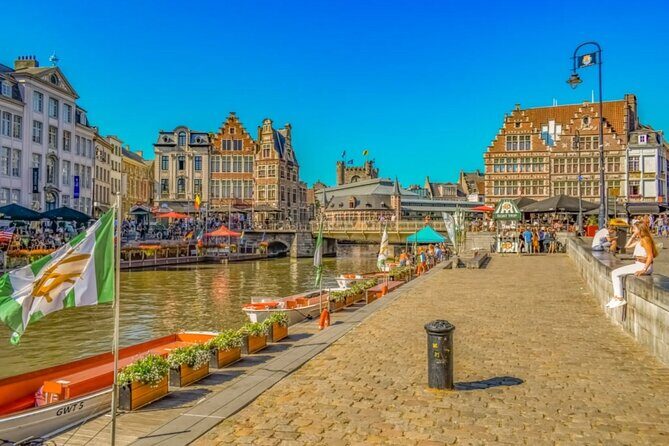
Ghent is one of those cities where the “pretty bits” are tied to the “important bits.” The canals, the stone bridges, and the medieval civic buildings all show up in the same walk. This tour leans into that. You start by the waterways and keep moving through the core neighborhoods—so you’re not bouncing across town trying to connect dots.
At about 3 hours, it’s long enough to feel like a real visit, but short enough to keep your feet from feeling like a bargaining chip by the end. Most walking legs are planned around 10–15 minutes, which is about right for reading stonework, taking photos, and letting the city’s rhythm land.
Also, this is a good match for first-timers who don’t want to overthink logistics. You don’t need tickets, guided explanations in real time, or a strict group pace—just your phone, headphones, and the route map.
You can also read our reviews of more walking tours in Ghent



Starting at St Michael’s Bridge: Your Ghent “Orientation Shot”
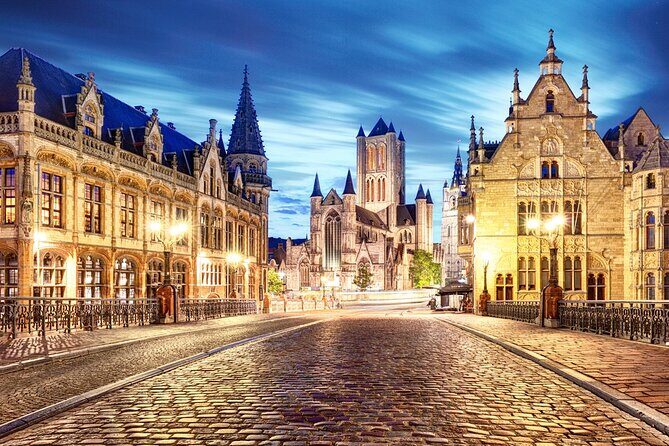
You begin at St Michael’s Bridge on Sint-Michielsplein. This is a smart start because bridges in Ghent do two jobs at once: they frame the scenery and they help you orient your bearings.
As you look out, you get a classic view of the medieval skyline details the city is famous for, including the Castle of the Counts area and St Nicholas’ Church. Even if you don’t go inside right away, this stop sets the visual theme: Ghent is all angles, towers, and canal reflections.
Practical tip: stand still long enough to spot the building shapes before you start walking. The audio guide’s landmark matching is useful here because it helps you connect what you’re seeing with what you’re about to hear.
Grasbrug Drawbridge: Medieval Engineering With Real Views
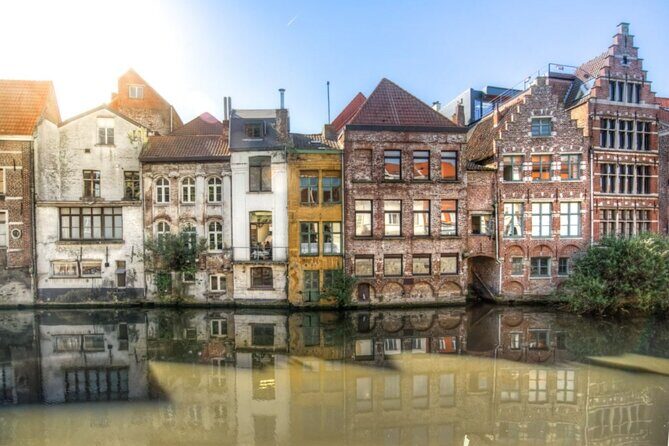
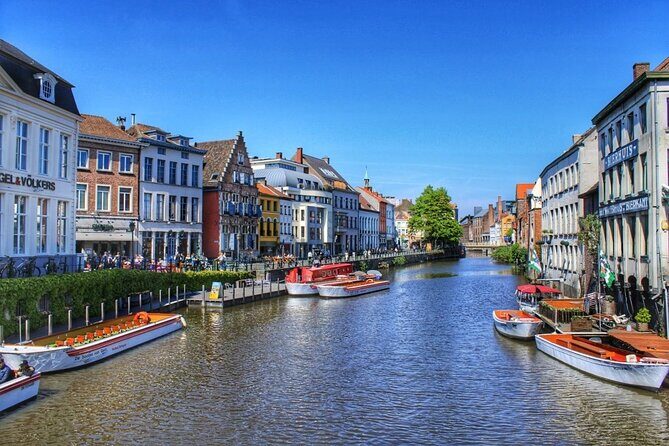
Next comes the Grasbrug Bridge over the Leie River, linking the embankments of Graslei and Korenlei. This is one of those sights where the stone and structure feel both old and functional, not just decorative.
The audio focus here is on the drawbridge mechanism and the waterfront setting. You’ll get plenty of chances to look across the river and scan the line of buildings along the embankment. For many people, this is where Ghent’s “cinematic” factor kicks in—because the view is wide and the details are close enough to notice.
One small consideration: it’s a popular photo area, so plan for a bit of stopping-and-starting if the walkway is crowded.
Old Meat Market Hall: Old Building, Modern Food Energy
Then you move to the Old Meat Market Hall, a medieval structure now used as a cultural and food-focused space. The key here is the contrast. You’re standing inside an old shell, but the experience is contemporary—think food stalls and artisanal shops where you can snack or browse as the mood fits your day.
This stop is valuable even if you’re not trying to eat. Market halls are built for movement, chatter, and people-watching, so it’s a nice break in a walking tour. It also gives you an easy option to grab something if you’re hungry later, without leaving the route.
If you’re trying to keep your cost down, treat it as a “browse first” stop. Entrance fees aren’t included, and food costs are, of course, on you—but the building itself is the point.
Groentenmarkt: The Vegetable Market Square That Still Runs the City
From there, the route heads to Groentenmarkt, Ghent’s historic vegetable market square. This is a great “slow down” area because it’s a square, not just a photo point. You’ll see historic building edges, outdoor café life, and that everyday market feel that makes cities feel lived-in.
If you like simple city moments—ordering a drink, watching people pass, catching up on the audio—this is a good place to do it. It also works as a reset before you move toward the bigger fort-and-tower sites.
A few more Ghent tours and experiences worth a look

Gravensteen Castle and Rabot Gatehouse: Power and Place
Now the route turns toward the medieval fortress and city defenses with two big stops: Gravensteen Castle and Rabot.
Gravensteen Castle: The Castle of the Counts
Gravensteen Castle towers over the city, and the audio guide’s angle is exactly what you’ll want here: dungeons, battlements, and panoramic views. This is the kind of stop that rewards you for taking a little extra time, because the whole point is seeing how the fortress controls the view.
Do keep your expectations realistic about time. You have a lot of ground to cover in a ~3-hour walk, so plan whether you’ll focus on exterior views plus the main interior highlights, or whether you’ll spend more time if you’re a fortress person.
Rabot: The City Gate That Watches Over the Neighborhood
Next is Rabot, a medieval gatehouse that once functioned as a toll gate and now stands as a symbol of Ghent’s endurance. This stop has a different feel than the castle: less “grand fortress,” more “historical checkpoint embedded in an active neighborhood.”
It’s a nice way to get the city’s layered story without sounding like a lecture. When the audio points out what to look for, you’ll usually start noticing the street-level details—the kinds of things you miss if you rush.
Patershol: Cobblestones, Colorful Houses, and the Walking Reward
Then comes Patershol, a historic quarter known for cobblestone streets, colorful houses, boutiques, and cozy places to eat. This is one of the best parts of the route if you like atmosphere, because it’s not only sight-seeing—it’s the kind of neighborhood where you naturally slow down and wander a few steps off-route.
The audio guide helps you keep the walk coherent, but you’ll still get room for little detours: small squares, tucked-in garden-like corners, and side streets that give you a different view of the same buildings.
If you’re traveling with someone who likes photos, this is a good “agree to stop often” area. It’s also handy when you need a break from tower views.
Friday Market Square (Vrijdagmarkt): Belfry and Church Views
Next is Vrijdagmarkt (Friday Market Square), a lively square with historic backdrops including the Belfry and St Nicholas’ Church. This is an important Ghent stop because it’s where the city’s civic pride becomes visible in architecture and in how people use the space.
The best strategy here is simple: pause in one spot and let the audio frame what you’re looking at. Once the Belfry and the church are in your mental map, everything else starts to snap into place.
Werregarenstraat (Graffiti Street): Modern Color After Medieval Stone
Then you’ll hit Graffiti Street, officially Werregarenstraat—a shifting street-art gallery with murals that add a contemporary edge to Ghent’s older layers.
This stop is worth it because it breaks the “all medieval all the time” rhythm. If you’re the kind of person who likes cities that evolve, you’ll appreciate how the tour doesn’t treat street art as an afterthought. It’s part of the story, not a detour.
Practical tip: street art is weather-dependent. If it’s raining or gloomy, the colors may look muted, so consider timing if you can.
St Bavo’s Cathedral and the Tower Views: Artistic Big Deal
After the street art, the route moves to St. Bavo’s Cathedral. The standout highlight here is the Mystic Lamb altarpiece by the Van Eyck brothers. Even if you don’t spend long inside, the audio cue helps you focus on what matters so the visit feels meaningful, not like a quick stop into a large building.
The cathedral also offers the chance to connect the art to the city’s identity—Ghent’s reputation isn’t only architectural. It’s also artistic, and this is one of the clearest places to see why.
Ghent’s Belfry: Climb for the City Picture
Next is Ghent’s Belfry, a UNESCO-listed tower with a huge payoff: 300 steps to reach panoramic views. The audio guide points out the dragon weathervane and the carillon (and what to listen for if you’re there when it’s active).
Even if you don’t know much about civic towers, you’ll understand the concept here quickly: the tower isn’t just a structure, it’s a statement of town identity. From the top, Ghent’s layout makes more sense, and you’ll likely notice how many of the walk’s stops connect visually.
Consideration: if you don’t love stair climbing, decide ahead of time how long you want to spend on this stop. The rest of the route still exists even if you choose to view from street level.
St Nicholas’ Church and St Michael’s Church: Quiet Gothic Moments
The tour finishes with more church stops: St. Nicholas’ Church and later St Michael’s Church.
St Nicholas’ Church
St Nicholas’ Church is introduced with a Gothic focus and the skyline presence you’ll likely spot from earlier points. The audio encourages you to look at the facade and then step inside to appreciate the medieval character.
St Michael’s Church
St Michael’s Church offers a quieter side: stained glass, an altar, and a calmer atmosphere away from the busiest streets. It’s the kind of stop that works well at the end of a walk, when your legs are tired and you want something that feels still.
One practical note: these are religious spaces, so keep your pace respectful and adjust your expectations if there are services or quiet times.
Timing, What to Bring, and How to Avoid App Frustration
This is easy to enjoy when everything tech-wise works. Here’s how to make it smooth:
- Bring your own headphones. They are not included.
- Use the offline map route from the app so you’re not relying on spotty mobile data.
- Save battery life: lower brightness, close other heavy apps, and keep an eye on charge.
- Start at St Michael’s Bridge (Sint-Michielsplein). The route is built around returning to the meeting point.
If the tour doesn’t download properly, there is support available via [email protected], and it’s specifically meant to help with installation and code entry issues. That’s not something you want to deal with mid-walk, so plan a quick check before you leave.
Price and Value: $8.42 for a Full Walking Loop
At $8.42 per person, the price is low enough that it feels like you’re buying time-saving guidance rather than a paid museum package. The value comes from the combination of:
- a 3-hour route
- 31 audio recordings
- offline navigation
- illustrations to spot landmarks
- 1-year access to revisit the tour in your chosen language (English)
Your main costs to consider are the ones not included: entrance fees/tickets, plus food and drinks if you choose to buy anything. Also, transportation to the start point is on you.
If you’re a traveler who likes walking, likes knowing what you’re looking at, and doesn’t want to pay for a human guide, this hits a sweet spot.
Who This Tour Suits Best (And Who Should Look Elsewhere)
This works especially well if you:
- enjoy walking at your own pace
- want a structured route without a strict schedule
- like medieval scenery but also appreciate modern street art
- prefer an audio format you can control (pause and replay)
It’s less ideal if you:
- hate using apps while traveling
- don’t like carrying headphones or worrying about battery life
- want a live guide to answer questions on the spot
Because there’s no human guide, you’re doing the learning through the audio. That’s the trade.
Should You Book This Ghent Smartphone Walking Tour?
Yes, if you want a practical way to see Ghent’s core without hiring a guide and without turning your day into a logistics puzzle. The route hits bridges, squares, fortress power, neighborhood character, and church interiors—then brings it home with calm, Gothic stops.
Book it if you’re comfortable with self-guided travel and you’ll take 5 minutes to get the app set up before you start. Skip it only if you expect someone to lead you step-by-step or if you don’t want to rely on your phone for navigation and narration.
If you like cities that reward slow looking, this is a good-value way to do Ghent properly in one walk.
FAQ
What language is the audio guide available in?
The audio guide is offered in English.
How long is the Ghent walking tour?
The duration is about 3 hours.
Where does the tour start and where does it end?
It starts at St Michael’s Bridge (Sint-Michielsplein, 9000 Gent, Belgium) and ends back at the meeting point.
Is there a human guide on this tour?
No. This is a self-guided tour with an audio guide app on your smartphone.
Do I need to bring headphones?
Yes. Smartphone and headphones are not included, so you’ll need to bring your own headphones.
What should I know about cancellation?
You can cancel for free, and you can cancel up to 24 hours in advance for a full refund.