REVIEW · GHENT
Discover Ghent with a self-guided Outside Escape city game tour!
Book on Viator →Operated by Outside Escape · Bookable on Viator
Ghent becomes a mystery trail in 2 hours. This self-guided city game turns major landmarks into puzzle checkpoints, with a story built around a missing panel from Lamb of God. I like that it gets you walking a tight route (about 2.5 km) without waiting on a group schedule, and I also like the problem-solving angle that pushes you to notice details you’d otherwise skip.
One possible drawback: this style depends on your phone and pacing. If you dislike puzzle hints or you want a fully guided narration, the experience may feel a bit too reliant on the game’s prompts.
In This Review
- Key Highlights You Should Know
- A Ghent Mystery You Solve at Your Own Pace
- Price and Group Value: What $28.66 Gets You
- What You Need: Smartphone, Data Plan, and a Simple Plan
- Stop 1: Vrijdagmarkt’s Old Square Energy
- Stop 2: St. Veerleplein, Gravensteen, and the Water Lines
- Stop 3: Sint-Niklaaskerk and the Lantern Tower at 76 Meters
- Stop 4: Stadshal’s KoBra Canopy in Emile Braunplein
- Stop 5: Geeraard de Duivelsteen and the Portus aan de Reep Connection
- Stop 6: Sint-Lievenscollege and the Bishop’s Palace Seat
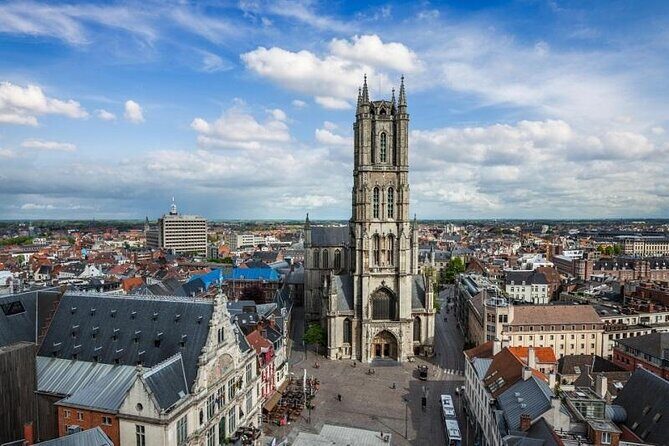
- Stop 7: St. Bavo’s Cathedral as Your Route’s Landing Point
- The Deathbed Confession Mystery: Why the Story Works
- Pacing Tips to Avoid the Hint Spiral
- Who Should Book This Ghent Game Tour
- Should You Book Outside Escape’s Ghent Game Tour?
- FAQ
- How long does the Outside Escape Ghent city game tour take?
- How far do I walk during the tour?
- How much does the tour cost?
- Where do I start the tour?
- Where does the tour end?
- Do I need a guide with me?
- What do I need to play?
- When can I start?
- What age is the tour suitable for?
- Is admission required for the stops?
- Is there a cancellation option?
Key Highlights You Should Know
- Start anytime: no fixed meeting time needed once you begin your route
- Smartphone-required: bring a charged phone and a mobile data plan
- Team-friendly: best with friends, up to 5–6 players and age 15+
- Real Ghent landmarks: Vrijdagmarkt, Gravensteen area, St. Niklaaskerk, and more
- Story-led clues: a deathbed confession leads you toward a missing art panel
A Ghent Mystery You Solve at Your Own Pace
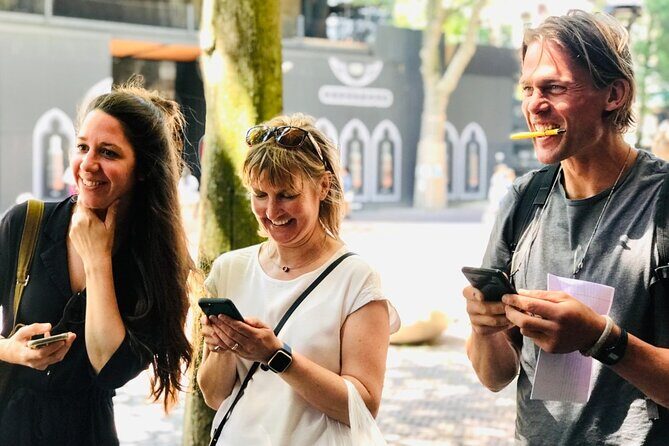
This Outside Escape outing is designed like a walking escape game, but with Ghent as your playing board. You’ll follow a set route through the center, solving prompts that connect local sights to an unfolding storyline. The best part is the flexibility: you can start at any moment you choose, rather than building your day around a strict tour departure.
The route is roughly 2 hours for most people (and can run up to about 2.5 hours), and it’s planned as a manageable circuit—about 2.5 kilometers on foot. That matters because Ghent’s old core can feel bigger than it looks on a map once you start weaving through streets. Here, the game gently keeps you on track while still letting you move at your own speed.
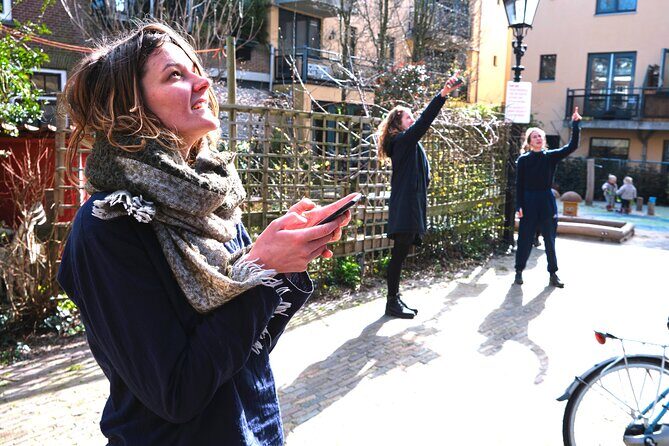
It’s also a social experience by design. The tour is set for up to 5–6 players, and the material is aimed at ages 15 and older (with supervision recommended for younger players). If you’re traveling with a group, this kind of format usually lands well because you can split roles: one person reads clues, another checks locations on the map, and someone else keeps an eye out for visual details.
You can also read our reviews of more guided tours in Ghent

Price and Group Value: What $28.66 Gets You
The price is $28.66 per group, for groups up to 5 people. That’s an important detail: this isn’t priced like a per-person guided tour. If you’re traveling with friends or a family unit, the value improves fast, because you’re essentially paying once for the group’s shared experience.
Here’s how I’d think about it:
- If you’re solo or as a couple, the cost per person can feel higher than a standard walking tour.
- If you’re in a group of 3 to 5, the game format can be very good value because everyone gets something to do.
- If you’re the kind of traveler who enjoys puzzles and wandering with a purpose, the entertainment factor is doing some heavy lifting.
One note based on feedback you might come across: people who want constant guidance or who find hint-based games frustrating may feel the price isn’t worth it. So the question isn’t only cost—it’s whether this “figure it out as you go” style matches your travel brain.
What You Need: Smartphone, Data Plan, and a Simple Plan
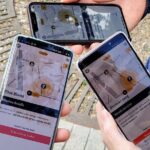
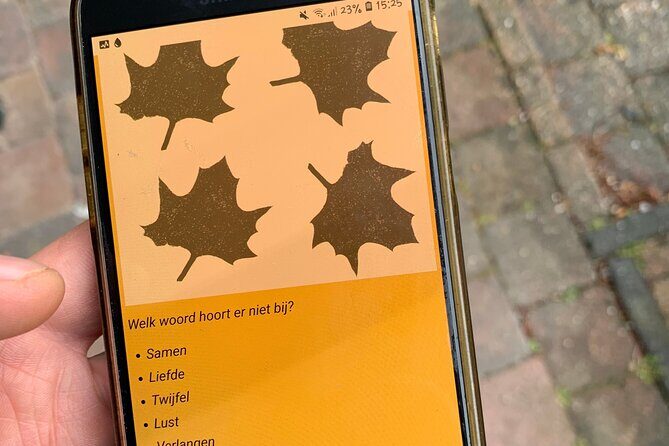
This tour runs on a mobile ticket, and the game expects a smartphone with a mobile data plan. That’s non-negotiable. Before you head out, I’d do two boring things that save you stress later: check that your phone is charged and confirm you’ll have data where you’re walking.
Also, because it’s self-guided, you’re responsible for pace. The route is short enough that you shouldn’t feel worn out, but long enough that you’ll want to avoid stopping every five minutes unless your team agrees to it. If one person is constantly behind, the whole puzzle flow can drag.
A good practical strategy is to pick a “team rhythm” right away:
- One person reads the clue text out loud.
- One person handles the map/location checks.
- Everyone else looks for the visible cues the clue might be pointing toward.
You’ll move faster and you’ll keep the fun part of the game from turning into awkward silence.
Stop 1: Vrijdagmarkt’s Old Square Energy
Your walk begins at Vrijdagmarkt, a historic square in Ghent. The square is about one hectare and played a major role in the city’s history. It’s the kind of place where you can feel the layers: civic life here over centuries, not just today’s café crowd.
Even if you’ve never studied Ghent, Vrijdagmarkt is a strong starting point because it’s central and easy to orient yourself. In a puzzle format, that matters: the first clue works best when you’re not already lost. Expect your opening puzzle prompt to use the square’s significance to nudge you into the right mindset—look around, compare details, and connect what you see to the story.
Admission at this stop is free, so you’re not paying extra to get started.
Stop 2: St. Veerleplein, Gravensteen, and the Water Lines
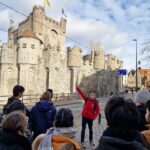
Next up is St. Veerleplein, a square with a layered geography. On the north side you’ll spot Gravensteen, Ghent’s fortress. West of the square runs the Lieve, tucked behind buildings, while to the south you have the Leie river. To the east lies the Patershol district.
This is one of those locations where a puzzle tour can help more than a typical sightseeing stop. The game nudges you to notice spatial relationships—how buildings face one way, where the water threads through the city, and how the medieval fortress looms over the square. If you like architecture but you usually feel like you’re just snapping photos, this kind of location-based clue can make the details click.
St. Veerleplein is named after Saint Pharaïldis of Ghent, which is the sort of tidbit that turns a square name into something you can actually remember. Admission here is also listed as free.
You can also read our reviews of more city tours in Ghent



Stop 3: Sint-Niklaaskerk and the Lantern Tower at 76 Meters
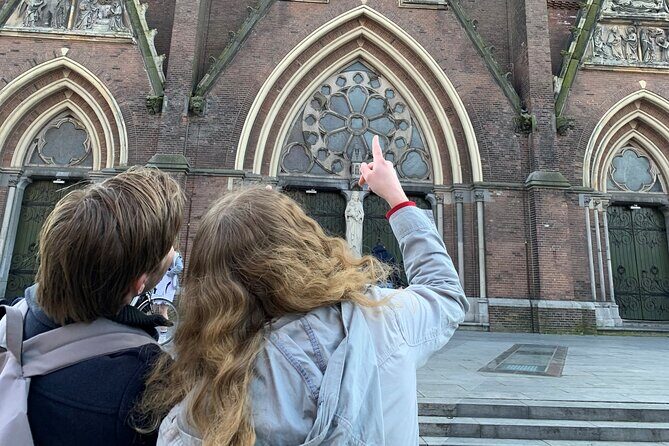
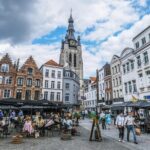
At Sint-Niklaaskerk, you’re stepping into a church connected to Nicholas of Myra. The building is a good example of Scheldt Gothic style. But the real star is the crossing tower—specifically a lantern tower—designed to illuminate the transept and the flying buttresses of the main choir. The tower height is 76 meters.
If you’re a traveler who enjoys seeing how buildings work (not just how they look), this stop is worth your time. That lantern tower detail is the kind of architectural feature you’d probably miss if you were rushing through. Even within a puzzle tour, you’ll likely slow down because the game is asking you to look closely rather than simply pass by.
The listed admission is free, so you’re free to linger and take in the geometry.
Stop 4: Stadshal’s KoBra Canopy in Emile Braunplein
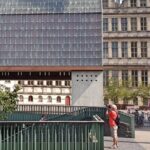
Then you shift from heavy medieval stone to the more modern Stadshal at Emile Braunplein. The Stadshal van Gent is described as a large, open canopy construction. It’s part of the KoBra project, a larger urban development effort in Ghent’s center.
This stop works because it interrupts the pattern. Many puzzle tours risk feeling like a checklist of the same era. Here, the canopy architecture is a reminder that Ghent isn’t only a museum town—people still use and build in the center.
In a game context, this is also helpful: open spaces make it easier to regroup and solve the next clue. If your team is a little stuck, a big open area is where you can spread out, talk, and reset without crowding each other.
Admission here is listed as free.
Stop 5: Geeraard de Duivelsteen and the Portus aan de Reep Connection
Your fifth stop is Geeraard de Duivelsteen, often described in English as the Castle of Gerald the Devil. This building played an important role in the defense of Portus aan de Reep, a trading settlement that stood at the cradle of Ghent’s birth.
That “cradle of Ghent” phrasing is a big hint about what this stop is doing for your understanding of the city. You’re not just looking at a fortress-like structure; you’re connecting it to trade, defense, and the early life of the city’s economy. It’s a useful mental upgrade from sightseeing to context.
Because it’s a defense-related site tied to a trading settlement, it’s also a natural place for a story-driven clue. In tours like this, the game often links the narrative to key roles buildings played—control, protection, movement of goods—rather than focusing only on names and dates.
Admission is free for this stop, too.
Stop 6: Sint-Lievenscollege and the Bishop’s Palace Seat
Next is Sint-Lievenscollege Business campus Baudelo, which brings you to the Bishop’s Palace of Ghent area. The bishop’s palace is described as the administrative seat of the Diocese of Ghent and the bishop’s residence. The current building is located on Bisdomplein and is protected as a monument.
Even without going deep into ecclesiastical history, you can feel why this matters in Ghent. Institutions like this helped shape how decisions were made, who had authority, and how the city functioned beyond markets and streets.
In a puzzle format, institutional buildings can be tricky because they may look similar from different angles. That’s where good teamwork helps: slow down, use the clue text, and check your position carefully rather than guessing. Admission at this stop is also listed as free, which makes it easy to stop and regroup.
Stop 7: St. Bavo’s Cathedral as Your Route’s Landing Point
The tour ends at St. Bavo’s Cathedral on Sint-Baafsplein 1. The church began as a parish church dedicated to John the Baptist. In 942, Transmar, the bishop of Tournai, consecrated it as the Sint-Janskerk.
Ending at St. Bavo’s matters because it’s a “big moment” location. Cathedral settings tend to frame the final part of the story: you’re not just finishing a walk—you’re finishing a narrative. It’s also a practical finish because this is a well-known meeting point in Ghent.
One consideration: a puzzle route can sometimes feel like it stops at the last checkpoint. If you prefer a lengthy, tidy epilogue, you might want to stay put after you reach the cathedral and make sure the game has actually finished what it needs to say on your screen. Based on feedback patterns from puzzle tours, this is the one place where timing and attention can make or break your final impression.
Admission for this stop is listed as free.
The Deathbed Confession Mystery: Why the Story Works
The game storyline centers on a deathbed confession that points to the location of a missing panel from Lamb of God. Your job is to find out whether someone still alive knows the exact location.
That’s more than a fun theme. A story like this does three practical things:
- It gives you a reason to look for specific details, not just move from place to place.
- It creates momentum, so the walk feels connected.
- It makes group problem-solving feel purposeful, because you’re working toward a single answer.
If you like travel that mixes curiosity with movement, this story approach can be a good fit. If you’re traveling mainly for laid-back people-watching and slow museum time, you may find the puzzle pace less relaxing.
Also, because the route is only about 2.5 kilometers, you’re not committing to an all-day challenge. It’s the kind of activity that can fit into a half-day window in your schedule.
Pacing Tips to Avoid the Hint Spiral
One criticism that can happen with city puzzle tours is the hint dependency. If a clue feels unclear, it’s easy to get stuck, then start relying on hints for too long—especially when you’re standing in a busy square with multiple visual targets.
Here’s how I’d reduce that risk:
- Read the clue twice before moving. Most of the time, the second read clarifies what you’re actually hunting.
- Agree on a “no guess” rule. If the team can’t justify a choice from what you’re seeing, pause and reread.
- Assign one solver and one spotter. A common problem is everyone solving and nobody checking location.
- Use the open-space stops strategically. Stadshal and the river-side area can be good reset points for your team’s focus.
Finally, keep your expectations realistic: a self-guided puzzle tour isn’t trying to be a narrated lecture. It’s designed for you to interact with the city through questions.
Who Should Book This Ghent Game Tour
I think this Outside Escape format fits best if you:
- enjoy walking with a mission rather than drifting aimlessly
- like puzzles and small problem-solving challenges
- travel with a small group that can talk through clues
- want to see key Ghent sights in a tight route without a fixed departure time
It may be less satisfying if you:
- want a human guide explaining history in depth
- get irritated when a clue isn’t immediately obvious
- are traveling solo and would rather pay less per person for a traditional tour format
Should You Book Outside Escape’s Ghent Game Tour?
If your travel style is part sightseeing, part game, I’d say it’s worth trying—especially when you can split the group cost. The route covers major central landmarks like Vrijdagmarkt, the Gravensteen area, Sint-Niklaaskerk, Stadshal, and the cathedral finish, all under a clear story about a missing Lamb of God panel.
Book it if you’re okay using a smartphone, enjoy puzzle momentum, and like the idea of figuring things out with friends. Skip it if you mainly want guided commentary or if you know you dislike hint-based games. In the end, this tour’s “value” comes from whether you’ll actively play along.
FAQ
How long does the Outside Escape Ghent city game tour take?
It’s approximately 1 hour 30 minutes to 2 hours 30 minutes, depending on how quickly your group completes the puzzles.
How far do I walk during the tour?
The tour is about 2.5 kilometers long.
How much does the tour cost?
It costs $28.66 per group, up to 5 people.
Where do I start the tour?
You start at Vrijdagmarkt, 9000 Gent, Belgium.
Where does the tour end?
The tour ends at Saint Bavo’s Cathedral, Sint-Baafsplein 1, 9000 Gent, Belgium.
Do I need a guide with me?
No. It’s a self-guided city game tour, and it uses a mobile ticket.
What do I need to play?
You need a smartphone with a mobile data plan.
When can I start?
You can start your adventure at any moment you choose.
What age is the tour suitable for?
It’s suitable for teams of up to 5–6 players aged 15 and older, with supervision recommended for younger players.
Is admission required for the stops?
The listed stops are marked as admission ticket free.
Is there a cancellation option?
Yes, free cancellation is available, and you can cancel up to 24 hours in advance for a full refund.