REVIEW · BRUGES
Private tour: From your hotel + see the Madonna of Michelangelo
Book on Viator →Operated by City Tours Belgium · Bookable on Viator
Bruges fits in two hours if you plan it right. This private tour connects the city’s big landmarks with the small details that explain how medieval power worked, from Belfort’s carillon to Michelangelo’s Madonna in Onze-Lieve-Vrouwekerk. I especially like the hotel pickup convenience and the way the guide ties each stop together so it feels like a coherent walk, not a random checklist.
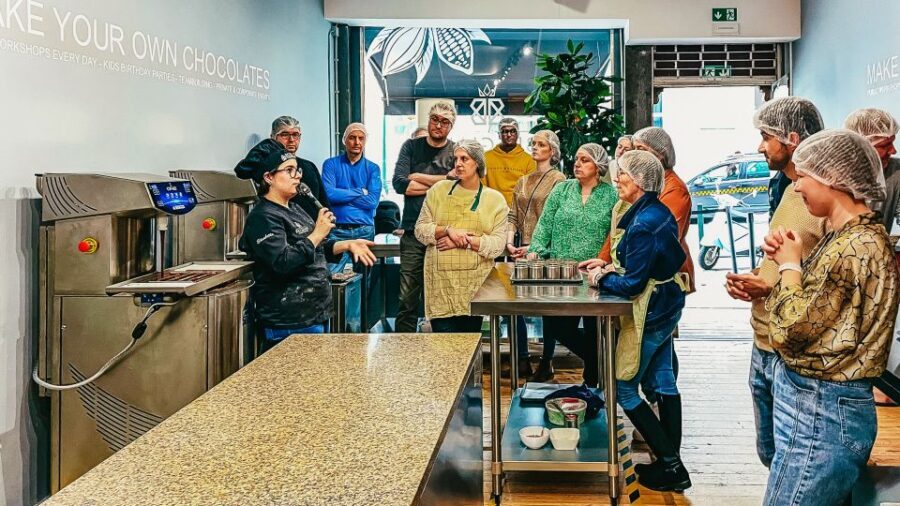
The only catch is timing and expectations. A couple people mentioned coming in hoping for an extra chocolate tasting, and it may not be included as part of what you actually do on the day, so don’t plan your sweet schedule around it.
In This Review
- Key highlights you’ll actually feel on the ground
- Belfort: getting your bearings with views and the 47-bell carillon
- Basilica of the Holy Blood: Romanesque arches and a relic that turns heads
- Gruuthusemuseum: where beer money helped pay for power
- De Halve Maan Brewery: the clever way to move beer
- Ten Wijngaarde Beguinage: a quiet break inside white walls
- Onze-Lieve-Vrouwekerk and Michelangelo’s Madonna and Child
- How the timing works (and how to enjoy the walk without rushing)
- Price and value: what $108 per person buys you in real terms
- Should you book this Bruges private tour?
- FAQ
- What time does the tour start?
- How long is the private tour?
- Do I get picked up from my hotel?
- Is the tour private?
- What language is the guide?
- Are admission tickets included?
- What should I know about Belfort’s carillon and stairs?
- Can I cancel, and what happens if the minimum number of travelers isn’t met?
Key highlights you’ll actually feel on the ground
- Belfort’s 366 stairs and 47-bell carillon, with the sound timed about every 15 minutes
- Holy Blood Basilica’s two-level layout, Romanesque lower chapel to 19th-century Neo-Gothic upper chapel
- Gruuthuse’s “gruut” beer-spice story, plus those showy three turrets that signal wealth
- De Halve Maan’s underground pipeline idea, designed to move beer without heavy trucks in the center
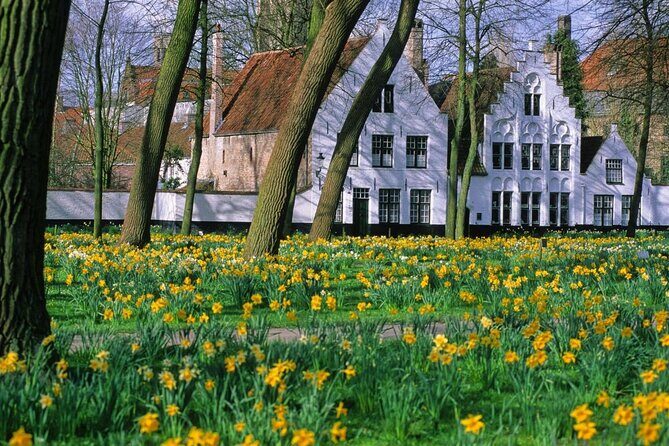
- Ten Wijngaarde beguinage quiet, where beguines once lived and today you still see religious community life
- Michelangelo’s Carrara marble Madonna and Child, with your ticket included for the church highlight
Belfort: getting your bearings with views and the 47-bell carillon
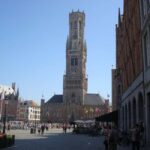
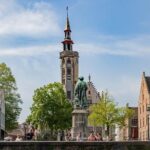
Belfort is one of those places where the building does half the work for you. The belfry dates to the 13th century, rises 83 meters, and is protected as a World Heritage Site. Even if you do not climb, you get a strong “this is Bruges” moment—because the structure is built to make the city feel legible from above.
If you do climb, it’s 366 stairs to the top. You do not need to race it. I like doing just enough to feel like you earned the view, then taking a slower walk around at the top to spot rooftops, canals, and the sense of how tightly the city is packed. This stop is also timed with a little sensory bonus: every 15 minutes you can listen to the carillon, made from 47 bells. That means your visit can land you right on cue, which is a fun way to keep the group moving without turning it into a sprint.
Admission here is free. That’s a good deal, because Belfort is the kind of sight you’ll compare other cities to later. It also gives you a mental map for everything you see after.
You can also read our reviews of more private tours in Bruges

Basilica of the Holy Blood: Romanesque arches and a relic that turns heads
Next comes a change of pace: stone, quiet, and symbolism layered through the building. The Basilica of the Holy Blood has two chapels with very different vibes. The lower chapel is Romanesque, with arched vaults and a bas-relief showing the Baptism of Christ. It’s the kind of detail that is easy to miss if you rush—so having a guide is a real advantage here.
Then you move to the upper chapel for the main reason people come: the relic of the Holy Blood. The upper space was redecorated in the 19th century in a Neo-Gothic style, which means the look shifts compared to the Romanesque lower level. That contrast matters. It shows how sites like this keep their importance while also getting reshaped by later tastes.
In practice, this stop is short—about 15 minutes—so the goal is not to study everything like a museum. It’s to understand the layout and see the standout elements: Baptism of Christ relief downstairs, and the Holy Blood focus upstairs. Admission is free, which makes this a high-value stop for the time you spend.
Gruuthusemuseum: where beer money helped pay for power
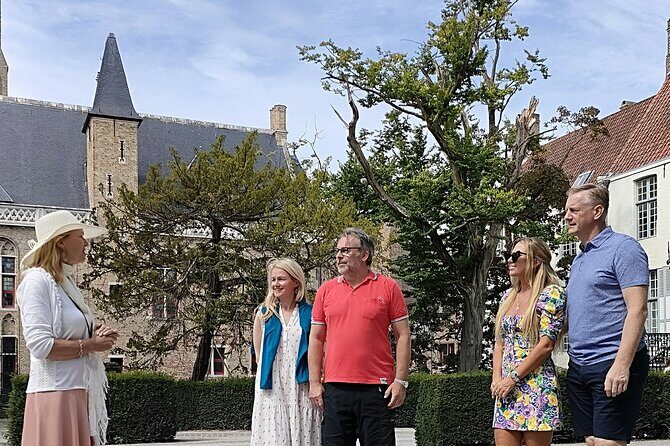
If you like the story behind the scenes, Gruuthusemuseum is a satisfying stop. You’re looking at the palace of the lords of Gruuthuse, and the building’s three turrets alone communicate wealth. This wasn’t just a family mansion; it was a statement.
Here’s what makes the explanation worth your attention: the Gruuthuse family profited from gruut, a spice mixture used to flavor beer. Later, gruut was replaced by hops. Even with that change in ingredients, the family still held power because they could levy taxes on every barrel of beer sold in the city. In other words, the museum doesn’t only show beauty—it points to the business model that helped produce it.
This is a free admission stop and lasts around 10 minutes. For me, that’s the sweet spot for this kind of place: enough time to appreciate the architecture and to catch the key story that connects Bruges commerce to what you see in front of you. If you want to go deeper into collections and interiors beyond the main narrative, you’d need extra time on your own—but as part of a 2-hour highlights loop, it lands well.
De Halve Maan Brewery: the clever way to move beer
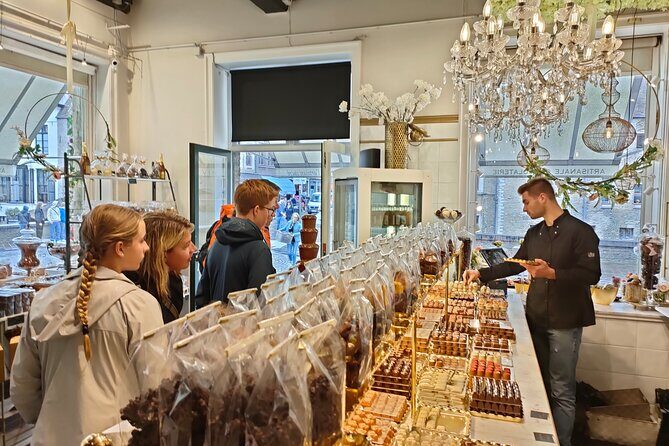
Brewery stop time is always fun in Bruges, especially when the focus is on how the city works, not just beer as a souvenir. At De Halve Maan Brewery, you’ll learn about an unusual piece of infrastructure: an underground pipeline that takes beer from the brewery to the bottling plant outside the city.
Why does that matter? Because it helped reduce heavy trucks in the city center. It’s one of those practical solutions that feels modern, but it’s rooted in real urban constraints. Bruges doesn’t have endless space for logistics, so builders found a way to keep business moving while protecting the streets.
You’re there for about 15 minutes and admission is free. Expect this stop to be more about understanding the setup than about a long, step-by-step tasting experience. If you love practical engineering stories, you’ll probably enjoy it even if you’re not a die-hard beer drinker.
Ten Wijngaarde Beguinage: a quiet break inside white walls
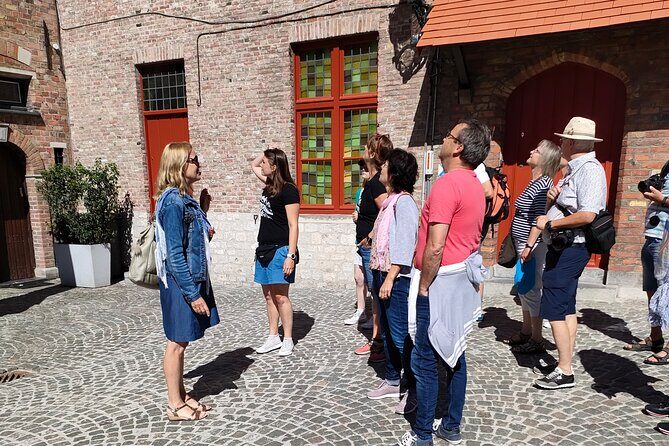
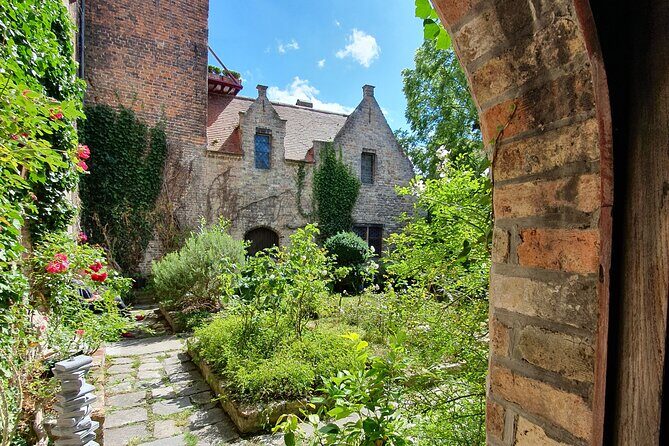
Then the tour slows into something calmer: the Princely Beguinage Ten Wijngaarde. Think of it as an oasis of silence, surrounded by white houses. For many first-time visitors, this is the moment that makes Bruges feel more lived-in, less like a set designed for photographs.
The beguinage is part of World Heritage recognition, and it has a specific human story. Beguines were emancipated lay-women who lived devout and celibate lives. Today, it’s not empty history. You still see community life: it’s inhabited by five nuns of the Order of St. Benedict and also single women.
This stop lasts about 15 minutes and is free. The best advice here is simple: keep your voice down and move gently. It’s not a theme park corner. You’re walking through a place where people still live their days.
If you’re walking all day in Bruges later, you’ll be grateful for this breathing space. It also pairs nicely with the church stops that come right after, because it gives your mind a rest before the art highlight.

Onze-Lieve-Vrouwekerk and Michelangelo’s Madonna and Child
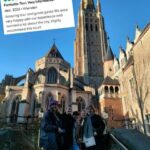
Now comes the reason many people book: Onze-Lieve-Vrouwekerk, the Church of Our Lady. It dominates Bruges’ skyline, and it’s treated as a top showcase of stonemason craft. In plain terms, it’s the kind of church where scale and detail can hit you all at once.
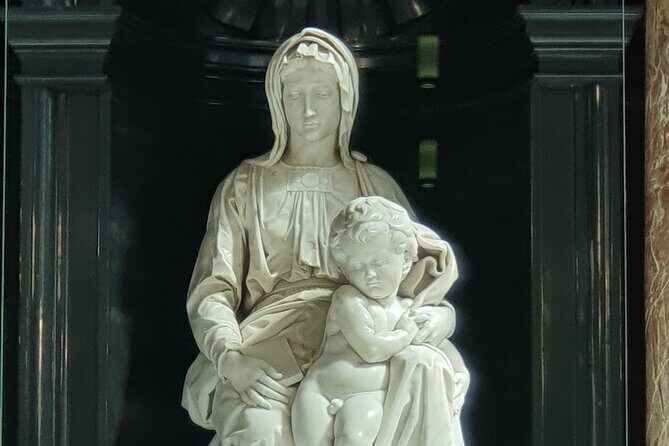
Inside, one standout is a Carrara marble Madonna and Child created by Michelangelo. This is a major art moment, and the tour includes your ticket for it. The guide’s job here is to help you see what makes the sculpture special—because if you just look for a few seconds, you miss the things that make it worth traveling for.
This stop is about 30 minutes, which is long enough to actually settle in. I like spending the first part getting oriented—where the piece is, how the surrounding space frames it—then letting the rest of the time turn into quiet looking. If you’re the type who gets restless in churches, the trick is to focus on one section at a time instead of trying to take everything in.
If you care about art, this is the moment you’ll feel most strongly afterward. It gives the day a real anchor beyond architecture and stories.
How the timing works (and how to enjoy the walk without rushing)
This private tour runs about two hours, with short stops that add up to a lot of Bruges. You’re moving through six key locations, and most of them are quick: some are 10 minutes, a couple are 15, and the church with Michelangelo gets the longest time at 30.
Because it’s private, the pace can fit your group. One guide detail that stood out: Frank, in particular, is described as able to walk slowly and tailor the tour for the pace of the group. That matters in Bruges, where cobblestones and stair climbs can turn a sightseeing plan into a test of endurance.
A practical way to handle this day:
- Wear comfortable shoes, since you’re doing multiple short walks back-to-back.
- If you want the Belfort view, plan to climb, but do not feel pressured to sprint up or down.
- If you get tired, speak up early so the guide can adjust and still keep the day meaningful.
Also, the tour is offered in English, and service animals are allowed. Most travelers can participate, which is a helpful promise if you’re deciding whether it fits your mobility level.
Price and value: what $108 per person buys you in real terms
The price is $108.02 per person for a 2-hour private tour, starting at 10:00 am. That may sound like a lot until you compare what’s included in the experience, not just the number.
Here’s what you’re paying for that you can’t easily replicate on your own:
- A guide to connect the dots between stops, so Bruges feels like one story.
- Hotel pickup at your lodging desk, which saves time and avoids the stress of finding the group.
- A route that prioritizes standout sights without turning it into a half-day commitment.
Ticket value is also part of the math. Multiple stops have free admission, including Belfort, the Holy Blood Basilica, Gruuthusemuseum, De Halve Maan Brewery, and the Beguinage. Only the Michelangelo highlight at Onze-Lieve-Vrouwekerk requires your included ticket, and that time is one of the core reasons to do this tour.
If you’re traveling in a group, private tours can feel like better value because you’re spreading the guide cost. If you’re traveling solo, it’s more of a splurge—though the pickup and guided art focus can still make it worthwhile if you want the highlights with less effort.
One more point: this tour is commonly booked about 70 days in advance on average. That’s a useful clue. If you’re traveling in peak season or on popular weekends, booking ahead is smart so you can get the time you want.
Should you book this Bruges private tour?
I’d book it if you want a focused Bruges intro with major highlights packed into two hours, especially if Michelangelo’s Madonna is on your list. It’s a good fit for first-timers, art lovers, and people who like understanding the practical stories behind historic places—like how beer logistics worked or why that spice tax mattered.
I’d think twice if you’re coming expecting a specific extra activity like a chocolate tasting, because that may not match what’s actually included in the day’s program. Also, if you want long museum time or deep study of any one site, this format will feel a bit brisk. It’s designed to hit the best beats, not to turn into a full-day academic tour.
If your goal is to see key Bruges landmarks efficiently, get great context from a guide, and still keep your afternoon free to wander, this is a solid choice. Just bring comfortable shoes and a little patience for stairs and stone.
FAQ
What time does the tour start?
The tour starts at 10:00 am.
How long is the private tour?
It lasts about 2 hours.
Do I get picked up from my hotel?
Yes. Your qualified guide meets you at your hotel desk.
Is the tour private?
Yes. It’s a private tour/activity, so only your group participates.
What language is the guide?
The tour is offered in English.
Are admission tickets included?
Admission is free for several stops (Belfort, Basilica of the Holy Blood, Gruuthusemuseum, De Halve Maan Brewery, and the Beguinage). The ticket for Onze-Lieve-Vrouwekerk for the Madonna and Child is included.
What should I know about Belfort’s carillon and stairs?
Belfort dates from the 13th century, is 83 meters high, and you can listen to the carillon with 47 bells about every 15 minutes. If you want the top view, it involves climbing 366 stairs.
Can I cancel, and what happens if the minimum number of travelers isn’t met?
You can cancel for a full refund up to 24 hours in advance. The experience requires a minimum number of travelers, and if it’s canceled because that minimum isn’t met, you’ll be offered a different date/experience or a full refund.