Ghent can feel like a maze at first. This guided, fully narrated walk-and-river route helps you connect the dots fast. You’ll see the medieval core up close, then shift your perspective along the Lys river for those postcard canal angles.
What I like most is the way the guide turns big monuments into clear stories. Two standouts for me are the professional, friendly narration and the practical city tips that help you plan the rest of your day (including where to eat and what to shop for). It’s also a strong fit if you want a first pass through Ghent without getting stuck reading guidebooks for hours.
One thing to consider: the tour is led in Spanish, so if you’re not comfortable with that language, your enjoyment will depend on how much you can follow. Also, it’s weather-dependent, since the schedule assumes outdoor walking and river views.
In This Review
- Key highlights to know before you go
- Getting Oriented in Ghent in 2 Hours 30 Minutes
- Spanish Narration That Actually Helps You See
- Town Hall and Belfry: Power, Style, and a Dragon
- St. Bavo’s Cathedral and the Mystic Lamb Story
- Saint Nicholas Church, Masons’ Guild Hall, and the Korenmarkt Clues
- St Michael’s Bridge: A Photo Stop With a Tower Twist
- Graslei and Korenlei Along the Lys River
- OOOST and the Cuberdon Moment: Old Markets, Sweet Details
- Sint-Veerleplein Wrap-Up: Where to Eat and What to Do Next
- Price and Value: Is $17.36 Worth It?
- What the Itinerary Feels Like on the Ground
- Who Should Book This Ghent Guided Tour
- Should You Book This Ghent Guided Tour?
- FAQ
- How long is the Ghent guided tour?
- What time does the tour start and where do I meet?
- What language is the guide?
- Is food included in the tour price?
- Are there admission fees for the main stops?
- How big is the group?
- Do I need a paper ticket?
- What happens if the weather is bad?
- Where does the tour end?
Key highlights to know before you go
- A guided route that mixes medieval sights with canal-and-bridge photo moments
- Fully narrated pacing that’s made for first-time Ghent visitors
- Spanish guide plus city tips on food, sightseeing, and souvenirs
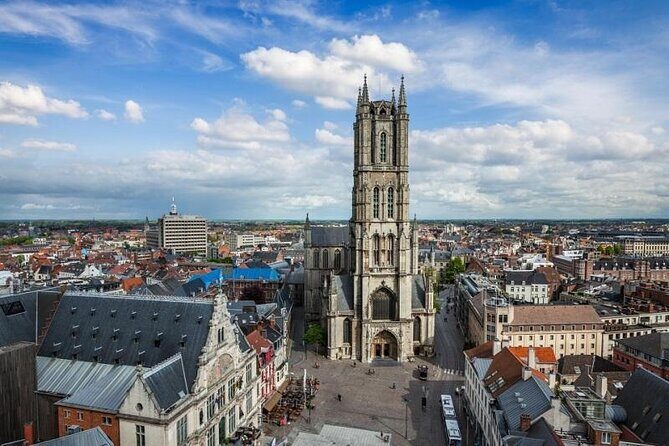
- Iconic stops like St. Bavo’s Cathedral and the Belfry (with the dragon story)
- Quick, easy photo breaks at St Michael’s Bridge and the Lys waterfront
- Small group size (up to 25) for a more personal feel
Getting Oriented in Ghent in 2 Hours 30 Minutes
This tour is built for momentum. You start in the historic center, hit the big-ticket landmarks, then end in another prime area that’s close to dinner options and public transport.
The timing matters. At about 2 hours 30 minutes, you’ll get a lot of visual information without burning your whole day. You’ll also leave with a mental map of where things are—Town Hall, the Cathedral zone, the bridge-and-river stretch, and the final square—so your next steps feel easier.
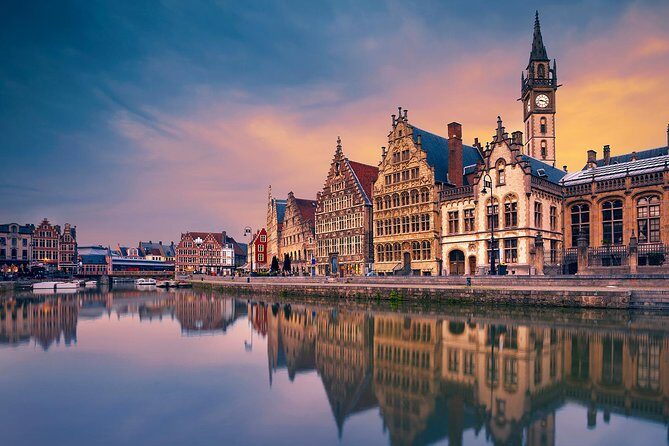
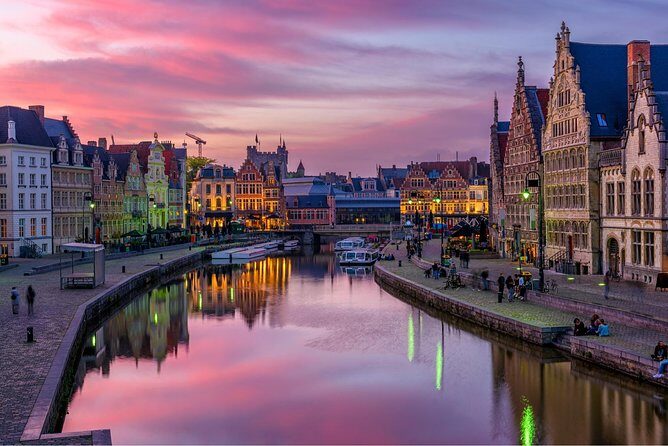
And yes, you get that land-and-water flavor Ghent is famous for. The route includes time along the Lys river at Graslei and Korenlei, which is the moment when the city starts to look less like buildings and more like a system of canals, trade, and clever design.
You can also read our reviews of more guided tours in Ghent


Spanish Narration That Actually Helps You See
A guided tour works best when you stop looking at everything like it’s random. Here, the narration ties the places together—architecture, guild life, church culture, and local legends—so you can understand what you’re looking at instead of just photographing it.
The tour is fully narrated, and the guides are described as friendly, professional, and energetic. In past runs, people have credited guides like Bea, Melissa/Melisa, Ana de Graná, and Marta for keeping the pace lively and the history clear. That kind of delivery is especially helpful in Ghent, where the city looks pretty uniform until someone explains what to notice.
You’ll also get practical pointers beyond the monuments. The end of the walk is designed to help you eat well and choose sensible next stops—plus where it makes sense to browse for souvenirs.
Town Hall and Belfry: Power, Style, and a Dragon
Your first moments set the tone. You begin in front of the Ghent Town Hall (Stadhuis), where the guide explains the different architectural styles of the building. That’s a smart opener because it gives you a framework for the rest of the medieval core.
Then you move to the Het Belfort van Gent, Ghent’s landmark tower. You’ll hear the history that surrounds the famous dragon—one of those details that makes the tower feel more like a character than a monument. This stop is short, but it’s the kind of short you can use: get the key story, then move on while you’re still focused.
If you’re the type who likes to understand what you’re looking at before you spend time wandering, these first stops do exactly that.
St. Bavo’s Cathedral and the Mystic Lamb Story
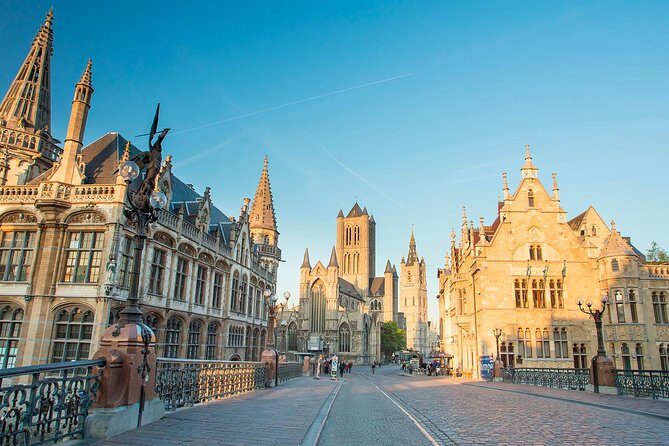
St. Bavo’s Cathedral is one of those places where the outside and inside both reward attention. You’ll spend time on the exterior and then step into the cathedral area to learn about what’s inside, including the famous painting by the Van Eyck brothers, The Adoration of the Mystic Lamb.
One reason this stop lands well is that it turns a famous name into a specific destination. Instead of treating the Van Eycks like generic museum labels, the tour connects you to why this cathedral matters—and why art protection and fame have shaped the way people talk about Ghent.
The stop is listed for about 25 minutes, which feels right for most people. You’ll have time to see the space, not just walk past it.
Saint Nicholas Church, Masons’ Guild Hall, and the Korenmarkt Clues
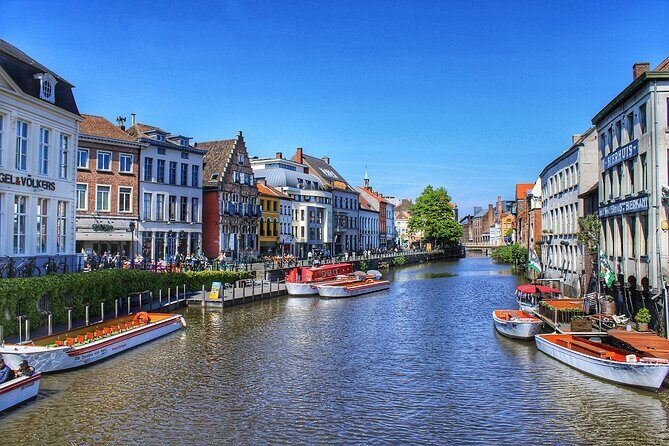
Next comes a trio of stops that show how Ghent balanced civic pride, religious life, and trade.
- At Saint Nicholas Church, you’ll hear that Belgian churches often host concerts and events. It’s a reminder that these aren’t dead, ceremonial spaces; they still function in daily city life.
- In front of the Masons’ Guild Hall, the guide explains what guild houses are and what makes them distinctive. This is where Ghent’s craftsmanship story becomes more concrete. You’ll start noticing the difference between a random facade and a building with purpose tied to trade.
- At Korenmarkt, you learn about the peculiar history of the building where a post office used to be. That kind of detail is gold because it makes you look at streets differently afterward—like you’re reading layers, not just sightseeing.
These stops are relatively brief, but they’re well chosen. They fill the “in-between” spaces that many walking tours skip, which is exactly where Ghent’s charm lives.





St Michael’s Bridge: A Photo Stop With a Tower Twist
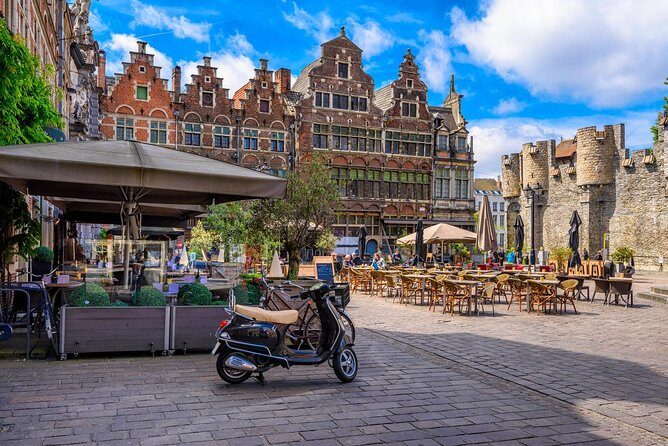
St. Michael’s Bridge is the kind of place where you instantly understand why people come to Ghent for photos. The viewpoints are excellent, especially for capturing that bridge-and-water perspective.
Here you also get an added story: the history of the tower of the Church of San Miguel. It’s not a long stop (about 7 minutes), but it’s a useful one—because once you know what tower you’re looking at, the photo becomes more than an image. It becomes a reference point.
If you’re trying to get crisp shots without rushing, show up with your camera ready. The tour will give you enough time to frame and snap, but Ghent moves fast when the light changes.
Graslei and Korenlei Along the Lys River
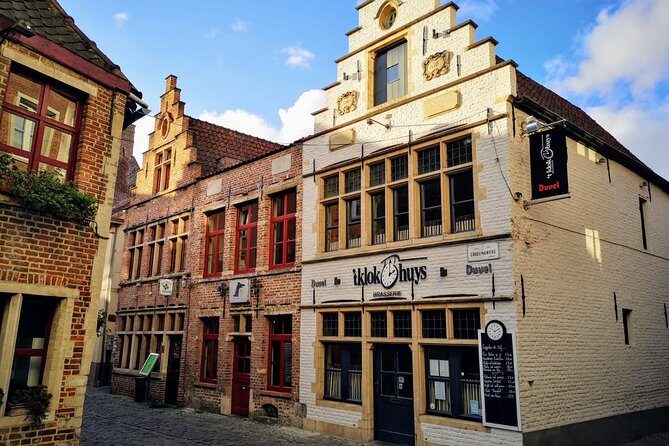
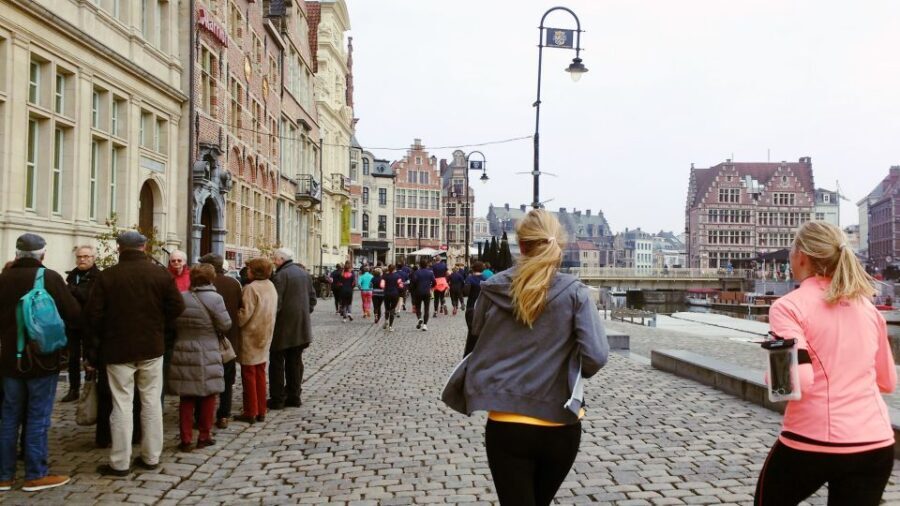
This is the moment where the route earns its “land and water” promise. You follow the banks of the Lys river at Graslei and Korenlei, and the guide points out the buildings that line the canal area—like the grain house and the building now associated with the Marriott Hotel.
Even if you don’t know the names yet, you’ll start understanding the logic. These canal-side facades weren’t built for looks alone. They relate to trade, storage, and the way goods moved through the city.
And yes, you get time for photos here. Expect it to be one of the smoother portions of the walk because it’s wide-open and visually rewarding.
OOOST and the Cuberdon Moment: Old Markets, Sweet Details
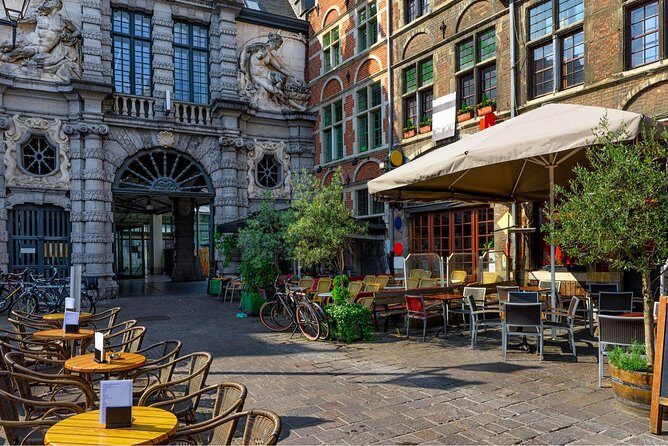
The tour continues to OOOST, also known as the meat house area, dating back to the 15th century and originally a covered market. This stop gives you a sense of how central these markets were, not just as places to buy things but as part of the city’s rhythm.
Then there’s a short, delightful pause at Kleine Vismarkt in front of the meat house, where you’ll see a traditional street stall. The guide shares about cuberdon, Ghent’s famous sweet.
It’s quick—about 3 minutes—but it’s the kind of local detail that makes a walking tour feel real. You come away knowing what people actually talk about when they mention Ghent’s flavors, even though this experience doesn’t include food.
If you want to taste cuberdon after the tour, you’ll know what to look for and why it matters.
Sint-Veerleplein Wrap-Up: Where to Eat and What to Do Next
At the end, you finish at Sint-Veerleplein, close to the Castle of the Counts area. This is a smart location to land because it keeps you near the center, with good access to public transport and lots of bars and restaurants.
The guide uses this final stop to do something practical: history plus real-world advice. You’ll get tips on where to eat and which souvenir shops make sense, plus general sightseeing and excursion guidance around Belgium.
This is also where the tour’s “first time in Ghent” value shows. You’re not left wandering with only a few photos. You leave with next steps and fewer dead ends.
Price and Value: Is $17.36 Worth It?
At $17.36 per person for about 2.5 hours, this is priced like a proper orientation tour. The value comes from what’s included: a professional Spanish guide, fully narrated sightseeing, and city/travel tips—plus the tour is marked with free admission for the listed stops.
So you’re paying for interpretation and structure, not entry fees or special access. For most people, that’s the right trade. You’ll save time figuring out where to go next, and you’ll avoid the common problem of seeing beautiful buildings without knowing what to notice.
One more value point: the group size is capped at 25, which often helps the guide keep energy up and keep you moving without constant stops.
If you’re on a short visit to Ghent—say you only have one day—this tour is a strong way to make that day count. If you already know the city well and only want specific sights, you might feel it’s a “highlights” style route. But for getting grounded fast, it’s a clear win.
What the Itinerary Feels Like on the Ground
The pacing is designed to keep you from getting tired too early. Most stops are short bursts—minutes, not long lectures—so you keep your attention. Then, a few key moments (like the cathedral and the river stretch) give you enough time to actually take it in.
The route also helps you connect distant-feeling sights. Town Hall, the Belfry, the cathedral area, bridge views, and canal frontage can look far apart on a map. Here they feel like one continuous walk because the guide gives you the stories that link the spots.
If you’re sensitive to walking, plan for a steady pace through the center. This is an outdoor-focused experience, and it requires good weather, so build flexibility into your schedule.
Who Should Book This Ghent Guided Tour
This is a great fit if:
- You’re visiting Ghent for the first time and want a clean orientation
- You like guided stories that explain architecture and local legends
- You want a mix of monuments and canal viewpoints in one outing
- You appreciate practical tips for where to eat and what to do next
It might be less ideal if:
- You need a tour in English or another language besides Spanish
- You dislike walking and prefer fewer stops with longer time at each
For couples, solo visitors, and small groups, the format is easy to enjoy because it’s structured but not rushed.
Should You Book This Ghent Guided Tour?
Yes, if you want a fast, guided way to understand Ghent’s medieval core without spending your whole day figuring it out. The combination of fully narrated stops, free-listed sightseeing entries, and end-of-tour advice on food and souvenirs makes this one of the more useful “see the city first” options.
Book it early in your Ghent stay if you can. That way, the next day’s wandering becomes targeted, not random.
Just go in with a small mindset shift: treat it like learning the city’s language—architecture, guild life, church culture, and canal trade—so every street and facade starts to make sense.
FAQ
How long is the Ghent guided tour?
The tour lasts about 2 hours 30 minutes.
What time does the tour start and where do I meet?
It starts at 10:00 am. The meeting point is Sint-Baafsplein 2, 9000 Gent, Belgium.
What language is the guide?
The tour is guided by a professional guide in Spanish.
Is food included in the tour price?
No. Meals and food are not included, but the guide will point you to good places to eat.
Are there admission fees for the main stops?
The listed stops are marked as admission ticket free, and the tour focuses on guided viewing and narration.
How big is the group?
There is a maximum of 25 travelers.
Do I need a paper ticket?
You’ll receive a mobile ticket.
What happens if the weather is bad?
The experience requires good weather. If it’s canceled due to poor weather, you’ll be offered a different date or a full refund.
Where does the tour end?
The tour ends at Sint-Veerleplein 11, 9000 Gent, Belgium, close to the Castle of the Counts. It’s near the center, public transport, and many restaurants and bars.