REVIEW · GHENT
e-Scavenger hunt Ostend: Explore the city at your own pace
Book on Viator →Operated by Qula · Bookable on Viator
Ostend gets fun when you play detective. This self-guided e-Scavenger hunt turns a walk into a timed-feeling quest, with clue questions at real city landmarks. You start when it fits your day, and you can pause whenever you want.
What I like most is the mix of big names and easy city walking. You hit major sights like the moored Mercator ship, plus art and architecture that you’d otherwise skim past. The second win: it’s genuinely low-stress—no group pacing, no fixed schedule, just a clear route you can take at your speed.
The only real catch is practical: you need a phone that’s ready to go. If your battery dies mid-game, you may be stuck, so bring a charger or power bank and expect to use your own data.
In This Review
- Key highlights you’ll actually use
- Why an e-Scavenger Hunt feels better than a standard walk
- Before you start: phone setup, battery, and your comfort level
- Station Oostende to Mercator: begin where the city feels most real
- St Peter and St Paul: Neo-Gothic church energy at street level
- James Ensor House and the art you can’t ignore
- The fishermen’s barok church: a small stop with big character
- Zeehelden to the pier: the 300m walk where sea air wins
- Casino-Kursaal and King Leopold I: formal architecture near the dike
- Heilig Hartkerk and Patrick Steen’s moving-wave sculpture
- Beach time at the end: turn clues into actual vacation
- Route rhythm: how to pace a 2–4 hour self-guided hunt
- Price and value: $37.33 per group can be a smart deal
- Who this is best for (and who should consider a different option)
- Should you book the e-Scavenger hunt in Ostend?
- FAQ
- What is the price for the e-Scavenger hunt in Ostend?
- How long does the hunt take?
- Is it available in English?
- Do I need my own smartphone?
- Do I need data on my phone?
- Where do we start the hunt?
- When can we start? Is there a set meeting time?
- Does it end at the same place we start?
- Is it a guided tour with a group leader?
- Is free cancellation available?
- Are service animals allowed?
Key highlights you’ll actually use

- Start anytime within the all-day window, so you can match it to your train, lunch, or beach plans
- Phone game + city walk in one, with clue questions tied to places around Ostend
- Not too hard to navigate, with questions found at the spots so you don’t feel stuck
- Memorable stops like the James Ensor House, Arne Quinze’s red sculptures, and the Kursaal-Kursaal Oostende
- Great for groups up to 6, since the price is per group, not per person
- Pause-friendly pacing—you can stop for a snack, then continue without “falling behind”
Why an e-Scavenger Hunt feels better than a standard walk
Ostend is made for walking, but most visits turn into a checklist. This format changes your brain from seeing sights to looking for answers. You’re still strolling neighborhoods and seafront areas, just with a reason to slow down at each stop.
I like that it’s self-paced. You don’t have to judge the mood of a group, or sprint to keep up. If you want to linger near the water or step into a café, you can—then pick the quest back up.
You’ll also get a more personal route. Since it’s built around on-foot stops, you’ll likely reach corners that feel awkward by bus—especially around the harbor-to-center-to-sea flow.
You can also read our reviews of more city tours in Ghent


Before you start: phone setup, battery, and your comfort level
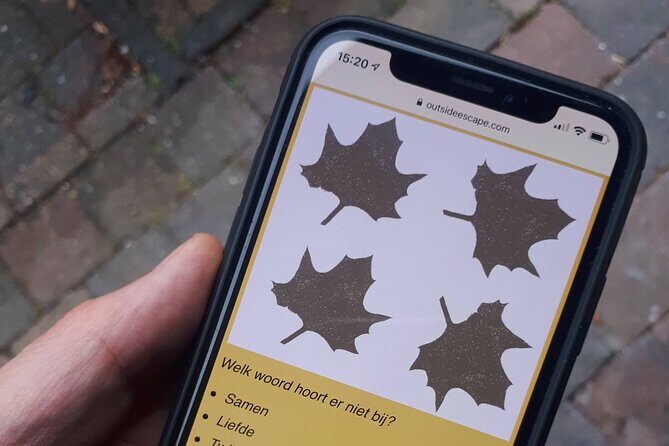
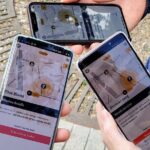
This is a mobile ticket experience, offered in English. The game is delivered through your phone, and your smartphone isn’t provided, and neither is data—so plan to use your own device and connection.
Here’s the practical part I’d take seriously: your battery. One common failure point is finishing at least a few clues and then realizing your phone is dying. Bring a power bank, keep brightness reasonable, and consider downloading anything your app needs before you head out.
You’ll also want to know where the map lives in the app. If you can’t find it quickly, you may waste time with external GPS. I’d rather you spend that time enjoying the sea air and reading the clue context.
Station Oostende to Mercator: begin where the city feels most real

You start at Station Oostende on Natiënkaai 1, and the game brings you back there at the end. That’s smart because it anchors your day: you can arrive, start the hunt, and feel like you’re already oriented.
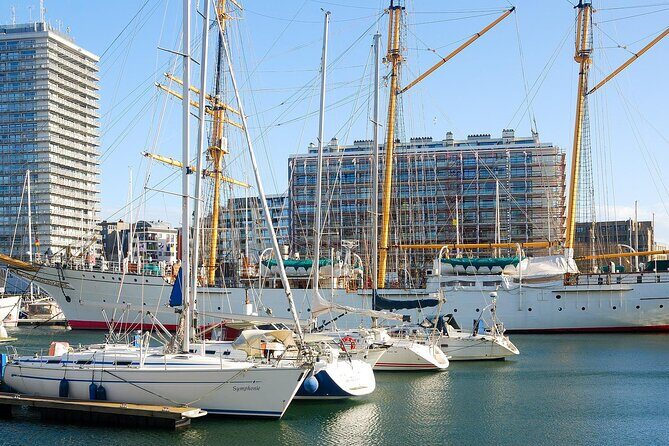
Your first big destination is the harbor’s protected sailing ship, the Mercator. It’s moored between the station and the town hall area, and it’s been there for decades—so it works like a living landmark. Even if you’ve never studied Belgian maritime history, the ship gives the quest a strong sense of place.
If you’re thinking, What do I do right here? That’s the point. You’re meant to stop, read clue info, and connect the questions to a location you can actually see. It feels less like homework and more like a story unfolding in front of you.
St Peter and St Paul: Neo-Gothic church energy at street level

Next comes the Church of Saint Peter and Saint Paul, the main church of Ostend. It’s Roman Catholic and Neo-Gothic, and it sits on the ashes of an earlier church on the same site—so you’re standing on layers of rebuilding.
The advantage of doing this through the game is that you don’t just walk past the facade. You slow down to notice details you might miss during a normal wander. Also, church stops often intimidate people because they feel “serious,” but here it’s paced like part of a playful trail.
A small consideration: depending on what you’re hoping for, you might want to check whether interior viewing is possible on your day. The quest will get you to the site, but the experience focus is on the clue moments tied to the stops.
James Ensor House and the art you can’t ignore
Ostend has a strong identity in the world of art, and the hunt puts you right in it. You’ll move from clue to clue toward James Ensor—including a visit at the renovated James Ensor House.
This stop is valuable even if you’re not an art-history person. The game format helps you engage with why Ensor matters to Ostend, and the house gives you a place where his influence isn’t just a label—it’s a setting.
Then you’ll hit the Zeeheldenplein, where the red sculptures by Arne Quinze make a visual statement. They’re eye-catching because of their monumental size and red color. On a normal stroll, you might simply notice them. In the hunt, you’ll be primed to look at them longer and connect them to clue questions.
If you’re traveling with kids or friends who get restless in museums, this pairing is a good rhythm: one stop is museum-like, the next is outdoors and instantly readable.




The fishermen’s barok church: a small stop with big character

Next up is a smaller, two-aisle barok church in the town center that many visitors overlook. It’s tied to Capuchin monks who worked among fishermen, and the church later became known as the fishermen and seamen church in Ostend.
What I like about this kind of stop is how it rounds out the city. You’re not only seeing monuments and famous art. You’re also touching the working-life side of the coast.
Because the church is described as small, it can feel “quicker” than the big sights. But that makes it perfect for balancing your time. If you’re tired, you can take a brief breather here and then continue.
Zeehelden to the pier: the 300m walk where sea air wins
One of the most satisfying parts of the whole day is getting to the pier. You’ll walk out to a 300m-long pier—described as the longest pier of the coast as of 2019—where you can see the Oostende skyline from the sea.
This is where the game benefits you most. When you’re walking at “hunt pace,” you’re willing to commit to the extra stretch. At the end, you’re rewarded with a view that you’d usually skip because it’s not on a super-short sightseeing list.
A tip: plan this stop for a time when you enjoy weather. Even if it’s not beach-perfect, standing out on the pier makes the city feel maritime and open.
Casino-Kursaal and King Leopold I: formal architecture near the dike
As you head into the promenade and seafront landmarks, you’ll reach the Casino-Kursaal Oostende (often called the Kursaal Oostende). It was built in 1950 and is built in white Portland stone, which makes it look crisp against the coastal light.
Next is a landmark that’s hard to miss once you notice it: the bronze equestrian statue of King Leopold I. It’s on the dike of Ostend along the Albert 1 promenade. This is the kind of stop that adds context fast—authority, monarchy, and the way cities mark major figures on the waterfront.
The value of doing these moments through the hunt is attention. You’re not just photographing. You’re pausing long enough to process why the architecture and monuments are where they are.
Heilig Hartkerk and Patrick Steen’s moving-wave sculpture
Then the route shifts back toward religious architecture and modern public art. You’ll visit Heilig Hartkerk, a parish church in the West Flemish city of Ostend, located on Heilig Hartplein in the Westerkwartier district.
From there, you’ll get a modern, public-art contrast: a work by Patrick Steen presented life-size on the boulevard. It shows the fusion of two dancing people with the waves of the sea.
This pairing matters because it changes the tone of your walk. Churches can feel like stillness; the sculpture brings motion into public space. It’s also a great moment for photos without needing a ticket or waiting for opening times.
If you’re traveling with people who don’t love churches or don’t love museums, this section helps. It gives “something for everyone,” and it keeps your group moving forward at a comfortable rhythm.
Beach time at the end: turn clues into actual vacation
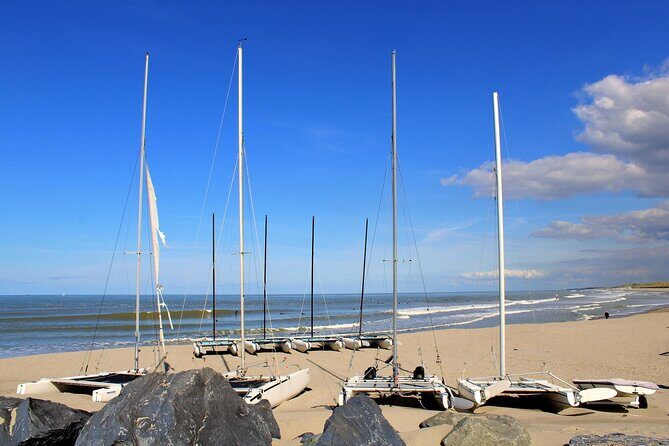
At the end of the quest, you’re nudged toward the coast itself. The route explicitly makes room for a sunbath or beach walk, plus fun like water sports depending on the day.
This is the part I’d treat as your payoff. You’ve been looking at ships, churches, and art on purpose. Now you can stop doing anything purposeful and simply enjoy the seaside mood.
Also, Ostend tends to work well for a casual “loop day.” You can eat, stretch, and reset without feeling like you missed a timed tour. The hunt ends back at your starting meeting point, so you won’t feel trapped at the far edge of town.
Route rhythm: how to pace a 2–4 hour self-guided hunt
The experience is about 2 to 4 hours, and that’s realistic for a route with multiple stops. The big variable is how long you linger at each clue location, and whether you treat the house visit as a quick look or a longer one.
If you want a smooth experience, I’d aim for a simple pattern:
- Do the first few clue stops without checking your phone too obsessively
- Pause longer at the art and pier moments
- Use the in-between time for snacks and quick photos
One practical note from the way people describe the experience: questions are meant to be found at the spot, so you should plan to read, look around, and then enter your answer. If you bounce around too fast, you may feel like you’re repeating steps.
Some users also mention translation glitches or repetition. That’s not a deal-breaker, but it’s a good reason to keep your expectations flexible. If a sentence feels odd, focus on the clues and move on.
Price and value: $37.33 per group can be a smart deal
The price is $37.33 per group, up to 6 people. That matters because self-guided city games are often priced per person, which can make families and friend groups pay more than they expect.
Here’s how I’d think about value: you’re paying for (1) a structured walking route, (2) the clue prompts that keep you engaged, and (3) the convenience of starting at your chosen time. You’re not paying for staff time during the walk, which keeps the cost down.
The thing you’ll still bring yourself is your phone and connection (since smartphone and data aren’t included). If you already travel with a reliable device and you’ve got a plan for battery, this is a very reasonable way to turn time in Ostend into something interactive.
Who this is best for (and who should consider a different option)
This works especially well for:
- Families who want kids engaged while still walking
- Friend groups who don’t want to be tied to a guide’s pace
- Budget-minded visitors who like structured routes but don’t want a scheduled tour
- Anyone who loves art, maritime landmarks, and the seaside atmosphere
It may not be the best match if:
- You know you’ll be low on battery or hate relying on your phone
- You need a fully guided, explanatory narrative at each site
- You want a strict, timed itinerary with guaranteed interior access
If you’re comfortable using a phone while you walk and you like puzzle-like moments, you’ll probably enjoy how the city “clicks” into focus.
Should you book the e-Scavenger hunt in Ostend?
I’d book it if you want an easy-to-manage way to see Ostend’s big elements—shipyard vibes, church landmarks, art stops, pier views, and beach time—without feeling rushed. The self-guided format is the core value, especially if you’re traveling with people who have different energy levels.
I’d skip it or pick a different style of tour if your phone battery is always a worry, or if you really prefer a guided voice explaining everything. In that case, the clue game can feel like extra work instead of a fun structure.
For most visitors, though, this is a practical, good-value way to spend a half-day in Oostende: you’ll walk more than you would on a casual stroll, and you’ll look closer when you get there.
FAQ
What is the price for the e-Scavenger hunt in Ostend?
It costs $37.33 per group (up to 6 people).
How long does the hunt take?
Expect about 2 to 4 hours.
Is it available in English?
Yes, the experience is offered in English.
Do I need my own smartphone?
Yes. Use of a smartphone isn’t included, so you’ll need your own device to play the mobile game.
Do I need data on my phone?
Yes. Data use isn’t included, so you should plan on using your own data.
Where do we start the hunt?
The start point is Station OOSTENDE, Natiënkaai 1, 8400 Oostende, Belgium.
When can we start? Is there a set meeting time?
There’s no fixed schedule mentioned for starting the game, and it’s available daily from 12:00 AM to 11:59 PM.
Does it end at the same place we start?
Yes, the activity ends back at the meeting point.
Is it a guided tour with a group leader?
No. It’s a private tour/activity, and only your group participates, with the experience designed as a self-guided mobile game.
Is free cancellation available?
Yes. You can cancel for a full refund up to 24 hours in advance of the experience’s start time.
Are service animals allowed?
Yes, service animals are allowed.