REVIEW · YPRES
From LIlle or Bruges, Christmas Truce to Passchendaele Ypres 1 day WW1 private
Book on Viator →Operated by A Foreign Field WW1 Tours · Bookable on Viator
History hits you differently in Ypres. This private WW1 day tour threads together trenches, cemeteries, and memorials so the story makes sense, not just dates on stones. I especially like how the route reaches Messines Ridge for the Christmas Truce story and then keeps going to the biggest names of the Ypres Salient. You’ll also be guided in English by Søren, who brings each location down to what happened there and why it mattered.
My second big plus is the door-to-door pickup for a long day. Depending on where you start (Ghent, Bruges, Lille, and more within 66 km of Ypres, including Ghent-Dampoort Station), you avoid the hassle of figuring out transport across multiple sites. One drawback to consider: lunch isn’t included, so you’ll want to plan ahead (or bring something) to avoid a late-day snack scramble.
In This Review
- Key Highlights You’ll Feel on Day One
- A Private 9-Hour Route Through the Ypres Salient
- Messines Ridge: Truce, Mine Craters, and a Wartime Crypt
- Hooge Crater Cemetery and Menin Road: VC Stories on the Passchendaele Line
- Polygon Wood: Walking the Woods and Seeing Concrete Bunkers
- Hill 60 at 3.10am: Tunnelling, Captain Woodward, and the Crater
- Tyne Cot Cemetery and John McCrae: Names, Missing, and the Poem
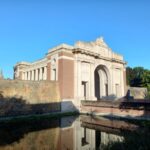
- Menin Gate Memorial: 55,000 Names and the Weight of Being Missing
- Sanctuary Wood Museum: Original Trenches Without the Guesswork
- Price and Value: What $532.32 Buys You Here
- Who Should Book This Tour (and Who Might Prefer a Different Style)
- Should You Book This Ypres WW1 Private Tour?
- FAQ
- How long is the Ypres WW1 private tour?
- What time does the tour start?
- Do I get hotel pickup and drop-off?
- Is this tour private?
- Is the tour offered in English?
- Are entrance tickets included?
- Is lunch included in the price?
- Can the guide tailor the tour to family history?
- What’s the cancellation policy?
Key Highlights You’ll Feel on Day One
- Private, English-speaking guiding with Søren and room to tailor the day to family ties
- Messines Ridge with mine craters, the Christmas Truce scene, and the crypt connected to Adolf Hitler’s treatment
- Hooge Crater Cemetery and Menin Road with links to the Passchendaele assault positions
- Concrete bunkers and the Australian 5th Division monument at Polygon Wood
- Hill 60 and the 3.10am mine explosion with the crater you can actually see
- Sanctuary Wood Museum featuring original WWI trenches (entry included)
A Private 9-Hour Route Through the Ypres Salient
This is a one-day private tour based in the Ypres region, running about 9 hours from a 9:00 am start. You’ll get a mobile ticket and English-language guiding, and it’s set up for a group that’s just you (so you can ask questions without waiting your turn). The big practical win here is the hotel or B&B pickup across a wide area: Ghent, Bruges, Lille, and more within a 66 km radius of Ypres. If you’re coming from Ghent, the tour notes Ghent Dampoort Station as a pickup option.
The tour also makes it easier to focus on the sites instead of the logistics. You’re not piecing together buses and taxis between memorials. You’re riding in comfort, with bottled water included, and you’re moving through the WW1 map in a way that builds momentum from place to place.
The price is $532.32 per person. That sounds steep until you remember what you’re buying: a private guide for the day, a full-driving route through major battlefield areas, and multiple stops where the time with a local explainer is usually the difference between skimming and understanding.
You can also read our reviews of more private tours in Ypres

Messines Ridge: Truce, Mine Craters, and a Wartime Crypt
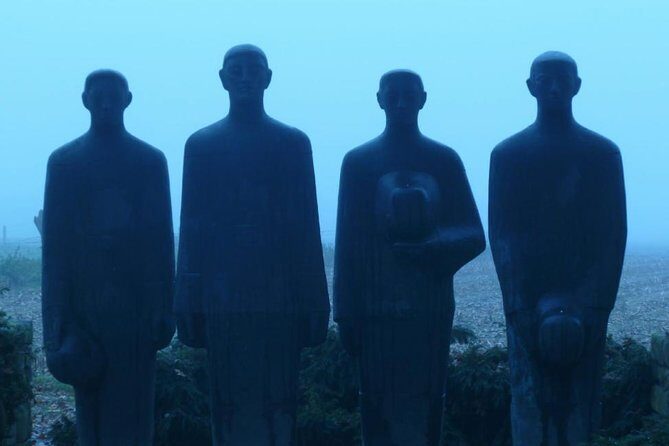
Stop one is Messines Ridge, and it’s a strong opener because it connects battlefield events to human moments. You’ll hear the story of the Battle of Messines, then move through mine craters tied to the fighting. Seeing those craters in person changes the scale of the story. It’s not abstract. You’re standing in the kind of ground that got reshaped by planning, tunnelling, and blasting.
Then comes a stop that many people remember for the rest of the trip: the scene connected to the Christmas Truce. This is one of those parts where the guiding matters. Without context, the story can turn into a slogan. With a guide, it becomes a way to understand what soldiers hoped for, what they risked, and how quickly war could swallow even a brief thaw.
Finally, Messines Ridge includes a crypt connected to Adolf Hitler’s treatment for his wounds. This is historically dramatic in a different way than the Truce, and it helps to keep the timeline of the war in your head. It’s not there to shock you. It’s there so you understand how the war’s major figures and major events overlap in real places.
This stop runs about 2 hours, which is a good amount of time for a location that can feel emotionally heavy and visually confusing if you don’t have someone to point out what you’re looking at.
Hooge Crater Cemetery and Menin Road: VC Stories on the Passchendaele Line
Next is Hooge Crater Cemetery, a shorter stop at about 15 minutes. Short doesn’t mean light. It’s exactly the kind of cemetery where the silence feels loud, and the details pull you in.
You’ll visit Pat Bugden VC, the 20-year-old recipient of the Victoria Cross. That VC connection gives you a concrete handle on the story—something to anchor the time to, beyond the general tragedy.
Then the tour positions you on the Menin Road, alongside where Australian gun pits were for the assault on Passchendaele. This is one of the best uses of a stop like this. You get a sense of how “front line” doesn’t mean one straight line. It means specific firing positions, timing, and terrain choices.
Because the stop is brief, I’d treat this as a quick but meaningful waypoint rather than your only deep cemetery moment of the day. If you’re the type who wants to linger, ask your guide for a bit of extra time, but know the schedule keeps space for the bigger anchors later.
Polygon Wood: Walking the Woods and Seeing Concrete Bunkers
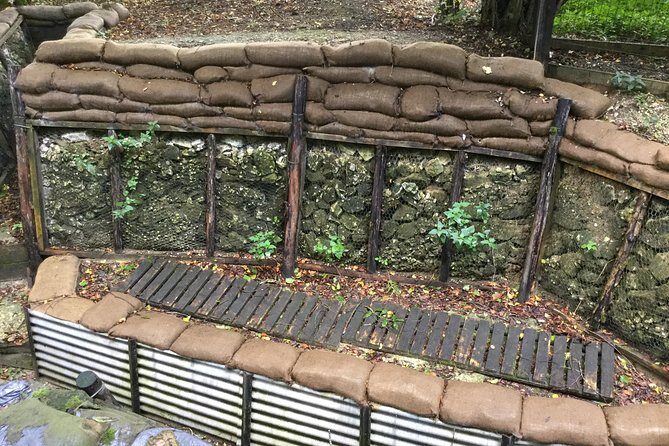
Polygon Wood takes about 30 minutes, and it’s built for a very specific kind of learning: what it looked like when the Australians captured positions in the area.
You’ll walk through the woods and visit concrete bunkers that were there when Australian soldiers took those ground areas. The concrete matters. It’s proof of how warfare hardened over time—how engineering and steel turned the landscape into a system.
You’ll also visit the cemetery and the Australian 5th Division monument. The monument helps you connect the action to a unit and a chain of command, which makes the story feel less like a film and more like a human operation with people you can name, even if only in part.
One practical note: woods can be damp and uneven underfoot. Wear shoes you trust on gravel and leaf-covered paths. You’ll enjoy the walking more if you’re not thinking about your footing.
Hill 60 at 3.10am: Tunnelling, Captain Woodward, and the Crater
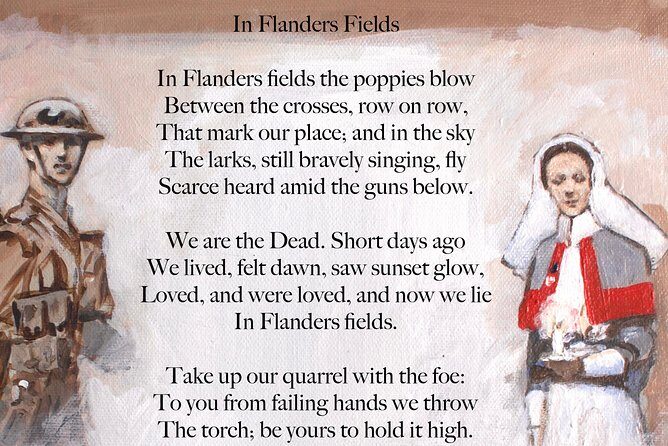
Hill 60 is a standout stop because it ties a precise moment in time to terrain you can see. You’ll hear the story of Captain Woodward and the 1st Australian Tunnelling Coy, then learn about a massive mine that was blown at 3.10am on 7 June 1917. The tour includes the chance to see the crater.
That “3.10am” detail is the kind of thing that makes history click. You start thinking in minutes and meters, not only years and months. A mine isn’t a movie trick here—it’s an engineered plan with a clock.
The stop runs about 45 minutes, which gives you time to look around instead of just listening. Hill 60 often helps people reframe what they thought the war was about. Yes, there was gunfire. But a huge part of the story is hidden work beneath ground—tunnelling, digging, waiting, and then committing to the blast.
A few more Ypres tours and experiences worth a look
Tyne Cot Cemetery and John McCrae: Names, Missing, and the Poem
Then the tour pivots into two of the most famous stops of the whole Ypres Salient: Tyne Cot Cemetery and the John McCrae site.
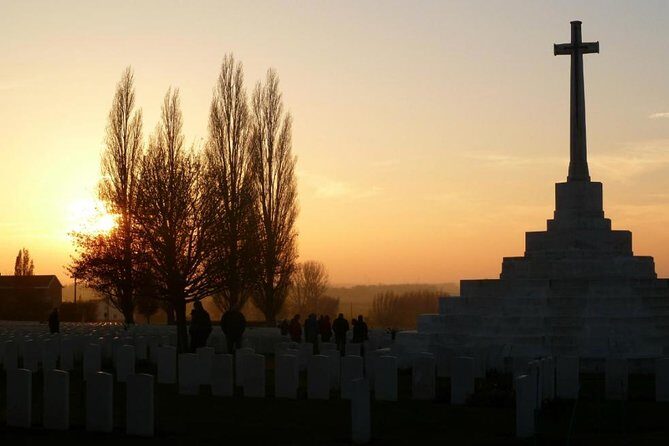
Tyne Cot takes about 45 minutes. It’s described as the world’s largest Commonwealth War Graves Commission cemetery, with 12,000 soldiers buried there and only about 3,000 with names. That ratio hits hard. It’s not just a statistic. It tells you how many people were recovered only as a presence, not an identity.
You’ll also hear about two Australian VC recipients buried here. That VC detail helps keep the cemetery from feeling like a wall of sameness.
After Tyne Cot, the tour moves to the John McCrae site—the hospital location where Lt Col John McCrae composed In Flanders Fields. You’ll spend about 30 minutes there. This is one of the best add-ons in the itinerary because it shifts you from the battlefield to the words that survived it. Even if you’ve heard the poem before, standing where McCrae wrote it makes the lines feel closer and more grounded.
Menin Gate Memorial: 55,000 Names and the Weight of Being Missing
Menin Gate Memorial is about 20 minutes on this tour, but it’s not a checkbox stop. It’s the kind of place where the number of names gives you a strange, slow pressure.
You’ll hear the story of how the Menin Gate memorial came about, plus the background behind the 55,000 names listed there for those who are missing. That’s the heart of it. These aren’t only deaths. They are people without a known grave, leaving families with an unanswered question.
If you’re planning your day carefully, this is one site where you’ll want your head to slow down. Even with a packed schedule, take a minute at the gate itself. Let the scale settle. Your guide can help you orient yourself, but you’ll bring the feeling.
The route also includes driving through Zonnebeke in the line of the Australian advance, which helps keep the connection between the major monuments and the movement between them.
Sanctuary Wood Museum: Original Trenches Without the Guesswork
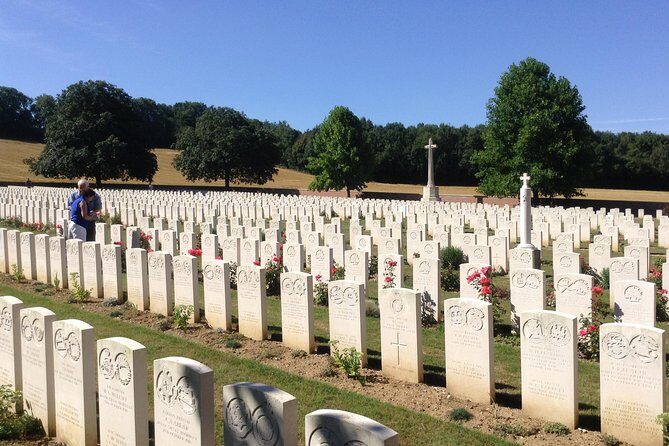
The final stop is Sanctuary Wood Museum, around 40 minutes. This is the tour’s most hands-on-feeling stop because it features unique original First World War trenches, and the admission is included.
If you’ve ever visited a battlefield site and wondered how on earth soldiers managed to function in that kind of space, a place like this helps. You can see the trench logic more clearly. You’re not only looking at monuments. You’re getting a feel for the ground-level reality of WWI.
There’s also a practical timing benefit. One of the strongest perks mentioned with this day tour is that, if timing allows, you can sometimes stay for the Last Post. Don’t bank your expectations on it, but it’s a real possibility to consider when you’re choosing a day for your trip. It can turn the whole day into something more ceremonial.
Price and Value: What $532.32 Buys You Here
Let’s talk value like an adult. $532.32 per person is the headline number, but the better question is: what costs are you avoiding, and what access are you getting?
You’re paying for:
- A private guide for about 9 hours, in English
- Pickup and drop-off from hotels or B&Bs across Ghent, Bruges, Lille, and nearby areas within 66 km
- A full driving route covering major sites around Ypres instead of you figuring it out
- Bottled water included
- Entrance being free at many locations, with Sanctuary Wood Museum admission included
Lunch is not included, so that’s one place where you’ll need to handle your own planning. If you go into the day hungry, you’ll waste energy. If you plan a snack or a simple meal stop, the tour stays focused.
The best value element, though, is how the route is paced. This itinerary doesn’t just jump from monument to monument. It connects the dots between trenches, cemeteries, and memorials, and your guide can adjust based on your interests.
That adaptability matters if you have family history tied to the area. The tour notes that it can be tailored, so you’re not only receiving a standard script.
Who Should Book This Tour (and Who Might Prefer a Different Style)
This private day fits best if you want:
- A structured WWI day with multiple major sites in one go
- A guide who can answer questions and adjust the day to your focus
- A calmer experience than a big group tour, where you can’t ask for context at each stop
It also works well if you’re traveling with family history on your mind. The tour explicitly mentions tailoring for that, which is exactly what you want when you’re connecting names and places in your own story.
If you’re the type who loves to linger at cemeteries and doesn’t want a schedule, you might feel the day is full. The stop times are set, and while you can ask for pacing help, the itinerary has a clear order that keeps the day coherent. In other words: you’re buying an intentional route, not an unlimited wander.
Also, keep in mind that this is moving and sometimes intense material. The sites are places of death and remembrance. Your guide will keep the tone respectful, but you should still expect a day that sticks with you.
Should You Book This Ypres WW1 Private Tour?
I’d book it if you want a WWI day that actually helps the pieces fit together. The mix is smart: Messines Ridge for the human story, Hooge and Menin Road for Passchendaele-era positioning, Polygon Wood and Hill 60 for the ground-level mechanics of warfare, then Tyne Cot and McCrae for the scale and the words. You end with Sanctuary Wood Museum, which lets you understand what you’ve been seeing.
I would think twice if you hate tight schedules, or if you don’t want to plan food at all—because lunch isn’t included and the day is long. Also, if you’re only looking for one or two “headline” sites, a multi-stop private route may feel like too much.
But if you care about understanding, and you appreciate respectful, detailed guiding, this is a strong choice.
FAQ
How long is the Ypres WW1 private tour?
It runs for about 9 hours (approx.).
What time does the tour start?
The start time is 9:00 am.
Do I get hotel pickup and drop-off?
Yes. Pickup is offered from hotels or B&Bs in a 66 km radius of Ypres, including Ghent (Ghent Dampoort Station), Lille, and Arras, plus other nearby locations.
Is this tour private?
Yes. It’s a private tour/activity, and only your group participates.
Is the tour offered in English?
Yes, it’s offered in English.
Are entrance tickets included?
Admission tickets are listed as free for the stops like Messines Ridge, Hooge Crater Cemetery, Polygon Wood, Hill 60, Tyne Cot, John McCrae site, and Menin Gate. Sanctuary Wood Museum admission is included.
Is lunch included in the price?
No. Lunch is not included.
Can the guide tailor the tour to family history?
Yes. The tour notes it can be tailored if you have family history tied to the region.
What’s the cancellation policy?
Free cancellation is available up to 24 hours in advance for a full refund. Cancel at least 24 hours before the start time to get your refund.