REVIEW · YPRES
PRIVATE Australian Western Front Battlefields 3-Day Tour Ypres to Amiens
Book on Viator →Operated by A Foreign Field WW1 Tours · Bookable on Viator
A WWI drive with a personal link can hit hard. This private Australian Western Front tour uses a guide with family connections to the battle sites, so the history doesn’t feel like a textbook exercise. I also like that the itinerary is packed with the places Australians cared about most, from Tyne Cot to the Australian National Memorial.
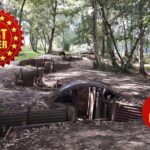
You’ll spend three full days moving through the Ypres Salient, Fromelles, Bullecourt, the Somme area, and finally Amiens. It’s a serious route, with time for cemeteries, visitor centres, and key ground features like mine craters and trench-line viewpoints.
One drawback to plan for: this is a lot of emotional subject matter, and the tour doesn’t include meals or accommodation. If you’re expecting a carefree weekend, you might find the pace and tone heavy.
In This Review
- Quick hits before you go
- Why the Australian focus matters on this route
- Price and what you’re really buying (at $1,965.48 per person)
- The day-by-day plan, from Ypres Salient to Amiens
- Day 1: Ypres Salient mines, woods, cemeteries, and the Menin Gate
- Day 2: Fromelles identification, Australian trench-line views, and Bullecourt
- Day 3: Albert, Lochnagar, Le Hamel, and the missing Australians
- Practical tips so you enjoy the tour instead of surviving it
- Who this tour suits best
- Should you book it
- FAQ
- What does the tour price include?
- How long is the tour?
- Can I choose whether the tour starts in Ypres or Amiens?
- Is this a private tour?
- What are the meal and accommodation arrangements?
- What time does the tour do the Last Post ceremony?
- What happens on Day 2 when you arrive in Amiens?
- Is free cancellation available?
- Is it suitable for people with service animals?
Quick hits before you go
- A private guide with family ties can tailor the day around your ancestors where possible
- Bottled water daily keeps you moving through long stops without hunting for refills
- Day 1 ends with the Menin Gate Last Post, a nightly ritual that’s hard to forget
- Fromelles museum + identified remains (including 250 Aussies found and identified from a mass grave) adds a powerful layer of meaning
- Mine craters and memorial viewpoints connect the battles to real geography, not just dates
- Two UNESCO-level stops in practice via Arras downtime, plus museum time at In Flanders Fields and Sir John Monash Centre
Why the Australian focus matters on this route
The Western Front is everywhere on the map, but this tour keeps the attention on the Australian story between Ypres and Amiens. That means you’re not just touring famous names—you’re seeing the sites tied to Australian attacks, tunnelling, casualties, and commemoration.
What I like most is the way the guide can shape the route around your interests. The itinerary even notes that if you have ancestors who fell in a particular battle, the plan can be tailored where possible. That’s not a gimmick. It changes the way you look at the ground: you stop scanning plaques and start linking places to people.
This is also a tour where the small moments matter. Standing in Plugstreet Wood for the Christmas Truce story, or pausing at a cemetery where a VC recipient is buried, gives the history a human scale. You’ll still learn the big operational picture, but you’ll feel the weight behind it.
You can also read our reviews of more private tours in Ypres

Price and what you’re really buying (at $1,965.48 per person)

The price is $1,965.48 per person for a private three-day experience. That number looks hefty—because you’re not paying for a bus tour with strangers. You’re paying for private transport plus a dedicated guide across multiple sites, including guided time at key locations.
Here’s what helps the value make sense. Transport and guided tours are included, and bottled water is provided each day. Some admissions are included (for example, In Flanders Fields Museum, the Museum of the Battle of Fromelles, and École Victoria), while many stops are listed as free.
The one cost you must plan for is meals and accommodation, which are entirely your responsibility. The tour even includes a lunch break at Arras and a lunch stop at Le Tommy on Day 3, but those are at your own expense. So your real budget is the tour price plus your lodging plus two or three lunch options.
The day-by-day plan, from Ypres Salient to Amiens
Day 1: Ypres Salient mines, woods, cemeteries, and the Menin Gate
Day 1 is built like a guided walk through the Ypres Salient’s hardest years, starting at Messines Ridge. This is the part of the map Australians attacked toward in 1917, with the tour explicitly designed to follow the Australian soldiers through the 1914–1918 story arc. Even if you know the battles already, you’ll get a better sense of how the ground shaped what was possible.
Then you move into the haunting, story-driven stops that make WWI feel immediate.
- At the Christmas Truce Memorial at Plugstreet Wood, you’ll hear the story of the 1914 Christmas Truce. It’s only a short stop, but it’s memorable for a reason: it breaks the pattern of relentless battle talk.
- At Spanbroekmolen Mine Crater, you’ll hear about the massive mine explosion on 7 June 1917. Knowing this happened in the middle of the bigger fighting helps you understand why the landscape changed so radically.
- Hill 60 follows as one of the massive mines in the area, finished by the 1st Australian Tunnelling Coy. This is where “tunnelling” stops being a word and becomes a real strategy.
- Battle of Polygon Wood brings you into the woods and concrete bunkers that were there during the fighting, plus the cemetery and an Australian 5th Division monument. Time here matters because you’re on the ground Australians captured and held—so the wood isn’t just scenery anymore.
From there, the tour hits the scale of commemoration.
Tyne Cot Cemetery is next, and it’s hard to do justice with numbers. It’s described as the world’s largest Commonwealth War Graves Commission cemetery, with 12,000 soldiers buried there and only about 3,000 names recorded. You’ll also learn that two Australian VC recipients are buried at Tyne Cot. If you like your history honest and direct, this stop delivers it.
Then it shifts to literary and personal memory at Essex Farm Cemetery, where Lt Col John McCrae wrote the poem In Flanders Fields. After that, you get a full hour at the In Flanders Fields Museum. Museum time is a smart move on this route because it helps you process everything you’ve just seen on the ground.
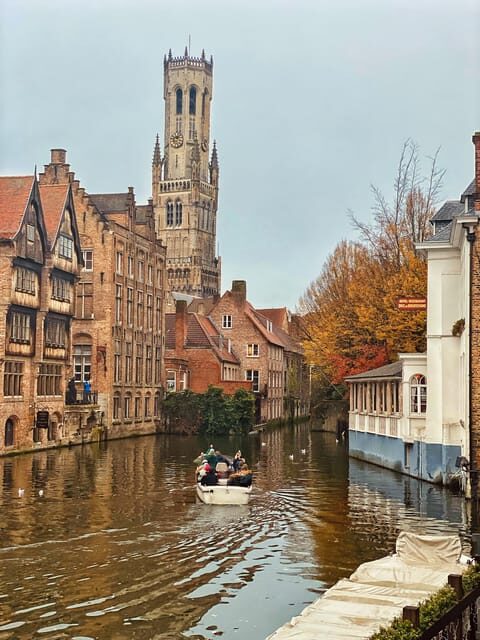
You also get a break in the real town life of Ypres: a quick stop at the Ypres Cloth Hall and free time to walk the main square. It’s one of those practical “you’re not trapped inside history” moments. If you want a local meal, the tour notes Flemish Stew as a local dish to consider.
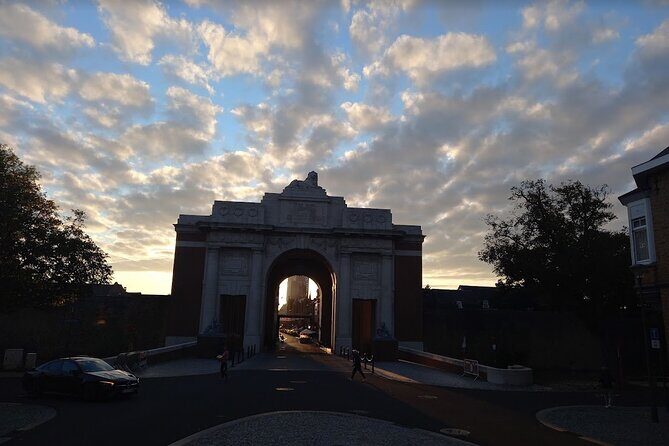
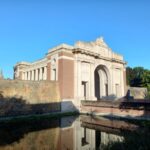
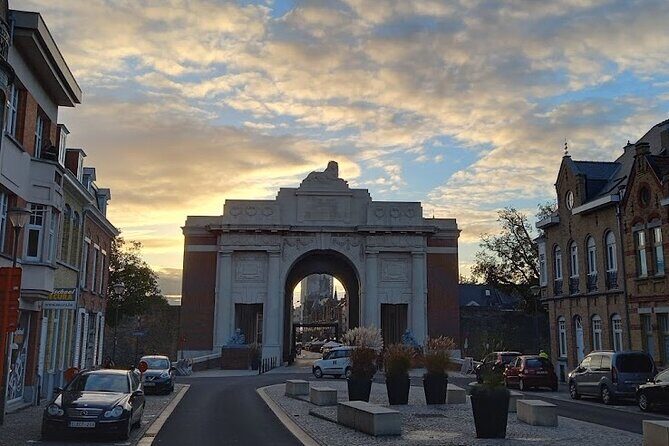
Finally, the day closes with ceremony. The Last Post ceremony at Menin Gate runs at 8pm and is conducted nightly by local fire brigade buglers since 1927, aside from the Nazi occupation in WW2. Even if ceremonies aren’t your thing, this one lands because it connects remembrance, routine, and public space.
You end Day 1 at Langemark Cemetery, where the Germans commemorate their war dead, with 44,000 German dead buried there. It’s a reminder that this landscape isn’t only one national story—it’s a shared European wound.
Day 2: Fromelles identification, Australian trench-line views, and Bullecourt
Day 2 starts with a museum built around modern discoveries: the Museum of the Battle of Fromelles. You’ll see how remains were found and identified, including 250 Aussies identified from a mass grave discovered in 2008. This is valuable because it shows how WWI history doesn’t stop just because the fighting ended.
The next stops keep you in the cemeteries and memorial ground.
At Le Trou Aid Post Cemetery, you’ll hear the story of Pompey Elliott and the massacre of the Australian 5th Division during the battle. Then comes Pheasant Wood Military Cemetery, tied to the Australian soldiers found in the mass grave, followed by VC Corner Australian Cemetery, where you’ll view the battlefield from Australian trench lines. Those trench-line viewpoints are more than scenic—they help you understand what visibility and terrain really meant in combat.
Then you’ll hear the German perspective at Australian Memorial Park, including the story connected to the Cobbers statue. That viewpoint swap is one reason this tour feels grounded instead of one-note. You still stay focused on Australians, but you get a fuller sense of what the landscape looked like from both sides.
Arras is the emotional palate cleanser and a practical break. You’ll have lunch time there, with Arras described as a stunning UNESCO world heritage site and time at the main square. It’s a good moment to reset your brain because Day 2 continues with heavier battle-linked ground right after.
Later, you’ll visit The Bullecourt Digger for the battle of Bullecourt, highlighted as costing 10,000 Australian soldiers in two weeks. A short stop at Slouch Hat Memorial looks at tank remnants from the battle and the Australian slouch hat memorial.
You finish the day by arriving in Amiens around 5pm, and your guide will show you where to eat and where to find the best views before dropping you at your lodging. That’s a smart way to end: you get enough guidance to enjoy the city without losing the momentum of the battlefield narrative.


Day 3: Albert, Lochnagar, Le Hamel, and the missing Australians
Day 3 starts at Albert, stopping at the Basilica and the story of the Leaning Virgin. It’s short, but it sets a tone: the war isn’t only trenches and craters—it’s also towns rebuilt around memory.
Next is Lochnagar Crater, described as a 30-meter deep crater from the mine blown on 1 July 1916. You’ll hear the story of that day and how it led to the deaths of 20,000 British soldiers. Even though this tour is Australian-focused, that context matters. It helps you understand the scale of the Somme fighting that Australians were part of.
You then move to the 1st Australian Division Memorial for the Battle of Pozieres, described as a six-week slaughter tied to the deaths of 24,000 Australian soldiers for a one-mile long ruined village. After that comes Windmill Memorial, showing the German trench system OG1 and OG2 and what was once a windmill. These stops do an important job: they connect memorial names to specific trench layouts and physical reference points.
Then you hit a milestone in military technology at the Tank Corps Memorial, noting tanks were first used in battle and walking through how they came about and how tactics developed. It’s easy to treat tanks as a trivia point. Here, they’re tied to real battlefield evolution.
Lunch at Le Tommy is on your own dime, and the stop is described as a café filled with love and respect for Australian sacrifice. You’re not just eating—you’re continuing the emotional work of the route with something human and local.
After lunch, you go to École Victoria, where you’ll hear the story of a school paid for by pennies from little children in Australia in the 1920s. This stop is quietly powerful because it shifts the narrative from wartime destruction to later care and rebuilding—an important balance.
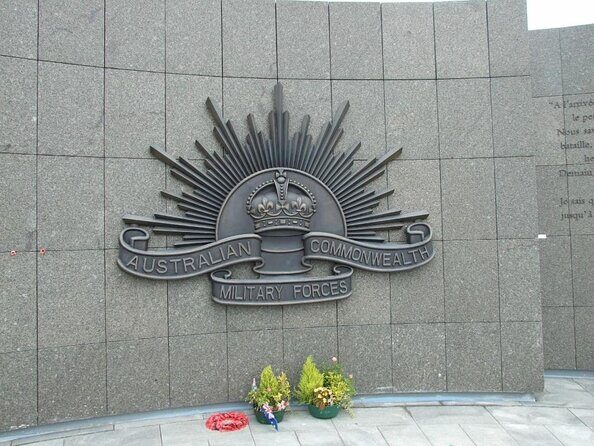
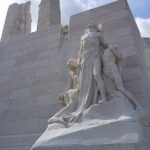
Then comes Adelaide Cemetery, tied to the story of the unknown Australian soldier exhumed from this site in 1993. You’ll also visit the Australian National Memorial to see the memorial to 20,000 missing Australians in this area, followed by a chance to spend an hour at the Sir John Monash Centre. Museum-centre time on the Somme side helps you make sense of why these battles still matter in Australian collective memory.
The day’s final major ground moment is the Australian Corps Memorial, connected to Monash’s Battle of Le Hamel—a rapid battle that cost fewer lives and is described as having many historical firsts. The tour ends with drop-off back in Amiens, either at your hotel or at the railway station.
Practical tips so you enjoy the tour instead of surviving it
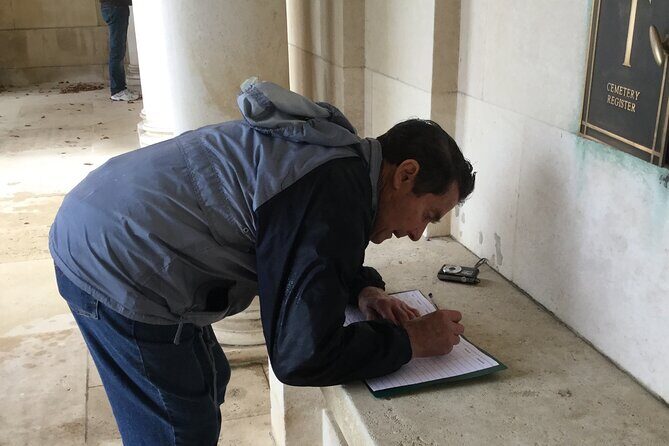
This is a three-day plan with a lot of short stops and a lot of meaning packed into each one. To get the best out of it, I’d plan like this:
- Wear comfortable shoes. Even when each stop is brief, the day adds up fast.
- Bring layers. You’ll be outside for memorials and cemeteries, so weather can change your comfort.
- Keep some emotional breathing room. If you find a cemetery too intense, you don’t have to force yourself to rush through. Let your guide know you need a slower pace.
- Budget for food. Meals and accommodation are on you, and the tour includes lunch opportunities at Arras and Le Tommy where you’ll be paying locally.
Also, if you’re coming with family names or a specific battle your ancestor fought in, tell the operator in advance. The itinerary explicitly notes the guide can tailor where possible.
Who this tour suits best
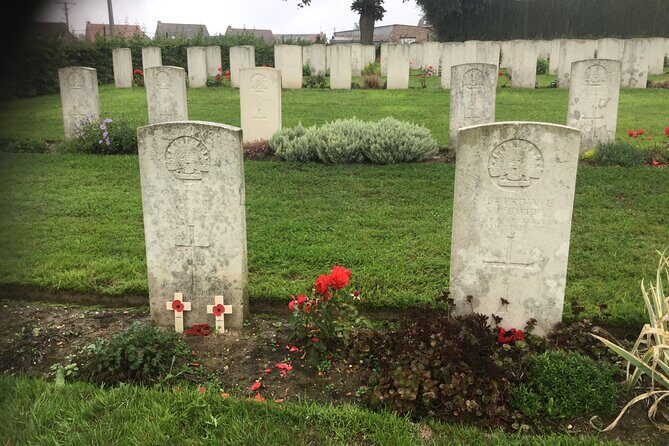
This is a great fit if you want depth over speed and you care about the Australian story in a place that defined the era. It’s also a strong choice if you like being able to ask questions and get answers tied to exact sites—especially because this is private and only your group participates.
If you’re traveling with mobility concerns, the itinerary includes many short stops. Still, it’s a battlefield route with outdoor walking around cemeteries and visitor areas. You might find it demanding if you prefer long indoor museum-only days.
It’s also ideal for people who appreciate a mix of commemoration and context—cemeteries, museums, trench-line views, and ceremony all in one.
Should you book it
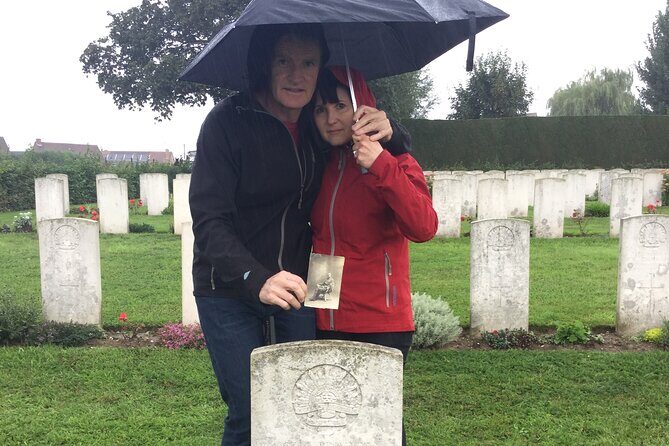
If you’re ready for a serious, personal tour, I’d say yes—especially if you value a guide who brings family-linked insight and can tailor the route around your questions. The private format, daily water, and multiple key memorial and museum stops make the high price feel more like a working value than a luxury add-on.
If you want light sightseeing, this won’t match your mood. And if you don’t want to handle meals and lodging planning yourself, you’ll feel the gap fast.
For the right mindset, though, this is the kind of tour that stays with you long after you leave the map behind.
FAQ
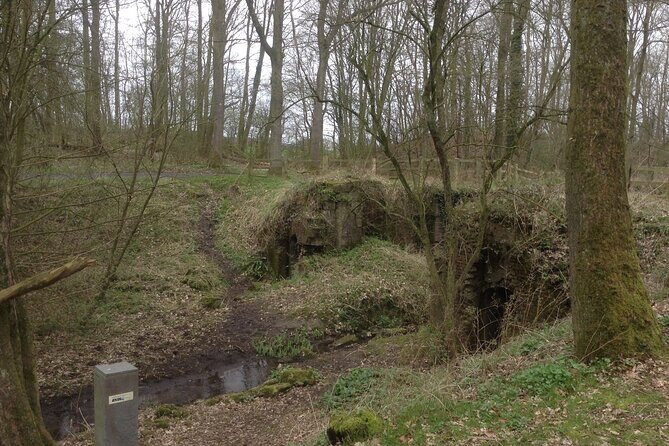
What does the tour price include?
The price includes transport and guided tours, plus complimentary bottled water each day. Some admissions are included (such as In Flanders Fields Museum, the Museum of the Battle of Fromelles, and École Victoria), while many stops are listed as free.
How long is the tour?
It’s a 3-day tour with a start time of 9:00am.
Can I choose whether the tour starts in Ypres or Amiens?
Yes. The route can be done Ypres to Amiens or the reverse, based on your preference.
Is this a private tour?
Yes. It’s private, so only your group participates.
What are the meal and accommodation arrangements?
Meals and accommodation are not included. You’ll pay for meals and choose your own lodging.
What time does the tour do the Last Post ceremony?
The tour includes the Last Post ceremony at Menin Gate, carried out nightly at 8pm.
What happens on Day 2 when you arrive in Amiens?
You arrive around 5pm, and your guide will point you to places to eat and the best views before dropping you off at your lodging.
Is free cancellation available?
Yes. You can cancel for a full refund up to 24 hours in advance of the experience start time.
Is it suitable for people with service animals?
Yes. Service animals are allowed.