REVIEW · YPRES
Full Day Canadian WW1 Vimy and Somme Battlefield Tour from Ypres
Book on Viator →Operated by Ploegsteert Sector Battlefield Experience · Bookable on Viator
One day can feel like a whole chapter of history. This is a Canadian WWI battlefield day that strings together the places you’ve probably seen in photos, but with the trenches, craters, and memorials explained in plain language.
What I like most is how much you get without hassle: hotel pickup and drop-off plus round-trip transportation mean you can focus on the sites, not the schedule. And you get lunch included, so you’re not juggling food stops between emotionally heavy locations.
The one drawback to consider is the pace. A full day in a vehicle, with several stops and set time windows, works best if you’re okay with moving on—there’s time to wander, but it’s still one long day.
In This Review
- Key points before you go
- A tight nine-hour loop from Ypres, with comfort handled
- Vimy Ridge: trenches, the Grange Tunnel, and the Douai Plain view
- Courcelette Canadian Memorial: a quick stop that still hits hard
- Lochnagar Crater: the 1 July 1916 underground explosion
- Thiepval Memorial and visitor centre: names of 72,000 soldiers without a grave
- Beaumont-Hamel in Newfoundland territory: Caribu, preserved trenches, and a walk
- Why a strong guide makes the day feel personal, not mechanical
- Price and value: what you’re paying for at $517.07 per person
- What to do before you go so the sites land
- Should you book this Canadian WWI battlefield day from Ypres?
- FAQ
- How long is the Full Day Canadian WWI Vimy and Somme Battlefield Tour from Ypres?
- What time does the tour start?
- Is lunch included?
- Do I need to pay for entry tickets at the sites?
- Does the tour include hotel pickup and drop-off?
- What language is the tour offered in?
- Is this a private tour or shared group?
- Are there any restrictions for children?
Key points before you go
- Round-trip transfers from your hotel keep the day smooth and low-stress.
- Lunch is included, so you don’t waste energy hunting food during key memorial stops.
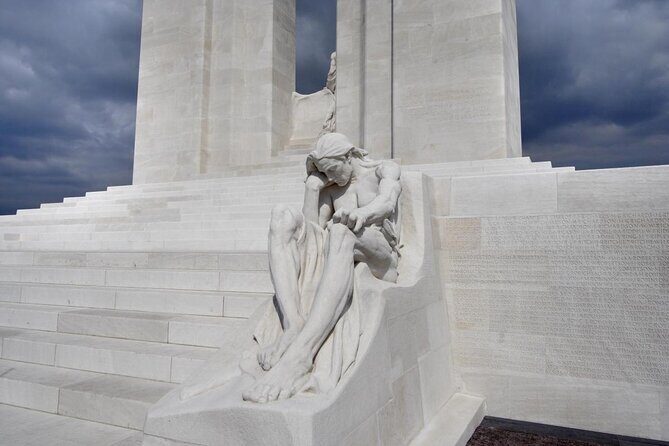
- Vimy Ridge hits hard with trench lines, the Grange Tunnel, and a top view over the Douai Plain.
- Lochnagar Crater gives you a rare, visible reminder of an underground explosion from 1 July 1916.
- Thiepval Memorial lets you see the names of soldiers with no known grave—72,000, in one place.
- Beaumont-Hamel in Newfoundland territory includes preserved trenches and a walk along areas tied to the 1 July 1916 fighting.
A tight nine-hour loop from Ypres, with comfort handled
This tour runs about 9 hours starting at 8:30am. That timing matters because you’ll likely hit the major sites earlier in the day, when you can take your time without feeling rushed by late-day crowd pressure.
Logistics are covered in a way that feels practical: you get hotel pickup and drop-off, plus a private vehicle (air-conditioned) and bottled water. That means less thinking on your end, which is a big deal on a day like this—when your focus should be on what you’re seeing.
The group stays to your tour only (it’s private for your booking), and you won’t be coordinating with strangers. The trade-off is that this is still a single-day circuit: if you prefer long, slow lingering without time limits, you may find the schedule brisk.
A few more Ypres tours and experiences worth a look
Vimy Ridge: trenches, the Grange Tunnel, and the Douai Plain view
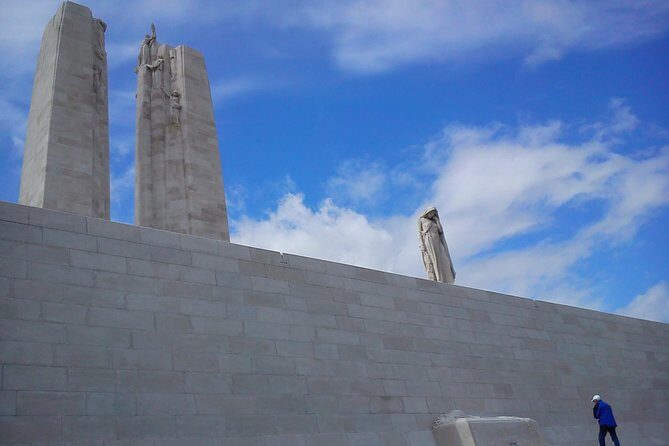
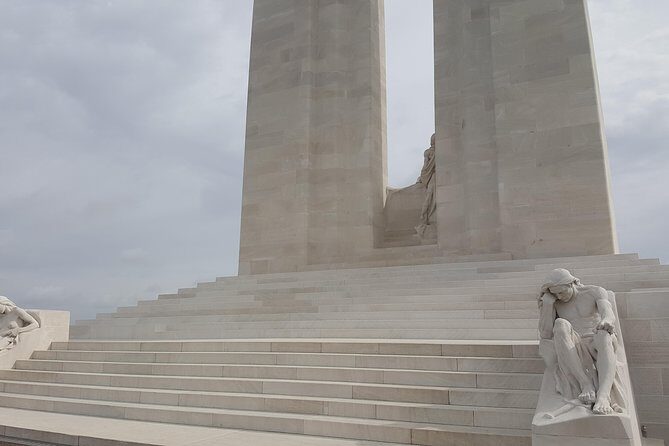
The day starts at the Canadian National Vimy Memorial, with about 3 hours on-site. You’ll be taken to Vimy Ridge, where you can stand in areas tied to both German and Canadian trenches, giving you a real sense of the fight for ground.
A standout detail is the Grange Tunnel, where Canadian troops were positioned in the hours leading up to the battle. This isn’t just a marker on a map—it helps you connect what the memorial is saying to what soldiers would have experienced right before going over the top.
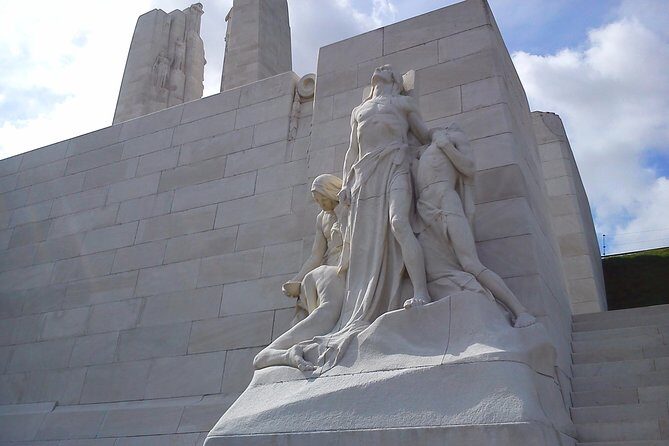
You’ll also have a chance to see the new visitor centre, plus the memorial itself, which commemorates 11,285 Canadian soldiers. And if you’re the type who likes context you can see, the view over the Douai Plain is one of the best ways to understand why this ridge mattered.
A possible downside at Vimy is that it’s the longest stop. If you’re hoping for a quick photo-and-go day, you’ll still get the depth here—just know that the time is designed for meaning, not speed.
Courcelette Canadian Memorial: a quick stop that still hits hard
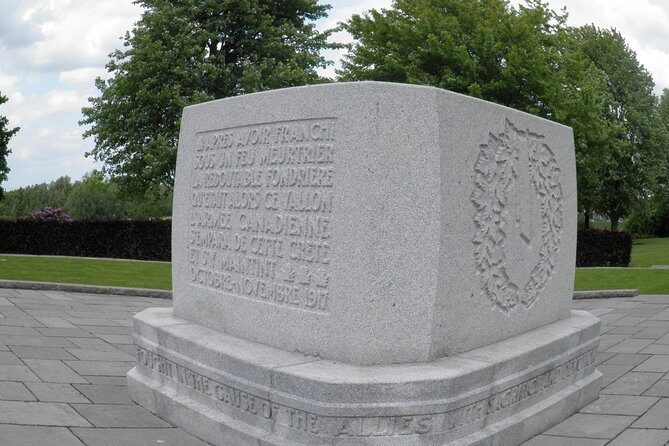
Next comes the Courcelette Canadian Memorial, a shorter 15-minute stop. On paper, that can sound too brief. In practice, it often works because it’s a pause in the middle of the route—an intentional moment to reset your understanding of what Canadians were doing in the fall of 1916.
Even with the short time window, you’ll be standing at a site linked to where Canadians fought, so it doesn’t feel like a filler stop. Think of this as a brief checkpoint: you’re absorbing the broader sweep of the war, not just one famous ridge or one single crater.
If you’re the kind of visitor who needs extra time to process, you might wish this stop were longer. But the tour’s overall structure is built to keep momentum across multiple high-impact locations.
Lochnagar Crater: the 1 July 1916 underground explosion
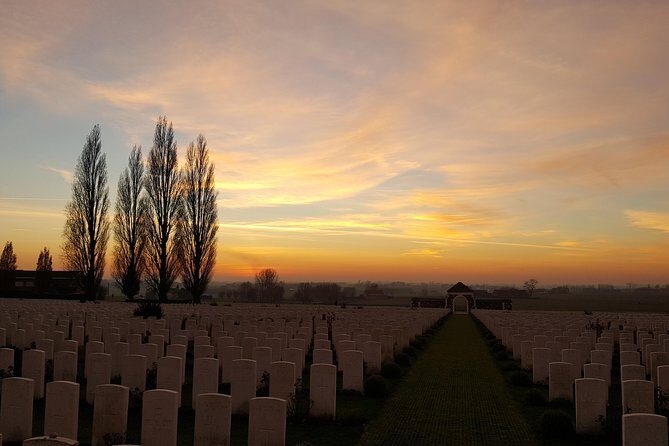
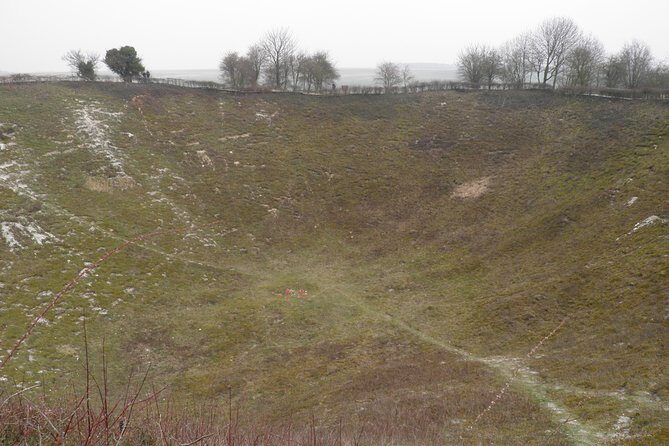
At Lochnagar Crater, you’ll have about 30 minutes to see the crater formed by an underground explosion triggered on the morning of 1 July 1916. This stop has a different feel than the memorials because it’s physical evidence—you can look at the shape and understand this was war at a scale that’s hard to grasp from a book.
Why it’s valuable is simple: it turns the idea of mining and underground warfare into something you can point to. Even if you only spend half an hour, you’ll likely leave with a clearer mental picture of how the ground itself was used as a weapon.
The only practical consideration is the weather. Craters and open-air sites don’t give you much cover, so dress for the day (and for the fact that you’ll be walking).
Thiepval Memorial and visitor centre: names of 72,000 soldiers without a grave
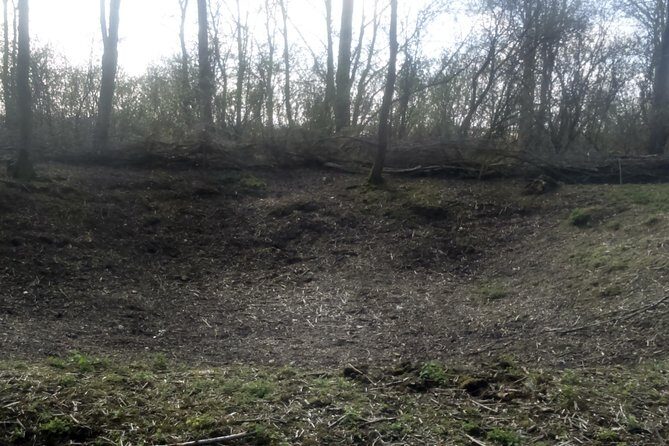
The Memorial de Thiepval is where the scale becomes overwhelming in a different way. You’ll spend about 1 hour here, including the visitor centre, and you’ll see the largest CWGC memorial bearing the names of 72,000 soldiers who have no known grave.
This stop is worth your attention if you want to understand how commemoration works after mass casualties—how history holds on to names even when bodies aren’t recovered. The visitor centre helps you put the memorial into context, so you’re not just reading inscriptions, you’re understanding why they’re there.
One drawback: one hour can feel tight if you’re the type who reads every name. If that’s you, use the guided explanation to pick what you want to focus on, then use the remaining time to walk at your own pace.

Beaumont-Hamel in Newfoundland territory: Caribu, preserved trenches, and a walk
The final major stop is the Memorial Terre-neuvien de Beaumont-hamel, with about 1 hour 30 minutes. This is one of the most moving parts of the day because you get more than a memorial wall—you get preserved trenches and walking routes tied to the fighting.
You’ll be near the Caribu and have time to view the preserved trench areas where Newfoundland troops were lost on 1 July 1916. The route includes a walk along Danger Tree, Y Ravine, and the 51st Highland Division Memorial.
There’s also time in the Newfoundland visitor centre, which gives you background so the details connect instead of bouncing off in your head. If you like when a site explains itself, this is the stop where that works best.
The main consideration is stamina. Even when the walk is guided and the pace is manageable, it’s still a memorial site walk plus time indoors. Comfortable shoes matter more here than anywhere else.
Why a strong guide makes the day feel personal, not mechanical
A battlefield tour can be either a list of locations—or a story you can actually follow. The best runs here come down to the guide, and the professional guide on these tours is a key part of the value.
A standout detail from past experiences is the way top guides can keep dates, units, and cause-and-effect explanations organized in their heads. You’ll get help making sense of why these battles happened when they did, not just what the sites look like now.
I also love tours where you’re not forced into one rigid pace. This one builds in room for your preferences, so if you want an extra minute at a memorial or a slightly different moment to photograph, you can usually work it in without feeling like you’re delaying everything.
And practical things matter: having a driver ready to handle real-world issues like traffic can turn a stressful situation into a non-event. On a day already loaded with emotion, you’ll feel calmer when logistics behave.
Price and value: what you’re paying for at $517.07 per person
At $517.07 per person, this isn’t a bargain. If you compare it to DIY travel, you’ll see why: you’re paying for time-saving transfers, a professional guide, an air-conditioned private vehicle, and lunch included.
What makes it feel like value is that those extras remove friction. On a WWI day, the worst part isn’t the walking—it’s the mental load of routing, parking, and figuring out what matters at each stop. Here, the structure is done for you: you show up in the morning, and you spend the day focused on the sites.
You’re also getting a mix of included experiences: admission is free at most stops, and admission is included at Thiepval (where the visitor centre is part of the time). That combination matters because it reduces surprise costs and keeps the schedule clean.
The best fit for the price is:
- You want a guided day with less planning.
- You care about Canadian WWI context, not just sightseeing.
- Your group values comfort (pickup, bottled water, vehicle) enough to pay for it.
If budget is tight, you might decide this is too much for one day. But if you’d otherwise spend hours researching and piecing together multiple stops, the guided circuit can actually save you time—and time is a real part of your travel cost.
What to do before you go so the sites land
This is a heavy subject. Still, you can make the day feel more meaningful with a bit of prep.
First, wear shoes you trust. You’ll be walking around memorials and along routes at Beaumont-Hamel, and the day is long enough that sore feet can steal your attention from the meaning of the places.
Second, go in with one question you want answered. For example: why Vimy? why the underground blast at Lochnagar? why the commemoration at Thiepval? Having a simple goal helps you translate what you’re hearing into something you remember later.
Third, treat lunch as fuel, not an afterthought. Since lunch is included, you can keep your morning focused and avoid last-minute food errands between stops.
Should you book this Canadian WWI battlefield day from Ypres?
Book it if you want a guided, multi-site Canadian WWI day that’s built to minimize planning and keep you moving efficiently between the biggest locations. The combination of pickup/drop-off, lunch included, and a guide who can explain the places in context is a strong match for visitors who have limited time in the area.
Skip it (or consider another option) if you’re price-sensitive and you prefer doing memorial sites at your own rhythm with slower, independent pacing. Also, if you tend to get overwhelmed by long days, know that this is a full 9-hour circuit—meaning you’ll be absorbing a lot, not spacing it out.
If you’re excited to see Vimy Ridge up close, understand what Lochnagar Crater represents, and finish with the trench experience at Beaumont-Hamel, this tour is set up to deliver that in one day.
FAQ
How long is the Full Day Canadian WWI Vimy and Somme Battlefield Tour from Ypres?
The tour runs for about 9 hours.
What time does the tour start?
The start time is 8:30am.
Is lunch included?
Yes. Lunch is included, and bottled water is provided.
Do I need to pay for entry tickets at the sites?
Most admission tickets are free as part of the stops listed, and admission is included for the Thiepval visitor centre.
Does the tour include hotel pickup and drop-off?
Yes. Hotel pickup and drop-off are included, along with private transportation in an air-conditioned vehicle.
What language is the tour offered in?
It’s offered in English, and the tour may be operated by a multi-lingual guide.
Is this a private tour or shared group?
It’s private for your group. Only your group will participate.
Are there any restrictions for children?
Children must be accompanied by an adult.