REVIEW · YPRES
From Ypres 4hr Christmas Truce and Monster Mines of Messines PRIVATE Tour
Book on Viator →Operated by A Foreign Field WW1 Tours · Bookable on Viator
The ground around Ypres has a pulse. This private tour strings together key WW1 battle sites in a tight loop, so you can actually absorb what you’re seeing instead of just ticking off stops. I liked the focus on the human scale of the story, from soldiers entombed in craters to memorials tied to specific countries and communities.
What also works well is the private guide setup. In my experience, Soren (our guide) didn’t rattle off facts and move on; he paced the tour with time for questions and even adjusted the mix around what mattered to me, including family-history angles. One possible drawback: it’s a short, 4-hour window, and these places are emotionally heavy—so if you want long museum-style time at each site, you may feel a bit rushed by the schedule.
In This Review
- Key things you’ll notice on this Ypres private WW1 route
- A private 4-hour WW1 route that feels like it has a point
- Hill 60 and the Caterpillar Crater: 8,000 men in the earth
- Spanbroekmolen Mine Crater: why tunnellers mattered
- Messines Ridge (N.Z.) Memorial: the New Zealand contribution in context
- Island of Ireland Peace Park: Irish contribution to the Battle of Messines
- The Christmas Truce Memorial: where 1914 happened in No Man’s Land
- Hyde Park Corner cemetery: names, twin brothers, and a rugby captain
- Price and value: what you’re paying for, really
- Who should book this private Ypres WW1 tour
- Should you book this private WW1 tour from Ypres?
- FAQ
- How long is the Ypres Christmas Truce and Messines Private Tour?
- What’s the group size for this private tour?
- Do I need to arrange pickup in Ypres?
- Is the tour in English?
- Are admission tickets required for the stops?
- Can I cancel and get a full refund?
Key things you’ll notice on this Ypres private WW1 route

- Pickup that saves time: meet at Ieper train station or your hotel/BnB (if not listed, you message the provider).
- Hill 60’s Caterpillar Crater story: the guide connects the crater, the fighting, and the cemetery without headstones.
- Messines tunnels at Spanbroekmolen: you’ll learn how tunnellers shaped what happened above ground.
- Memorial stops by nationality: New Zealand and Irish contributions are both built into the route.
- Christmas Truce ground: you see where the 1914 moment happened in No Man’s Land, with context that makes it stick.
- Hyde Park Corner’s specific graves: names, twin brothers buried side by side, and the Hyde Park Corner Memorial.
A private 4-hour WW1 route that feels like it has a point

Ypres can overwhelm you fast. The trenches are spread out, the signage is uneven, and without context you end up making your own guesses. This is designed to solve that. You get a private guide and an easy way to move between sites without spending your brainpower on navigation.
You’ll appreciate how the tour is set up for a passenger. The stops are spaced out, and the guide’s job is to make each one “click” in your head. Instead of bouncing from place to place, you get clear explanations tied to what you’re standing on, what the battle meant, and how the memory of it is preserved in stone.
Because it’s private, you can steer it. The best version of this tour is when you go in with at least one personal thread—family research, a specific memorial you want to see, or a country/connection you care about. In my case, that mattered: the guide took the limited time and built a route that fit my priorities, rather than forcing a one-size-fits-all circuit.
Timing note: the advertised duration is about 4 hours. In real life, you may run longer if you ask questions or want extra time at a stop. That’s not a bad thing, as long as you’re not on a hard schedule after.
You can also read our reviews of more private tours in Ypres

Hill 60 and the Caterpillar Crater: 8,000 men in the earth
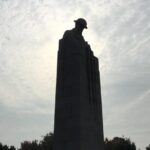
Hill 60 is where the story starts getting physical in your imagination. You’ll hear about Hill 60 and the Caterpillar Crater, and what makes it unforgettable is how it was tied to bodies—about 8,000 soldiers described as encased in the earth. The guide also points you toward the idea of a cemetery without headstones, which changes the way you look at the ground. You stop seeing it as “just a field” and start seeing it as a record that’s been hidden rather than erased.
What I liked most here is the way the explanation doesn’t float above the site. The guide makes the connection between the action (what happened on and around Hill 60), the crater itself, and the later act of remembering. That matters, because WW1 sites can turn into vague “events” unless someone forces the details to line up.
If you’re the type who wants to picture tactics and scale, this stop gives you a strong anchor. The crater becomes a teaching tool, not just a landmark. And if you’re visiting with family history, Hill 60 gives you a meaningful way to think about what records can and cannot show—especially when memory is preserved without traditional markers.
Time on site: around 35 minutes. That’s enough to understand the story and get your bearings, but it won’t let you wander for an hour and “figure it out” alone. Go in ready to listen, then ask questions you actually care about.
Spanbroekmolen Mine Crater: why tunnellers mattered
Next is the Spanbroekmolen Mine Crater, and it hits you with sheer scale. You’ll see the crater connected to the mine described as weighing about 91,000 lb. The guide uses that to explain the work of the tunnellers of WW1—people doing specialized, dangerous engineering underground so the battle could change above ground.
This stop is valuable because it widens the usual WW1 focus. Many people come expecting mostly trench lines and artillery. Here, you also get a human story about digging, secrecy, and timing. The crater becomes evidence of a hidden battle happening out of sight, where progress depended on skill, patience, and luck.
It’s also the kind of stop where a guide helps you avoid a common mistake: treating a crater as a static hole. With the right context, it becomes a timeline. You’ll understand why the tunnels were attempted, why the mine’s mass mattered, and how that feeds into what came next on the ridge and in the fighting around Messines.
Time on site: about 10 minutes. That’s short, but it’s also honest. This is a stop you use to sharpen your mental picture, not to linger for ages. If you want longer time here, ask your guide for it—private tours are the best place to do that.
Messines Ridge (N.Z.) Memorial: the New Zealand contribution in context
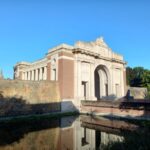
At Messines Ridge, the focus shifts from earthworks and craters to memorial meaning. You’ll visit the Messines Ridge (N.Z.) Memorial, where you hear about the New Zealand contribution to the battle.
This stop works well when you want the story to grow beyond a single trench line. The guide ties the ridge back to the larger offensive picture, so you understand what the New Zealand involvement represented within the overall fight. Memorials can sometimes feel like “names on a wall,” but this one is used as a storytelling tool—helping you connect action to remembrance.
I found it emotionally steadier than the crater stops—not because the subject is lighter, but because the meaning is clearer. Instead of trying to imagine what’s hidden under soil, you’re offered a defined place where contribution and sacrifice are marked for future generations.
Time on site: around 15 minutes. That gives enough time to absorb what the memorial represents and still keep you moving through the day without exhausting your brain.
Island of Ireland Peace Park: Irish contribution to the Battle of Messines
Then it’s the Island of Ireland Peace Park, with the Irish contribution to the battle of Messines at the center. Peace parks can feel generic if you treat them as a quick photo stop. With a guide, you get more than that—you get a framework for why this location is here, what it remembers, and how that memory fits into the same conflict you’ve been following at the craters and ridge.
What I liked about this part of the tour is how it balances the earlier “battlefront engineering” focus. You move from mines and earth to identity and commemoration. For many people, that’s what makes the overall route feel complete: you don’t just learn how the war was fought; you also learn how it was remembered in different corners of the same world.
If you’re tracing family lines, this stop can be especially meaningful. Even without specific family names in hand, it helps you connect the battle to communities your relatives may have come from.
Time on site: about 15 minutes. Short enough to keep momentum, long enough to take the story in.
A few more Ypres tours and experiences worth a look

The Christmas Truce Memorial: where 1914 happened in No Man’s Land
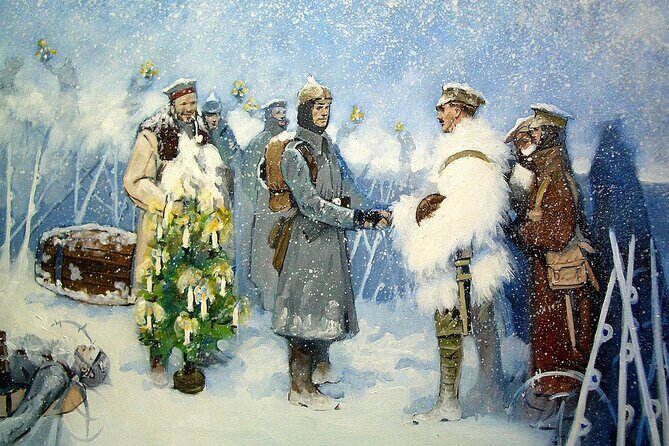
The route takes a big emotional turn at the Christmas Truce Memorial. You’ll hear the story and see the ground where the moment took place in Christmas 1914, when soldiers forgot their differences and met in No Man’s Land.
This stop is powerful because it gives you context that stops the story from turning into a simple feel-good legend. The guide helps you understand why that moment mattered, how it happened, and what it meant for men living inside a war that normally allowed almost no human contact.
Practical tip: don’t race through this one. Your instinct might be to move on quickly because the subject is so well-known. Resist that. Give yourself a few extra seconds to actually look at the ground where the encounter is remembered. In a private tour format, you’re not competing with a crowd to do it.
Also, keep your expectations balanced. The Christmas Truce story is moving, but it doesn’t erase the horror of the same war. That contrast is part of what makes it stick.
Time on site: around 15 minutes. Use it to slow down.
Hyde Park Corner cemetery: names, twin brothers, and a rugby captain

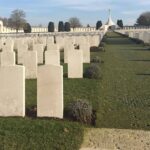
Finish with Hyde Park Corner Commonwealth War Graves Commission Cemetery, and you’ll see how memory becomes personal again. The guide shows you the Hyde Park Corner Memorial, then points out specific details that bring individual stories forward—like the resting place of the England rugby captain and twin brothers buried side by side.
This is the part of the tour where you may feel the emotional weight most directly. The cemetery is orderly and quiet, and that’s exactly why the stories hit harder. It’s not chaos from the past; it’s remembrance carefully built in the present.
If you’re doing family research, this stop can be a reality check. Even when you don’t find a specific relative here (and many visitors won’t), the cemetery teaches you something: how the war was categorized, recorded, and honored. And if you do have a name to look for, your guide can help you make sure you’re reading things correctly and not misinterpreting markers.
Time on site: about 15 minutes. Short, but meaningful—especially if your mind is already prepared by the earlier stops.
Price and value: what you’re paying for, really
The price is $532.32 per group, up to 4 people, for about 4 hours with a private guide. On the surface, that can sound steep. But here’s what you’re actually buying: access to a guide who can turn multiple distant sites into one coherent story, plus pickup that helps you start without wasting half your day figuring out logistics.
If you’re traveling as a small group or a family, the math gets easier fast. Instead of paying for separate tickets, separate transport puzzles, and separate explanations, you’re paying for one shared learning experience built around your interests. You also get admission tickets for the stops described as free, which helps.
Is it worth it if you only care about one site? Maybe not. If you want a single quick stop, a self-guided visit can be cheaper. But if your goal is to understand what you’re seeing—Hill 60’s craters, Spanbroekmolen’s tunnelling, Messines memorials by country, the Christmas Truce moment, and the Hyde Park Corner graves—then a private guide is doing the heavy lifting.
One more value point: when your guide takes questions seriously, you stop feeling like you’re being rushed through grief. In the reviews I saw echoed later, the guide’s approach was about time and attention, not just speed.
Who should book this private Ypres WW1 tour
This tour is a strong fit if:
- You want to see several major WW1 sites around Ypres in a single outing.
- You prefer a calm pace with time for questions rather than a busload schedule.
- You have an ancestry angle or specific memorial priorities and you want the day shaped around that.
- You’d like help connecting craters, ridges, and cemeteries into one story you can repeat later.
It may be less ideal if:
- You’re looking for lots of museum time and long individual exploration at each site.
- You want a light, casual outing. Even with the Christmas Truce stop, the core theme is war, loss, and memory.
Should you book this private WW1 tour from Ypres?
If you have even one or two “I really want to understand this” priorities—especially a specific memorial or family-history connection—I’d book it. Private guides are most valuable when they can personalize your route and slow down when you need clarity, and this one is built around exactly that.
Also, if you’re short on time but want a real grasp of how Ypres and the Messines area fit together, this is a smart way to do it. You’ll leave with a route in your head, not just photos on your phone.
FAQ
How long is the Ypres Christmas Truce and Messines Private Tour?
It runs for about 4 hours (approximately).
What’s the group size for this private tour?
The tour is private for your group, up to 4 people.
Do I need to arrange pickup in Ypres?
Yes, pickup is offered. You can meet at Ieper train station, or at Ieper hotels & Bn’B’s if your accommodation is listed. If it isn’t listed, you message the provider with your accommodation name.
Is the tour in English?
Yes, it’s offered in English.
Are admission tickets required for the stops?
The admissions listed for the stops are marked as free.
Can I cancel and get a full refund?
You can cancel up to 24 hours in advance of the experience’s start time for a full refund. If you cancel less than 24 hours before, the amount paid is not refunded.