REVIEW · YPRES
From Ypres: WWI Battlefields Private Tour
Book on GetYourGuide →Operated by A Foreign Field Battlefield Tours/Passchendaeleprints.com Søren Hawkes · Bookable on GetYourGuide
Trenches hit different in daylight. I love how this private tour focuses on walking key ground like the Sanctuary Wood trenches and standing at the Caterpillar Mine Crater (Hill 60 B), with enough context to make it click. One drawback: it’s a memorial trip, so expect an emotional tone and bring comfortable shoes because the ground can be uneven.
What makes it especially worth your time is the way you can steer it—Australian, Canadian, or Kiwi routes are built in, and the guide can tailor around what matters to you. You’ll see major sites like Tyne Cot Cemetery and the Brooding Soldier memorial connected to the first-ever German gas attack, plus a photo stop at the John McCrae Dressing Station tied to In Flanders Fields.
In This Review
- Key Things I’d Watch For On This Ypres Private WWI Tour
- Getting Oriented in Ypres: How This Tour Keeps You From Feeling Lost
- Hill 60 B at the Caterpillar Mine Crater: The Ground That Still Holds Its Breath
- Sanctuary Wood Museum and Trench Ground: Where the Battle Line Becomes Real
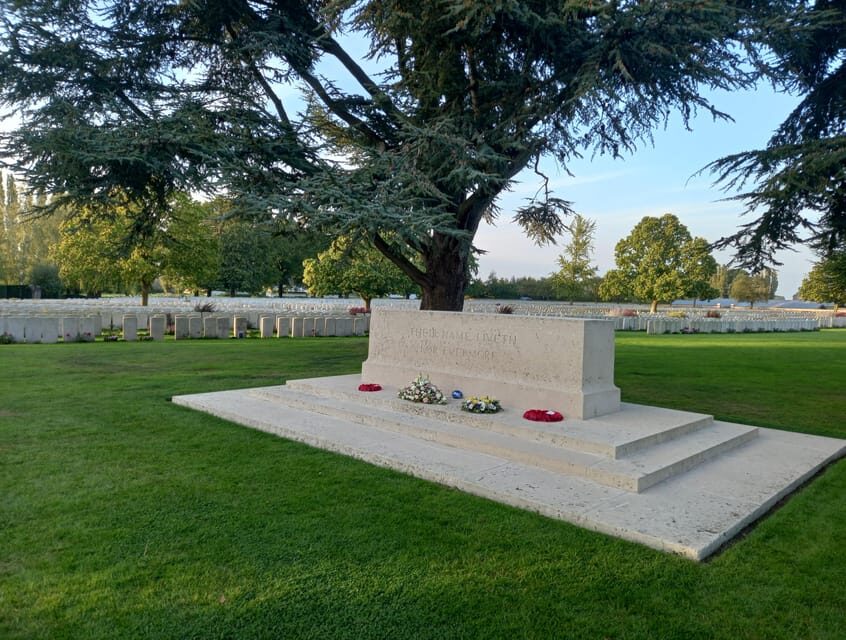
- Tyne Cot Cemetery and Wargrave: When the Numbers Become Personal
- The Brooding Soldier Memorial: First Gas Attack, Still Heavy to See
- John McCrae Dressing Station and In Flanders Fields: A Poem Tied to Place
- Essex Farm Cemetery: Short Stop, Big Impact
- How the National Itineraries Change Your WWI Story (Australian, Canadian, Kiwi)
- Private 4-Hour Value: When $530 Per Group Makes Sense
- What to Pack and How to Prepare for a Sober Day in Flanders
- Should You Book This Ypres WWI Battlefield Private Tour?
- FAQ
- How long is the WWI Battlefields Private Tour from Ypres?
- What does the tour cost, and how many people can it include?
- What stops are included during the 4-hour route?
- Can the tour be tailored for family history or specific interests?
- Where do we meet the guide?
- Is there food included in the price?
Key Things I’d Watch For On This Ypres Private WWI Tour
- Private group pacing: you go at your own speed, with time to look instead of sprinting.
- Walkable battlefield ground at Sanctuary Wood and the Hill 60 mine crater area.
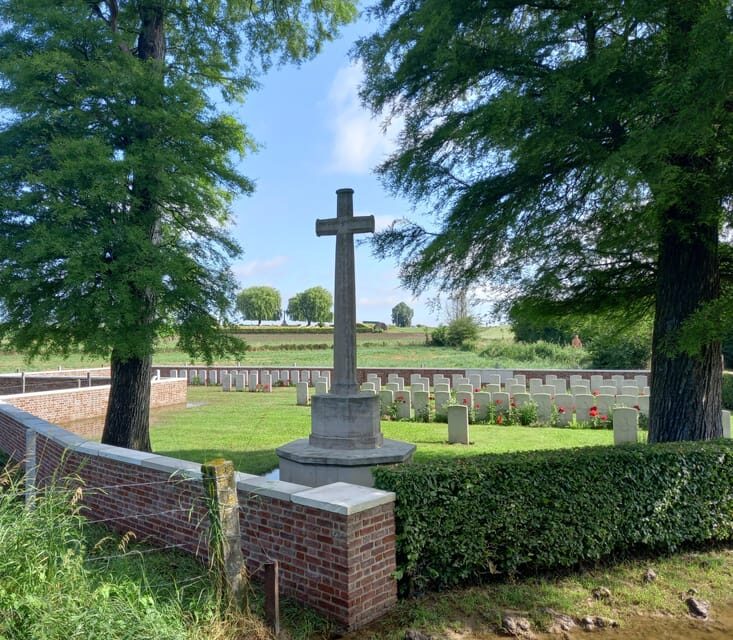
- Tyne Cot Cemetery scale: a long visit that helps you understand what mass death looks like in real space.
- Gas attack memorial context at the Brooding Soldier site.
- Nationality-based itineraries (Australian, Canadian, Kiwi) so the story fits the soldiers you came for.
- Family-history tailoring when you share names and details the guide can work with.
Getting Oriented in Ypres: How This Tour Keeps You From Feeling Lost

This tour is built around a simple idea: if you’re going to the Western Front, you need a route you can follow without constantly stopping to guess. The day starts with pickup in Ypres—either at your accommodation or at Ypres Railway Station, whichever is easiest for you. From there, the vehicle takes you between sites on the roads that shaped how troops actually moved toward Passchendaele in 1917.
The time frame is tight but not rushed: the full experience runs 4 hours with guided visits at each main stop. That matters because WWI battlefield sites reward attention. If you try to do too much on your own in a short window, you often end up with a pile of names and no sense of how the battle flowed.
The private format also changes the feel. You can ask questions that actually connect the maps to what you’re standing next to. And if you have ancestors connected to the fighting, this tour is set up to try to incorporate them, where possible.
You can also read our reviews of more private tours in Ypres

Hill 60 B at the Caterpillar Mine Crater: The Ground That Still Holds Its Breath
Your first big hit is the Caterpillar Mine Crater (Hill 60 B). You get a guided tour and then a short walk—about 30 minutes total at this stop. This is one of those places where the scale does the explaining. The crater isn’t just a hole in the earth; it’s a physical reminder of how industrial warfare rewired the terrain.
What I like here is that you’re not just looking. You’re being guided through why this spot mattered and what it meant for soldiers attacking in 1917. The mine crater is part of the larger story that led toward the Ypres Salient battles, and the timing works well because it sets your mental map for everything that follows.
Practical tip: bring your camera, but also slow down. At crater sites, the most important details are often the ones you see from different angles while you stand still.
Sanctuary Wood Museum and Trench Ground: Where the Battle Line Becomes Real
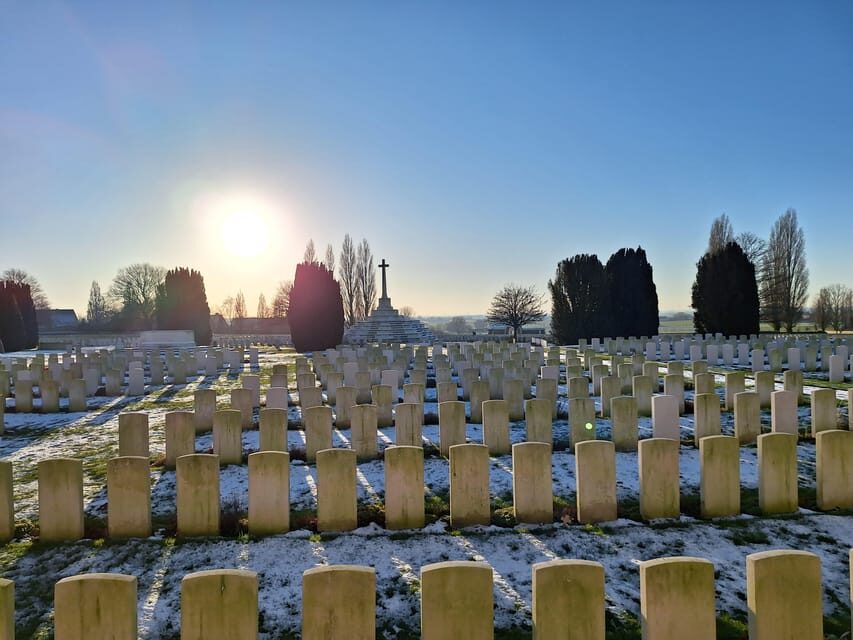
Next up is Sanctuary Wood Museum, with a guided visit of about 50 minutes. This stop is special because it connects the museum context to actual battlefield features. If you’ve ever struggled to picture what trench life was like, this is the kind of place that helps your brain do the conversion—from reading to imagining.
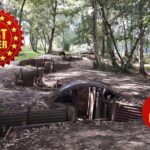
The highlight here is walking original trenches at the Sanctuary Wood site. Even if you don’t consider yourself a history person, trench lines have a way of making the story physical. You can see how attackers had to move forward under fire and how defenders shaped the ground.
This is also where pace matters. The best versions of this tour don’t rush you through the trench experience. You want a few minutes to look, then a few minutes to listen to the guide’s explanation, then another look. That rhythm helps the place stick.
Consideration: trench ground can be rough underfoot. Comfortable shoes aren’t optional for this one; they’re how you keep the day enjoyable.
Tyne Cot Cemetery and Wargrave: When the Numbers Become Personal
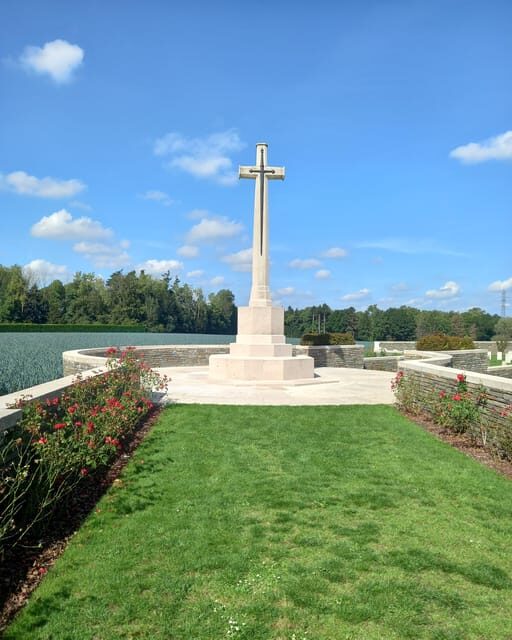
Then you shift into remembrance, and it’s powerful. Tyne Cot Cemetery is where you’ll spend about 50 minutes on guided time. This is one of the most important WWI cemeteries in the region, and it’s tied to Wargrave, where 12,000 war dead are buried.
The value of a guided visit here is simple: the cemetery isn’t just solemn—it’s structured. You can learn what you’re looking at, how the graves are organized, and what that means in terms of who is missing, who is known, and how families experienced loss.
If your interest is national—Canadian, Australian, Kiwi, British, South African—this is also a strong stop because the cemetery is where you can connect the personal to the large-scale. In practical terms, the guided portion helps you find specific names and sections efficiently, which is easy to miss if you’re doing it on your own.
Emotional note (useful, not dramatic): this is a place where you may want a moment before taking photos. The tour’s rhythm usually gives you time to do that without feeling like you’re holding everyone else back.
The Brooding Soldier Memorial: First Gas Attack, Still Heavy to See
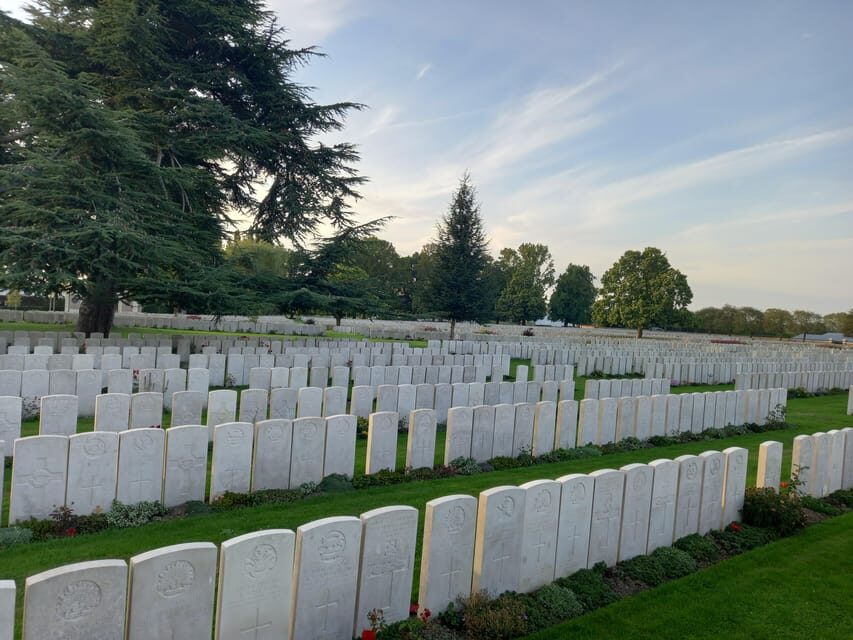
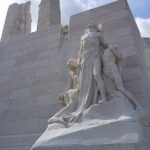
After Tyne Cot, you visit The Brooding Soldier for about 20 minutes. This memorial connects to the 1915 first-ever German gas attack, and it’s one of those stops where the guide’s explanation makes a visible shift between what you can see and what you’re trying to understand.
Gas warfare is hard to grasp because it isn’t a single event you can picture like a trench line or a mine crater. The memorial gives you a focal point. Then the guide helps translate the broader story—how new weapons changed tactics and why fear and suffering were not theoretical for soldiers in that year.
This stop is short by design. You don’t need long minutes here to understand what it represents, as long as the guide gives you the context before you move on.



John McCrae Dressing Station and In Flanders Fields: A Poem Tied to Place
You’ll have a photo stop at the John McCrae Dressing Station, tied to the famous poem In Flanders Fields. The stop is about 35 minutes, which gives you time to read the scene, take a few photos, and absorb how the writing connects to the fighting around Ypres.
I like that this portion isn’t treated like a detour. Instead, it works like a bridge between battlefield mechanics and the way the war was remembered afterward. McCrae’s link to the area turns the story from tactics into meaning, and it gives your day a human angle when your brain is already overloaded with physical reminders.
Practical tip: use part of the time to stand back and look. Poems feel different when you’re physically near the ground they’re connected to.
Essex Farm Cemetery: Short Stop, Big Impact
Your itinerary includes Essex Farm Cemetery for about 10 minutes of guided time. That brief window might look small on paper, but it’s long enough to set the tone and help you understand why this cemetery fits the route you’re following toward Passchendaele and the broader Ypres Salient story.
What makes a shorter cemetery stop work is that the tour has already built context at Tyne Cot and at earlier battlefield features. By the time you arrive here, you’re not starting from zero. You can process this site as another piece of the same tragic puzzle.
If you’re traveling with limited time, I appreciate that the day doesn’t pad with extra stops. It keeps you focused on the core WWI locations connected to the fighting.
How the National Itineraries Change Your WWI Story (Australian, Canadian, Kiwi)
One of the smartest parts of this tour is that it doesn’t force a single story on everyone. There are three different itineraries available:
- Australian 1917 Ypres Battlefields
- Canadian 1915 and 1916/1917 Ypres Battlefields
- Kiwi 1917 Ypres Battlefields
That matters because the Western Front isn’t one uniform experience. Different units arrived at different times, fought in different phases, and left behind different memorials and connections. A nationality-based route helps you follow the narrative with fewer mental detours.
In real life, I think the biggest win is that your guide can tailor around what you care about. If you tell them you want to focus on a specific national contribution—or if you have family details—they can try to build the route around those priorities, where possible. The tone also tends to match the group, with a careful balance of seriousness and clear storytelling.
Private 4-Hour Value: When $530 Per Group Makes Sense
The price is $530 per group for up to 4 people, and the tour lasts 4 hours. If you split it among your group, you’re effectively paying for a dedicated guide, pickup/drop-off, and museum entrance fees, instead of paying for individual tickets and then trying to piece the history together yourself.
This is where it becomes good value:
- You’re getting hotel pickup and drop-off, which saves time and stress.
- You’re getting guided museum access and interpretation, not just a car ride.
- You’re paying for time that fits your interests, not a fixed script.
Included items help too: mineral water is provided, and the key admissions are covered. Food is not included, so if you’re hungry, plan a simple meal before or after—don’t assume you’ll stop somewhere convenient.
The vehicle gets high marks for comfort, including being air-conditioned on hot days. That’s not glamorous, but it makes a difference when you’re spending hours outside in the Belgian weather.
What to Pack and How to Prepare for a Sober Day in Flanders
This kind of tour is physical and emotional. I’d keep your packing simple:
- Comfortable shoes you can trust on uneven ground
- A camera (you’ll want it for cemetery rows and memorial viewpoints)
- Weather-appropriate clothing, because you’ll be outside for parts of the day
Also, if you have any family info—names, unit details, or anything you’ve already collected—bring it. The guide setup is designed to tailor around ancestors and family connections when possible, and even small details can help them build a meaningful route for you.
If you’re expecting a casual sightseeing day, this will surprise you. It’s a reminder of what war does to people, communities, and the landscape. That’s why planning to go slowly is part of getting the full value.
Should You Book This Ypres WWI Battlefield Private Tour?
I’d book this tour if you want three things at once: a guided route you can trust, time to stand where history happened, and a format that can adapt to your interests. The private setup is especially attractive for families, small groups, and anyone with a specific national connection to the Ypres fighting.
You might pass if you’re looking for a light, purely recreational outing. This is solemn ground. Also, if you don’t want any walking at trench and crater sites, make sure you’re comfortable with uneven terrain and short guided walks.
If you can handle a meaningful day—and you want the story connected to the places—this is a solid way to see the key Ypres battle sites without losing time or meaning.
FAQ
How long is the WWI Battlefields Private Tour from Ypres?
It runs for 4 hours total.
What does the tour cost, and how many people can it include?
The price is $530 per group, up to 4 people.
What stops are included during the 4-hour route?
You’ll visit Caterpillar Mine Crater (Hill 60 B), Sanctuary Wood Museum, Tyne Cot Cemetery (Wargrave), The Brooding Soldier, John McCrae Dressing Station (photo stop), and Essex Farm Cemetery.
Can the tour be tailored for family history or specific interests?
Yes. The tour is described as tailored to your interests, and if you have ancestors that fell in the battle, your guide will tailor the tour to include them where possible.
Where do we meet the guide?
You can meet at a Ypres-based accommodation, at Ypres Railway Station, or at your preferred pickup location in Ypres.
Is there food included in the price?
No. Food is not included. Mineral water is provided, and the tour includes the museum entrance fee.