REVIEW · GHENT
Ghent: Private Tour in Historical Center
Book on GetYourGuide →Operated by WalkinGent · Bookable on GetYourGuide
Ghent hits you fast with medieval spires. This 2-hour private walking tour in Ghent’s historic center uses the city’s biggest icons—Saint Bavo’s Cathedral, the Belfry, and the Cloth Hall—to help you read the Middle Ages like it’s written on the streets.
I especially love how the route pairs grand monuments with everyday details, like the patrician houses and the City Hall, then shifts your eyes to the Castle of the Counts. You’ll also get standout “how did they build this?” moments at the Graslei and Korenlei riverfront with guild houses and grain warehouses.
One thing to consider: two hours goes quickly. If you want long stops inside each landmark, you may want to add time before or after the walk.
In This Review
- Key highlights at a glance
- Where the medieval heart of Ghent starts (Sint-Baafsplein)
- Saint Bavo’s Cathedral, Belfry, and Cloth Hall: the power cluster
- Patrician houses and City Hall: reading Ghent’s “who mattered”
- The Castle of the Counts: a dramatic turn in mood
- Great Butchers’ Hall and the harbour area: where trade becomes food
- Graslei and Korenlei: guild houses and grain warehouses on the Lys
- St Michael’s Bridge: the three-tower viewpoint moment
- Who this private Ghent walk is best for
- Price and value: what $147 per group buys you
- The on-the-walk rhythm: what you’ll feel during the 2 hours
- A note on guides: tailored explanations, not scripts
- Should you book this Ghent historical center private tour?
- FAQ
- How long is the Ghent private historical center tour?
- Where does the tour start?
- How much does it cost?
- Is the tour wheelchair accessible?
- What languages are available for the guide?
- What’s included in the walk?
- Is chocolate tasting included?
- Can I cancel and get a refund?
Key highlights at a glance
- Saint Bavo’s Cathedral: the first wow-factor on Sint-Baafsplein
- Belfry and Cloth Hall: medieval civic pride in one stop
- Castle of the Counts: a strong change of scale from town square to fortlike presence
- Great Butchers’ Hall: a chance to taste regional specialties near the action
- Old harbour and Lys views: Graslei and Korenlei scenes that feel timeless
- St Michael’s Bridge: the classic viewpoint for Ghent’s three towers
Where the medieval heart of Ghent starts (Sint-Baafsplein)
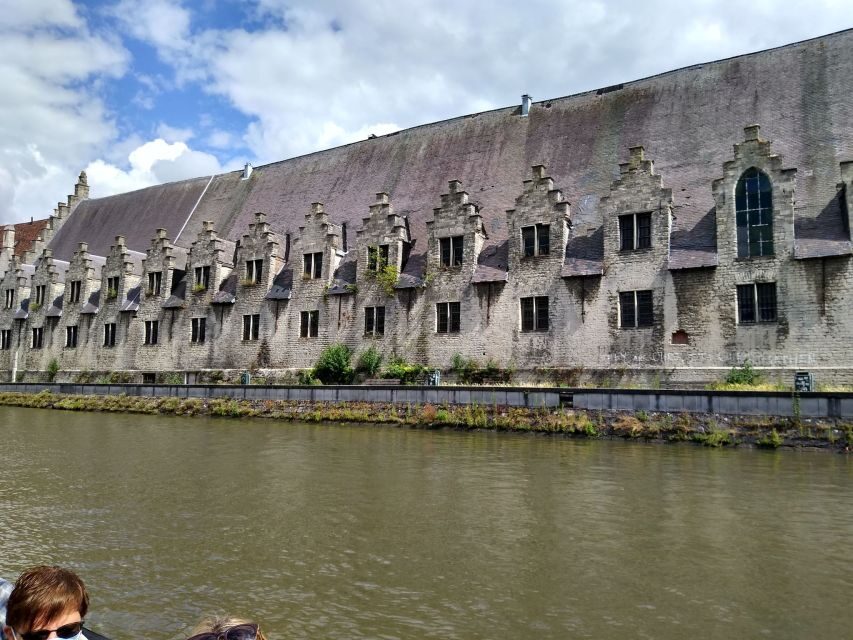
The experience begins right where Ghent’s story shows up in stone. You meet in front of St Bavo’s Cathedral and look for the WalkinGent logo. From there, the walking flow is designed to keep you moving between key landmarks without turning the day into a museum sprint.
This route works because Ghent’s historic center is compact, but not flat. You get constant changes in perspective—towers ahead, river views pulling you forward, and backstreets that make the city feel lived-in rather than staged. It’s a smart way to get your bearings fast.
If you like architecture, civic buildings, and the “why does this city look like this?” side of travel, this is a strong fit. You’re not just seeing sights; you’re learning what those sights meant to people back when the city ran on guilds, trade, and power.
You can also read our reviews of more private tours in Ghent



Saint Bavo’s Cathedral, Belfry, and Cloth Hall: the power cluster
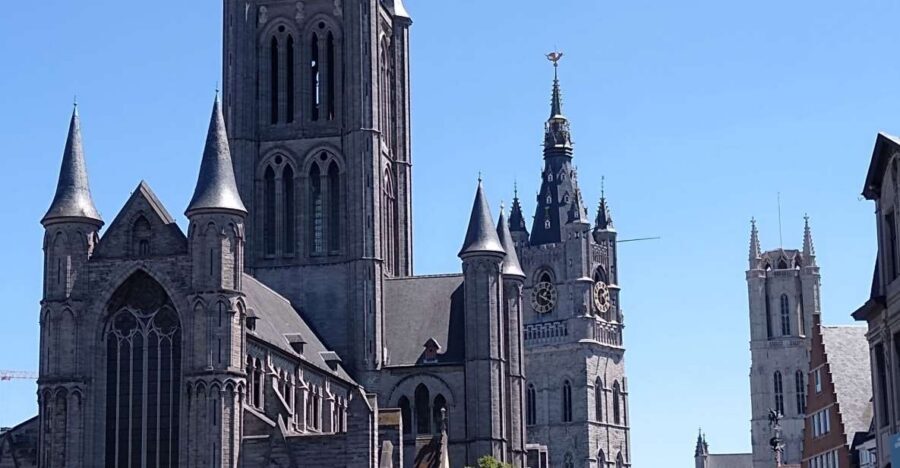
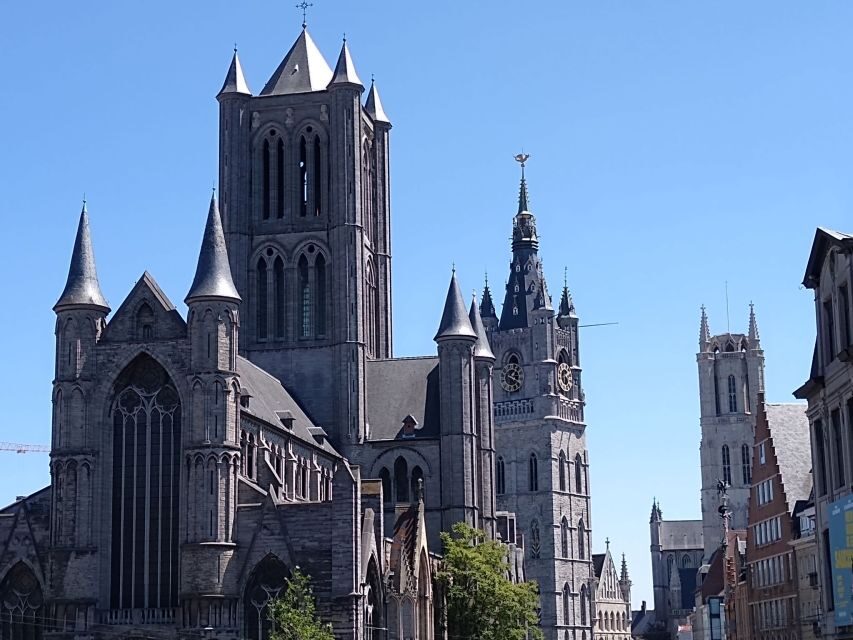
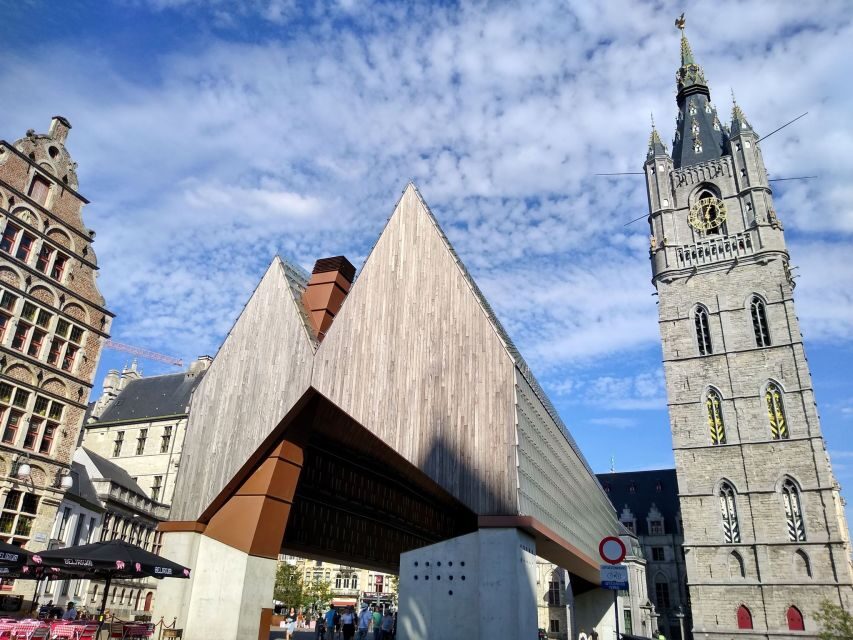
Sint-Baafsplein is the launchpad, and it makes a great first impression. The tour focuses on the cathedral, the Belfry, and the Cloth Hall, which together act like a medieval billboard for Ghent’s status.
Saint Bavo’s Cathedral is more than an impressive facade—it’s part of the identity of Ghent’s center. The Belfry, too, is the kind of landmark you can spot from far enough away to feel like a navigation tool. And the Cloth Hall reminds you that this was a trading city as much as a religious one.
What I like about this first stretch: it gives you context before you start wandering. By the time you leave the square, you’re already thinking in categories—religion, governance, and commerce—so the rest of the walk makes more sense.
Tip for you: bring your camera, but also take one minute to just look up and around. The city’s tower-and-facade composition is part of the charm.
Patrician houses and City Hall: reading Ghent’s “who mattered”
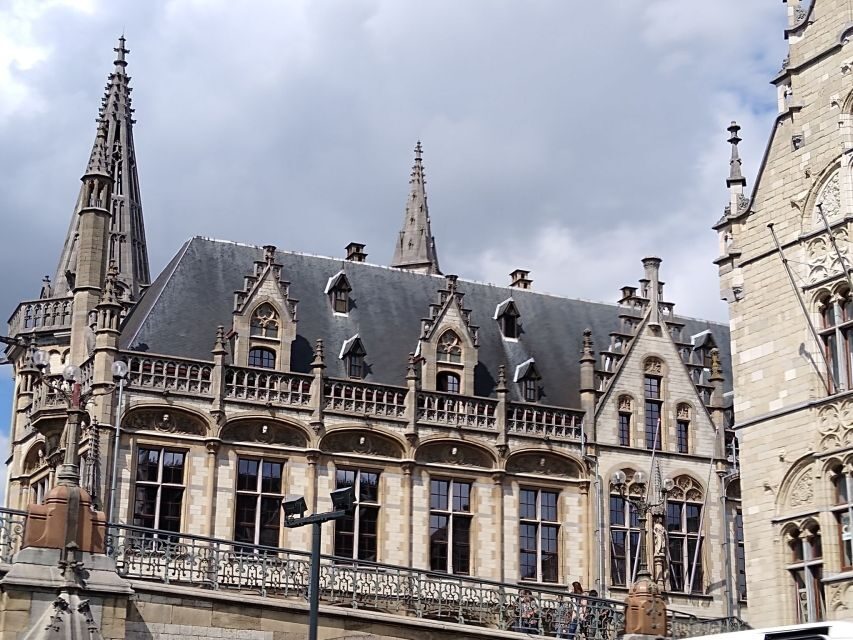
Next you move past patrician houses and on to the City Hall. This part of the walk shifts from landmark scale to street-level detail, which is where Ghent gets interesting for people who pay attention to how cities reflect class and influence.
Patrician houses are a reminder that medieval Ghent wasn’t only about big official buildings. Wealthy families showed their standing on the street, and you can often spot that through the design and placement of facades. It’s the kind of detail that makes a city feel like a real place, not just a postcard.
The City Hall adds the civic angle again. It’s where you can start connecting the dots: trade created wealth, wealth supported institutions, and institutions shaped the city’s look and rules. You’ll get a feel for how the city organized itself, not just how it looked.
A small consideration: if you’re expecting a lot of indoor time, the walk is more about outdoor viewing and interpretation. You’ll get value from looking carefully at what you can see, rather than waiting in lines.
The Castle of the Counts: a dramatic turn in mood
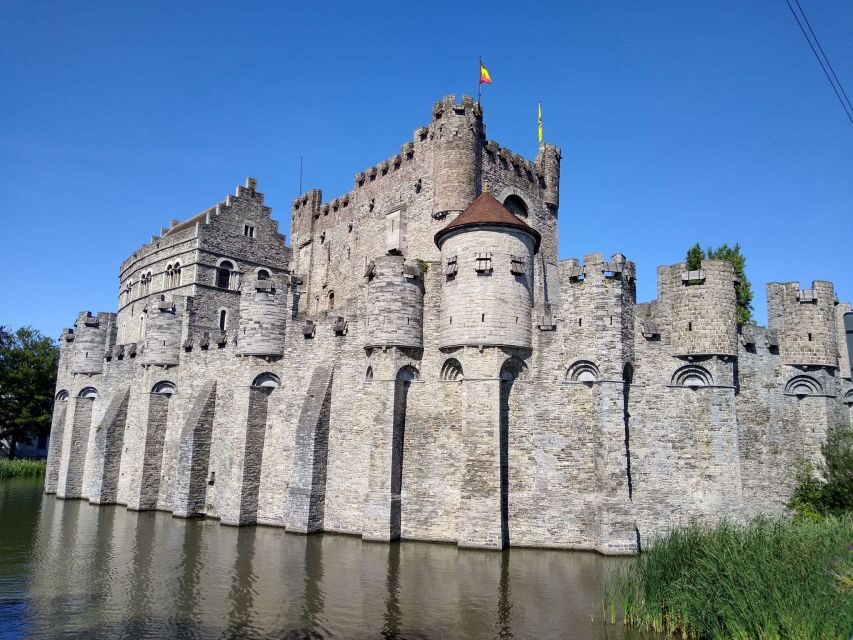
Then comes one of the biggest atmosphere shifts: the Castle of the Counts. Even from the outside, it adds a different tone to the walk. You’re not only moving through a medieval city center now—you’re approaching something that feels more defensive, more official, and more formidable.
What I like here is how the tour uses contrast. You go from municipal buildings and merchant-facing spaces to something that reads as authority in brick and stone. That contrast is useful because it helps you understand what kinds of forces shaped daily life.
If you’re the type who enjoys history through visuals—walls, layouts, power symbols—this stop will land well. It’s one of those places where you can imagine the city under pressure without the guide needing to overcomplicate it.
Great Butchers’ Hall and the harbour area: where trade becomes food
Next stop is the Great Butchers’ Hall, and this is where Ghent gets practical. The tour includes the hall as part of your route, and there’s even an opportunity to taste regional specialties at the end of the tour.
This is also where the story shifts from “who ruled” to “how people lived.” A food-focused stop near the harbour makes sense in a trading city: markets, supply chains, and daily routines all tie back to the same economic engine.
Right after that, you’re close to the old harbour—the beating heart of Ghent. Even if you don’t linger long, the location does a lot of work for you. You start thinking about the rivers as highways, and the city as a hub rather than a set of monuments.
If you’re trying to plan meals in Ghent, this is a great moment to get your bearings. You’ll leave with a better sense of where the action is and what foods fit the region.
You can also read our reviews of more historical tours in Ghent






Graslei and Korenlei: guild houses and grain warehouses on the Lys
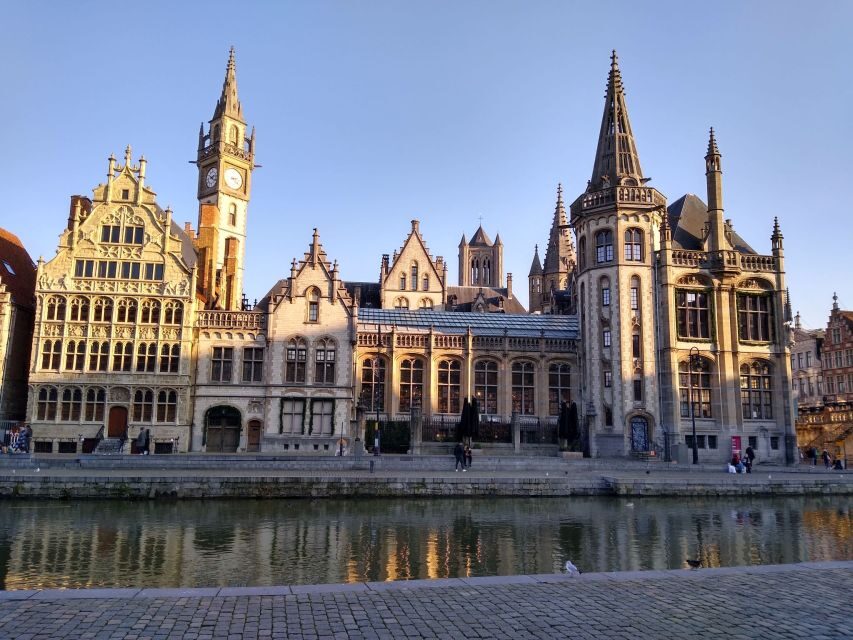
Now the walk turns your attention toward the river. Looking at both banks—Graslei and Korenlei—you get the famous view of guild houses and grain warehouses. This stretch is visually strong because the architecture tells you what the waterfront was built for.
Guild houses connect you to the idea of organized trades. Grain warehouses connect you to the practical side of survival: storing food, managing supply, and protecting value. Put together, they explain why this area looks the way it does.
For you, this section is about more than photos. It’s where the tour’s “Middle Ages in motion” idea becomes real. You can almost picture cargo, paperwork, bargaining, and the rhythm of daily trade with the river as the backbone.
Practical note: plan to slow down here. You’ll want a moment to frame pictures properly, especially along the waterline where reflections can help or distract.
St Michael’s Bridge: the three-tower viewpoint moment
From St Michael’s Bridge, you get a unique view of the city’s three towers—three landmarks, one angle. This is the kind of stop that’s quick, but it earns its time because it changes how you understand the skyline.
It’s also a social moment. There’s a mention of a selfie with the local guide (and it’s a fun way to mark the shift from “walking tour mode” to “I’ve got the city in my head mode”). You’ll likely feel like you’ve reached a visual checklist: cathedral, belfry, and the rest of Ghent’s tower identity all connect into a single scene.
If you like city photography, this is one of your best chances to get a clean composition without chasing the perfect street corner. Take one photo, then look again without the screen for a minute—you’ll notice details you missed the first time.
Who this private Ghent walk is best for
This tour is built for small groups. It’s a private group experience for up to five people, which matters because you get a guide who can slow down for your pace and interests. If you’re traveling with family, friends, or someone who enjoys architectural details, this format helps keep everyone engaged.
It also fits you if you want a high-impact overview in a limited amount of time. With a duration of 2 hours, you’ll cover the major medieval center landmarks without burning half a day.
You might especially enjoy it if:
- you like medieval civic buildings and the “how a city worked” angle
- you enjoy waterfront scenes and want them explained, not just shown
- you prefer guided context over wandering with no plan
It may be less ideal if you want a deep, time-consuming tour of one single museum inside a landmark. This experience is about the whole historic center and how it connects.
Price and value: what $147 per group buys you
The price is $147 per group up to 5 for a 2-hour private walk. That’s not cheap if you compare it to group tours where you share a guide with strangers. But private tours aren’t priced for maximum low cost. They’re priced for control.
Here’s why the value can make sense for you:
- You’re getting qualified guides and a route designed to hit the big medieval “reading points” efficiently.
- The small group size makes questions easier, and it keeps the pace from dragging.
- You get multiple landmarks packed into one coherent walk: cathedral, belfry, cloth hall, city hall, castle, hall/food stop, harbour, and the Lys viewpoints.
If you’re traveling as a couple or small family, the per-person cost can look much more reasonable. And if you care about context—why Ghent developed the way it did—guiding helps you see more than you’d catch on your own in the same time.
One more value angle: the tour is multilingual (French, Dutch, English). That matters if your group includes different language preferences and you want the experience to stay smooth.
The on-the-walk rhythm: what you’ll feel during the 2 hours
The pacing is straightforward: start at Sint-Baafsplein, work through official medieval landmarks, cross into civic and fortlike areas, then end by shifting your gaze toward the river and harbour. You’ll keep moving through the city’s Kuip (the Dutch name for the center), which helps the tour feel like a real walk rather than a sequence of separate stops.
At the end, there’s mention that chocolate tasting is possible. Even if you don’t do it, the idea is nice: a food-linked finish makes sense in a city where the historic centre is built around trade and markets.
From what you can expect in practice, you’ll probably spend most of your time outside looking at buildings and viewpoints, with guide commentary to connect the dots. This is ideal if you’re comfortable standing and walking at a city pace.
If you’re bringing mobility needs, it’s wheelchair accessible based on the activity information you have. Still, city sidewalks and bridge areas vary, so it helps to go in with realistic expectations about surfaces and short inclines.
A note on guides: tailored explanations, not scripts
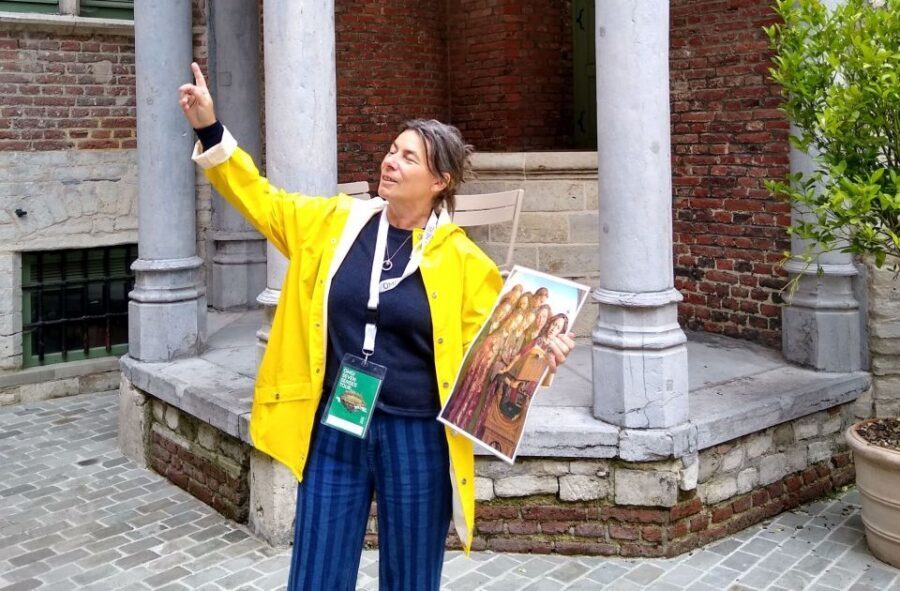
The overall feel is that the guide is there to explain, not just point. One guide name that’s come up in the experience is Ann, praised for being professional and for adjusting the program when someone asked to see beginner-friendly areas.
That kind of flexibility matters on a private walk. If you have a particular interest—architecture, city planning, or simply better orientation—you’re more likely to get a route tweak rather than a strict script.
Also, the tour supports French, Dutch, and English. If your group has mixed language needs, that’s a comfort factor you don’t always get with heritage walks.
Should you book this Ghent historical center private tour?
Book it if you want a focused, high-value overview of Ghent’s medieval core in just two hours. The route hits the cathedral and Belfry cluster, adds civic power stops like the City Hall, and includes the Castle of the Counts for atmosphere. Then you end where Ghent earns its fame: the harbour and the Lys riverfront with Graslei and Korenlei views.
You might skip it if you’re hoping for lots of indoor time in multiple major buildings, or if your idea of a tour is long, slow wandering with minimal structure. This walk is designed to guide your eyes and thinking, not to turn into a full-day deep study.
If you’re deciding right now, here’s the simple check: if your trip needs an efficient, meaningful medieval orientation—this private Ghent walk is a strong yes.
FAQ
How long is the Ghent private historical center tour?
The duration is 2 hours.
Where does the tour start?
The meeting point is in front of St Bavo Cathedral. Look for the WalkinGent logo.
How much does it cost?
It costs $147 per group, up to 5 people.
Is the tour wheelchair accessible?
Yes, the tour is wheelchair accessible.
What languages are available for the guide?
The live guide speaks French, Dutch, and English.
What’s included in the walk?
The tour includes guided stops at Sint-Baafsplein (Cathedral, Belfry, Cloth Hall), patrician houses, the City Hall, the Castle of the Counts, the Great Butchers’ Hall, the old harbour area, the guild houses and grain warehouses along the Lys, and a viewpoint from St Michael’s Bridge.
Is chocolate tasting included?
Chocolate tasting is not included, but it is possible at the end of the tour.
Can I cancel and get a refund?
Yes. You can cancel up to 24 hours in advance for a full refund.